
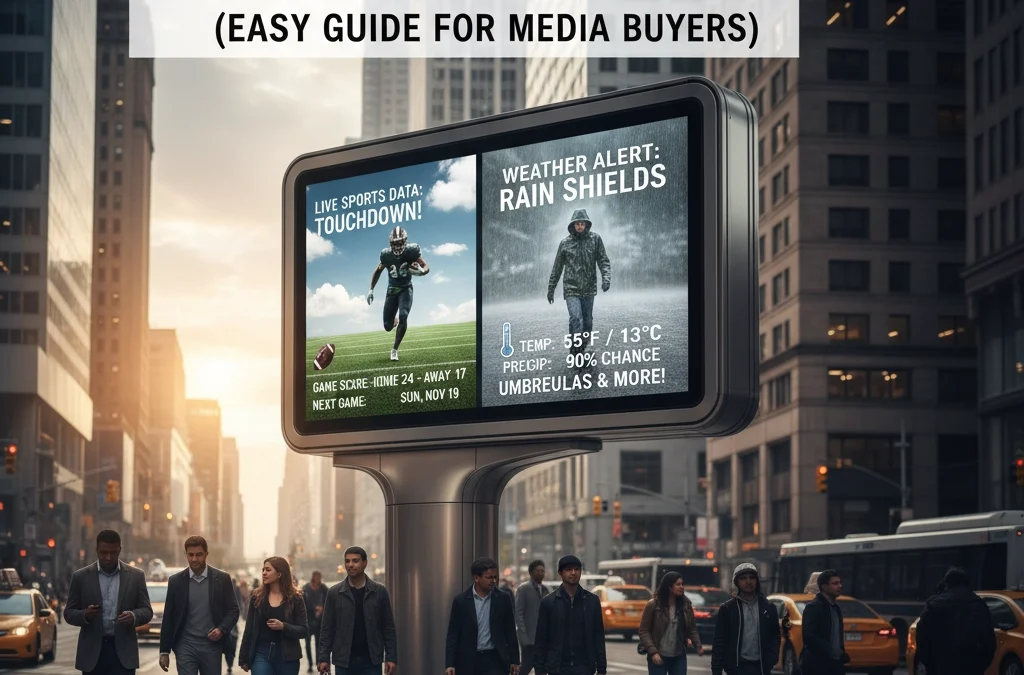
Real-time digital out-of-home (DOOH) campaigns powered by live data streams represent the cutting edge of contextual advertising. Media buyers who master the integration of sports data and weather triggers can deliver precisely timed messages that capture consumer attention at peak relevance moments. This systematic approach transforms static billboard placements into dynamic, responsive advertising experiences that drive measurable engagement and conversion improvements.
The convergence of sports events and weather conditions creates unique opportunities for brands to connect with audiences when external factors directly influence purchasing decisions. A sudden rainstorm triggers immediate demand for umbrellas and waterproof clothing, while a hometown team's playoff victory generates instant appetite for celebratory merchandise and dining experiences. Media buyers equipped with the right data infrastructure and campaign automation can capitalize on these fleeting moments with surgical precision.
Step 1: Establish Robust Data Partnership Infrastructure
The foundation of successful real-time DOOH campaigns requires partnerships with reliable data providers delivering accurate, low-latency information streams. Weather data partnerships should prioritize providers offering hyperlocal forecasting, real-time precipitation alerts, temperature fluctuations, and severe weather warnings with geographic precision down to zip code levels.
Sports data integration demands partnerships with organizations providing live game scores, player statistics, team standings, injury reports, and tournament brackets. The most effective campaigns combine multiple data sources, including official league APIs, sports analytics platforms, and social media sentiment tracking to create comprehensive triggering conditions.

Data quality verification protocols ensure campaign reliability during high-stakes moments. Establish redundant data feeds from multiple sources, implement latency monitoring systems, and create fallback mechanisms that prevent campaign interruptions during peak engagement periods. The technical infrastructure should support data ingestion rates capable of processing updates every 30 seconds or faster for optimal responsiveness.
Partnership agreements should specify data delivery standards, including update frequency, historical data access, and geographic coverage limitations. Media buyers must negotiate service level agreements that guarantee data availability during major sporting events and extreme weather conditions when advertising impact potential reaches maximum levels.
Step 2: Define Precise Triggering Conditions and Campaign Logic
Effective real-time DOOH campaigns operate on sophisticated trigger logic that combines multiple data inputs to determine optimal creative deployment. Weather-based triggers should specify exact temperature thresholds, precipitation levels, wind speeds, and atmospheric conditions that correlate with target audience behavior patterns for specific product categories.
Sports-related triggers require detailed condition mapping that accounts for game timing, score differentials, player performance milestones, and team advancement scenarios. A successful sports bar campaign might trigger different creative variants based on whether the local team leads by more than 10 points, trails in the final quarter, or advances to championship rounds.
Compound trigger logic creates more sophisticated targeting opportunities by combining weather and sports conditions. Restaurant chains can trigger hot beverage promotions during cold weather playoff games, while outdoor gear retailers can promote weatherproof fan gear during rainy game days. The specificity of trigger conditions directly correlates with campaign relevance and audience response rates.
Geographic trigger boundaries ensure campaigns activate only within relevant market areas. Define radius parameters around sporting venues, weather monitoring stations, and target demographic concentrations to prevent irrelevant ad deployment that wastes impression inventory and reduces campaign efficiency metrics.
Step 3: Develop Comprehensive Dynamic Creative Asset Libraries
Dynamic creative optimization requires extensive asset libraries that accommodate every potential trigger scenario while maintaining brand consistency and message clarity. Creative development should produce modular template systems that automatically swap images, headlines, calls-to-action, and promotional offers based on real-time data inputs.

Weather-responsive creative assets must address diverse meteorological conditions including sunny skies, rain, snow, extreme heat, cold fronts, and severe weather warnings. Each weather scenario should connect to relevant product promotions, seasonal messaging, and urgency-driven calls-to-action that motivate immediate consumer response.
Sports-themed creative variations should account for pre-game excitement, live game scenarios, post-game celebrations, and tournament progression stages. Successful campaigns prepare creative assets for team victories, defeats, milestone achievements, playoff advancement, and championship opportunities that generate peak emotional engagement from target audiences.
Technical specifications for dynamic creative require standardized file formats, loading optimization, and seamless transition capabilities that prevent visual disruptions during real-time updates. Creative assets should load within two seconds of trigger activation to maintain campaign responsiveness and audience engagement continuity.
Step 4: Configure Campaign Automation and Quality Assurance Systems
Campaign automation infrastructure transforms trigger conditions into immediate creative deployment through sophisticated decision-making algorithms. Media buyers must configure campaign management platforms that evaluate multiple data streams simultaneously and execute creative changes without manual intervention during live events.
Automation rule hierarchies establish priority systems when multiple trigger conditions activate simultaneously. A rainy playoff game might trigger both weather-appropriate messaging and sports celebration content, requiring predetermined logic that selects the most commercially relevant creative variant based on historical performance data and current campaign objectives.

Quality assurance protocols prevent inappropriate content deployment during sensitive moments or technical malfunctions. Implement approval workflows for high-stakes trigger scenarios, establish content review checkpoints for controversial sports outcomes, and create manual override capabilities that allow immediate campaign adjustments when circumstances require human intervention.
Real-time monitoring dashboards provide campaign managers with live visibility into trigger activation rates, creative deployment frequency, and audience engagement metrics across all screen locations and time periods. Comprehensive logging systems track every trigger event and creative change to support post-campaign analysis and optimization initiatives.
Step 5: Execute Performance Monitoring and Optimization Protocols
Campaign execution requires continuous performance monitoring that tracks engagement metrics, conversion attribution, and trigger effectiveness across all deployment scenarios. Key performance indicators should include creative rotation efficiency, weather and sports relevance correlation, dwell time variations, and audience interaction rates during different trigger conditions.
A/B testing frameworks compare real-time triggered content against static campaign variants to quantify the engagement and conversion improvements generated by dynamic content deployment. Statistical significance testing ensures optimization decisions reflect genuine performance improvements rather than random variation in audience behavior patterns.
Attribution modeling connects DOOH exposures to downstream conversion activities through device ID matching, geofencing verification, and omnichannel campaign tracking integration. Advanced attribution analysis identifies which trigger conditions generate the highest-value customer actions and return on advertising spend improvements.

Optimization cycles implement systematic campaign refinements based on performance data analysis. Media buyers should establish weekly optimization reviews that evaluate trigger condition effectiveness, creative asset performance rankings, and geographic deployment success rates to guide strategic adjustments and budget allocation decisions.
Maximizing ROI Through Data-Driven Precision
Real-time DOOH campaigns triggered by live sports and weather data deliver measurable advantages over static advertising approaches through improved audience relevance and engagement timing precision. The systematic implementation of robust data partnerships, sophisticated trigger logic, comprehensive creative libraries, automated deployment systems, and continuous optimization protocols creates sustainable competitive advantages for media buyers operating in increasingly competitive advertising markets.
The integration of multiple data streams creates exponential targeting opportunities that transform outdoor advertising from broad awareness generation to precise conversion-driving experiences. Media buyers who master these technical capabilities position their campaigns for superior performance metrics and demonstrate clear return on investment improvements to advertising clients.
Dan Kost, CEO of OOH Sports, emphasizes that successful real-time campaigns require balancing technological sophistication with creative excellence to deliver messages that resonate with audiences during peak receptivity moments. The convergence of sports passion and weather-driven needs creates unique opportunities for brands that execute data-driven DOOH campaigns with precision and creativity.
Ready to implement real-time DOOH campaigns that respond to live sports and weather data? Contact OOH Sports at +1 (970) 703-0102 to discuss advanced targeting strategies and campaign automation solutions tailored to your brand objectives.
What specific sports events or weather conditions drive the highest engagement for your target audience? Share your experiences with real-time campaign triggers in the comments below.
About OOH Sports: Leading provider of innovative digital out-of-home advertising solutions that connect brands with sports audiences through data-driven precision targeting and real-time campaign optimization.
Tags: #Motivation #Branding #Strategy #Marketing #AdvertisingAndMarketing #digitalmarketing #Innovation #Sports
Share this article:
LinkedIn | Facebook | Instagram | X
Related Reading: