
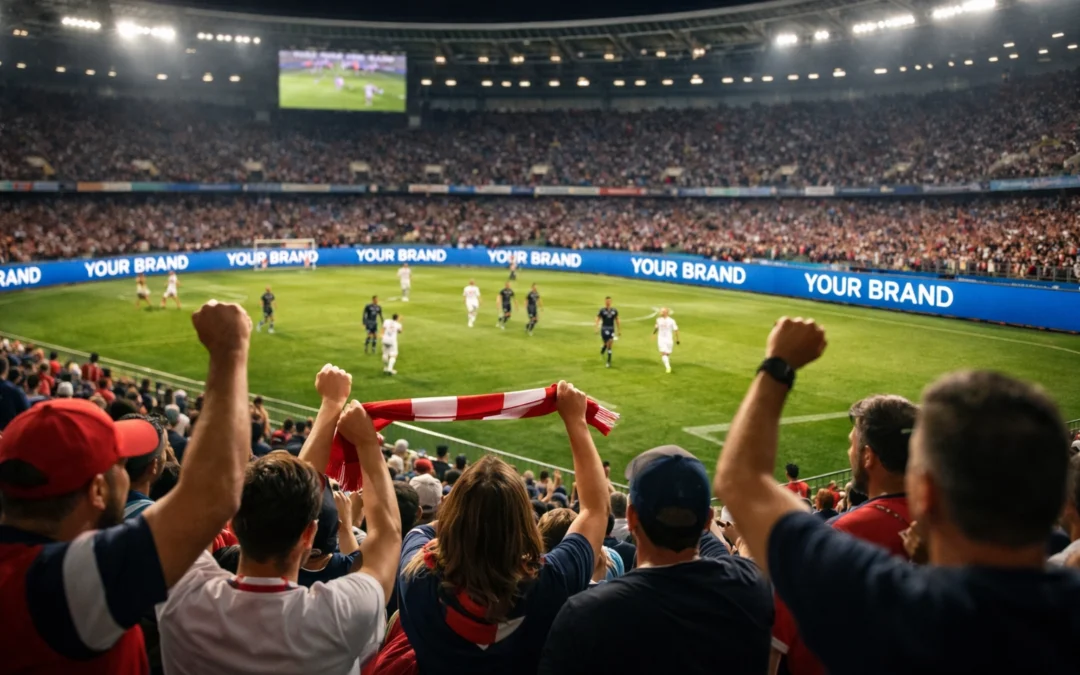
The average sports fan spends hours watching their favorite teams compete, their eyes glued to every pass, shot, and play. But there's something else they're seeing, whether they realize it or not: the brands lining the perimeter of the field. Stadium perimeter advertising has evolved from simple static boards into a powerful tool for transforming casual spectators into devoted brand advocates.
For creative directors and CMOs looking to maximize their advertising investment, understanding how to leverage this unique medium can create lasting connections with one of the most engaged audiences available. The key lies in strategic execution that respects the fan experience while building meaningful brand associations.
The Non-Intrusive Advantage
Stadium perimeter advertising operates fundamentally differently from most traditional advertising formats. It doesn't interrupt the action, pause the game, or demand immediate attention. Instead, it exists alongside the sporting event, becoming part of the fabric of the experience itself.
This non-intrusive nature creates a psychological advantage. Fans don't view perimeter boards as interruptions to their enjoyment. They're simply there, present during moments of triumph, tension, and excitement. This organic integration leads to more positive brand reception compared to ads that actively disrupt content consumption.
The result is a subtle but powerful shift in perception. Brands become associated with the positive emotions of game day rather than the frustration of commercial breaks. This foundation is critical for building superfan loyalty.

Strategic Placement for Emotional Impact
Not all perimeter advertising positions are created equal. The most effective brand building occurs when advertisements are positioned to capture emotionally charged moments. Boards placed behind goals in soccer, near end zones in football, or alongside basketball hoops become part of the most celebrated and replayed moments in sports.
Consider the instant a goal is scored. Fans leap from their seats, players celebrate, and cameras zoom in to capture the moment. The perimeter advertising visible during these celebrations gets featured in highlight reels, social media posts, and sports news coverage. This amplification extends brand visibility far beyond the stadium walls.
These emotional peak moments create powerful memory associations. When fans recall their team's winning goal or championship moment, the brands present in those celebrations become part of the memory itself. This emotional anchoring is significantly more valuable than simple brand exposure.
The Power of Sustained Exposure
Building superfans doesn't happen through a single touchpoint. It requires consistent, repeated presence that compounds over time. Stadium perimeter advertising excels in this area through sheer volume of exposure across full seasons.
Research from Premier League partnerships demonstrates this compounding effect clearly. A single minute of perimeter advertising during a match can translate into over 150 minutes of on-screen visibility globally when accounting for replays, highlights, and multi-angle coverage. This multiplication factor is unique to stadium advertising.

Over a ten-month sports season with multiple matches, this sustained exposure creates deep brand recall. Marketing messages get reinforced naturally through the rhythm of the sporting calendar. Fans see the brand week after week, building familiarity and recognition that transcends traditional campaign durations.
This repetition operates at a subconscious level. The brand becomes a familiar presence, associated with the consistency and reliability of the sporting season itself.
Positioning as a Partner, Not a Seller
A critical distinction separates successful stadium advertisers from those who see minimal return: positioning. Fans respond more favorably to brands that present themselves as supporters of the sport and team rather than aggressive product pushers.
This positioning requires a shift in messaging approach. Rather than hard-selling features and benefits, effective perimeter advertising focuses on alignment with team values, celebration of fan culture, and support for the sporting experience. The brand becomes a participant in the ecosystem rather than an outside advertiser.
Research consistently shows that fans view sponsorships and partnerships through a different lens than traditional advertising. They appreciate brands that contribute to their team's success and the quality of their game day experience. This goodwill translates directly into purchase consideration and brand preference.
The most successful perimeter campaigns embrace this partner mentality, using messaging that reinforces connection to the sport rather than disconnection from it.
Dynamic Messaging for Targeted Relevance
Modern perimeter advertising technology enables unprecedented customization. Digital LED boards can display different messages to different broadcast markets watching the same game, adjust content based on score or game timing, and tailor creative to specific audience demographics.

This dynamic capability transforms perimeter advertising from a one-size-fits-all medium into a precision targeting tool. A brand can show one message to the in-stadium audience, another to domestic television viewers, and a third to international markets, all during the same match.
This personalization increases relevance dramatically. Fans see messaging that feels tailored to their context rather than generic broadcast content. Regional references, language adjustments, and culturally specific creative all become possible within a single game environment.
The increased relevance drives higher engagement rates and stronger brand recall. When advertising feels personalized and contextual, audiences respond more positively and are more likely to act on the message.
Amplification Beyond the Stadium
The reach of perimeter advertising extends exponentially beyond those physically present at the match. Television broadcasts bring the boards into millions of homes. Social media amplifies key moments to global audiences. Highlight reels and sports news coverage provide additional exposure.
Major sports leagues and teams command massive social media followings, often exceeding hundreds of millions of followers across platforms. When these organizations share highlights, celebrations, or key moments, the perimeter advertising visible in that content reaches new audiences organically.
Brands can further amplify this reach by designing board content with social sharing in mind. Clean, visually striking creative that photographs well and includes shareable elements becomes viral content in its own right. The perimeter board becomes a backdrop for user-generated content as fans share their game day experiences.
This multi-platform amplification means the initial advertising investment continues generating impressions long after the final whistle. A single season of perimeter advertising can produce content that circulates for years in highlight compilations and throwback posts.
Visual Design Best Practices
Effective perimeter advertising requires thoughtful visual design. The medium presents unique constraints, viewing distances, and viewing durations that demand specific creative approaches.
Simplicity is paramount. Clear brand names, recognizable logos, and strong color contrasts work best at a distance and in fast-moving game situations. Overly complex designs get lost in the visual noise of the stadium environment.
Bright, saturated colors attract attention more effectively than muted tones. However, these should align with brand identity rather than clash with it. The goal is visibility within brand guidelines, not visibility at any cost.
Dynamic displays with subtle product animations or rotating messages capture more attention than purely static boards. Movement draws the eye naturally, particularly in the peripheral vision of focused sports viewers. However, this movement should enhance rather than distract from the game itself.
Text should be minimal and high contrast. Taglines work better than paragraphs. Brand names should be legible from across the stadium. The "less is more" principle applies strongly in this medium.
Measurement and Optimization
Converting spectators into superfans requires understanding what's working and continuously refining the approach. Modern perimeter advertising offers robust measurement capabilities that go beyond simple impression counts.
Brand lift studies can measure changes in awareness, consideration, and preference attributable to perimeter exposure. These studies provide concrete data on campaign effectiveness and return on investment.
Social media monitoring tracks organic mentions, share rates, and sentiment around board creative. This real-time feedback allows for mid-campaign adjustments and identifies particularly resonant messaging.
Attribution modeling can connect perimeter advertising exposure to downstream behaviors like website visits, product searches, and purchases. This full-funnel view demonstrates business impact beyond awareness metrics.
Strategic Implementation
Successfully turning spectators into brand superfans through stadium perimeter advertising requires strategic planning across multiple dimensions. Selection of the right sports properties, venues, and teams forms the foundation. These choices should align with target audience demographics and brand positioning.
Creative development should balance brand consistency with the unique demands of the stadium environment. Testing creative at various sizes and distances ensures optimal legibility and impact.
Campaign duration matters significantly. Short-term activations provide limited opportunity for the repetition and familiarity that builds superfans. Season-long or multi-season commitments allow for deeper audience connections.
Integration with broader marketing efforts multiplies impact. When perimeter advertising works in concert with social media campaigns, influencer partnerships, and experiential activations, the combined effect exceeds the sum of individual tactics.
Stadium perimeter advertising represents a unique opportunity to build lasting brand relationships with highly engaged audiences. By respecting the fan experience, leveraging emotional moments, maintaining consistent presence, and employing strategic creative, brands can transform passive spectators into active superfans who champion the brand long after the game ends.