
The Super Bowl remains the pinnacle of American sports and a massive opportunity for brands to connect with a global audience. As Super Bowl LX approaches on February 8, 2026, the focus shifts to Levi’s Stadium in Santa Clara, California. This event is not merely a game but a region-wide takeover of the San Francisco Bay Area. Navigating the complexities of advertising in this high-stakes environment requires a deep understanding of venue mechanics, transit flows, and the technological landscape of out-of-home (OOH) media.
This guide outlines the essential strategies for brands to establish a dominant presence during the 2026 championship. With 40 years of advertising leadership in the sports industry, OOH Sports provides a blueprint for comprehensive coverage that spans from stadium floors to the surrounding 10-mile perimeter.
Objective & Strategy: Dominating the Bay Area Footprint
The primary objective for any major brand during Super Bowl week is to maximize visibility across the entire fan journey. Unlike traditional advertising that may focus on a single medium, a successful Super Bowl campaign must be omnichannel and geographically diverse. The strategy for 2026 involves a multi-layered approach that targets fans from the moment they land at the airport to the final whistle at Levi’s Stadium.
The San Francisco Bay Area presents a unique geographic challenge. Events are distributed across San Francisco, San Jose, and Santa Clara. The strategy must account for the primary fan hubs, including the Moscone Center in San Francisco and the San Jose Convention Center. By deploying digital out-of-home (DOOH) assets in these high-traffic zones, brands can maintain a continuous presence in the minds of consumers.
The core strategy rests on three pillars:
- Saturation: Ensuring brand messaging is visible at every major touchpoint in the region.
- Context: Delivering relevant content based on the time of day, location, and real-time game events.
- Connectivity: Using digital formats to drive fans toward mobile and social engagement.
40 Years of Advertising Leadership
Success in sports marketing is built on experience and long-standing relationships. OOH Sports, as part of the Sports Media Inc. family, brings four decades of expertise to the table. This history is marked by a deep understanding of how fans interact with stadium environments and the evolution of advertising technology.
Over the last 40 years, the industry has shifted from static banners to dynamic, programmatic digital displays. This leadership has allowed for the development of exclusive networks that provide access to prime inventory that is often unavailable to the general market. This longevity ensures that the logistics of a Super Bowl campaign, which can be incredibly complex due to NFL regulations and local municipal rules, are handled with precision.

Venue-Wide Coverage: From Floors to Billboards
Owning the venue means going beyond the traditional scoreboard ad. In 2026, the concept of "venue-wide" coverage includes every surface a fan might encounter. This "floors to billboards" philosophy ensures that brand messaging is inescapable.
Interior Venue Assets
Inside Levi’s Stadium, the advertising landscape is dense. High-definition LED ribbons, concourse displays, and digital kiosks provide high-frequency impressions. However, innovative brands are now looking at unconventional spaces. Branded floor graphics in high-dwell areas, such as food courts and entry gates, capture attention when fans are looking down at their phones or navigating crowds.
Spectacles and Billboards
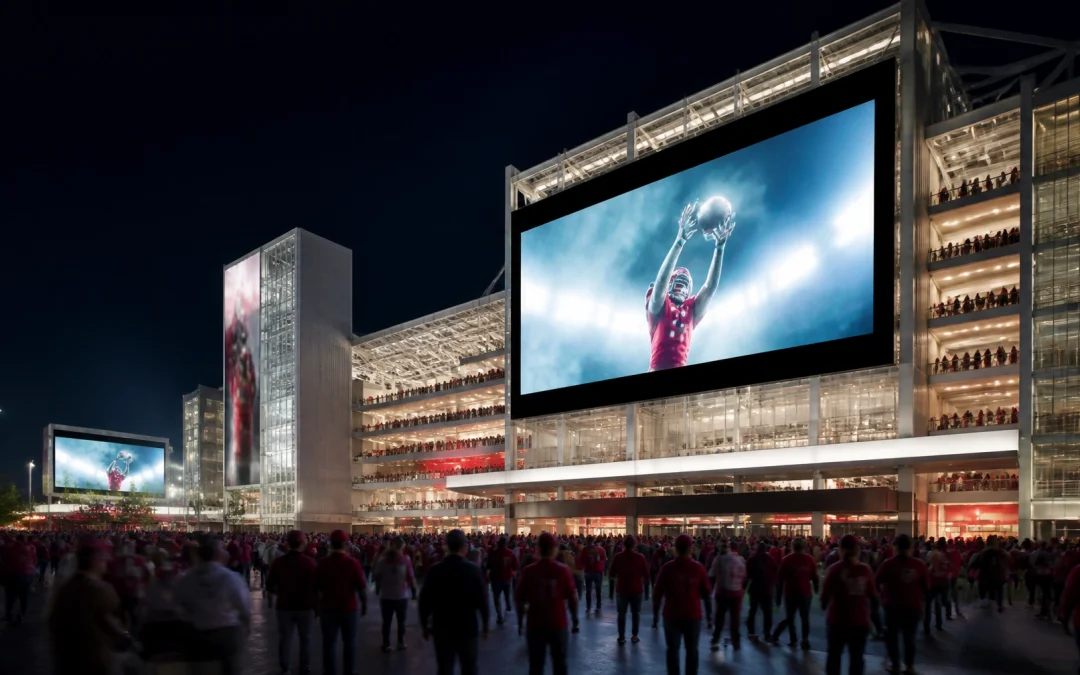
Large-format "spectaculars" around the stadium exterior serve as the visual anchors of a campaign. These massive screens are visible to thousands of fans queuing for entry and millions more watching via news broadcasts and social media posts. The goal is to create "shareable" moments where the advertising becomes part of the fan’s own content creation.

The 10-Mile Perimeter: Capturing the Fan Journey
The game day experience begins long before a fan reaches their seat. The OOH Sports network focuses on a perimeter of up to 10 miles around sports venues. This radius is critical because it captures the "pre-game" and "post-game" transit phases.
For Super Bowl 2026, the 10-mile perimeter around Levi’s Stadium includes major transit arteries, hotels, and dining districts in Santa Clara and Sunnyvale. By dominating the digital video boards within this radius, a brand can intercept fans multiple times during their commute.
Key Transit Corridors
Transit flows are the lifeblood of Super Bowl logistics. The routes from San Francisco via Caltrain and the VTA Light Rail into Santa Clara are high-frequency impression zones. Digital screens at these stations allow for hyper-targeted messaging that can change based on the arrival of specific trains or the demographic profile of the commuters at different times of the day.

Technology Partners & Programmatic Execution
The modern Super Bowl campaign is powered by programmatic technology. Technology partners play a vital role in ensuring that ads are delivered efficiently and at the right moment. Programmatic DOOH allows for real-time bidding and creative optimization, which is essential for an event as dynamic as the Super Bowl.
Real-Time Triggers
If a significant event occurs during the game, such as a lead change or a spectacular touchdown, programmatic technology can trigger specific creative assets across the entire network within minutes. This level of responsiveness makes the advertising feel like a part of the live event rather than a static interruption.
Data-Driven Targeting
The use of anonymized mobile location data helps planners understand where fans are gathering in the days leading up to the game. If data shows a surge of activity at a specific fan zone in San Francisco, the programmatic system can automatically shift more impressions to the digital boards in that vicinity.
Results: Measuring Success in the Modern Era
Success in a Super Bowl campaign is no longer measured solely by "eyes on screens." Advanced attribution models now allow brands to quantify the impact of their OOH spend. By using device ID exposure data, it is possible to track how many people saw an ad in Santa Clara and subsequently visited a retail location or made an online purchase.
Previous campaigns within the Sports Media network have demonstrated significant brand lift. For instance, recent programmatic DOOH activations for major beverage brands saw a 74% lift in purchase consideration. Another campaign for a global athletic brand achieved a 144% increase in brand favorability by strategically targeting transit routes near major marathons. These metrics prove that a well-executed venue-wide strategy delivers tangible business results.
Video: The Future of Sports Media
To understand the scale and impact of modern sports advertising, visual context is essential. The following video illustrates how brands are leveraging digital out-of-home assets to create immersive experiences in and around major sports arenas.
https://www.youtube.com/watch?v=l6J-0zileKE
Conclusion
Super Bowl 2026 in the San Francisco Bay Area will be one of the most technologically advanced and highly attended sporting events in history. For media buyers and brand managers, the challenge is to cut through the noise and deliver a message that resonates. By leveraging 40 years of leadership and a "venue-wide" strategy that encompasses everything from the stadium floor to a 10-mile perimeter, brands can ensure their message is not just seen, but remembered. The combination of high-impact physical assets and flexible programmatic technology provides the ultimate toolkit for owning the venue.