
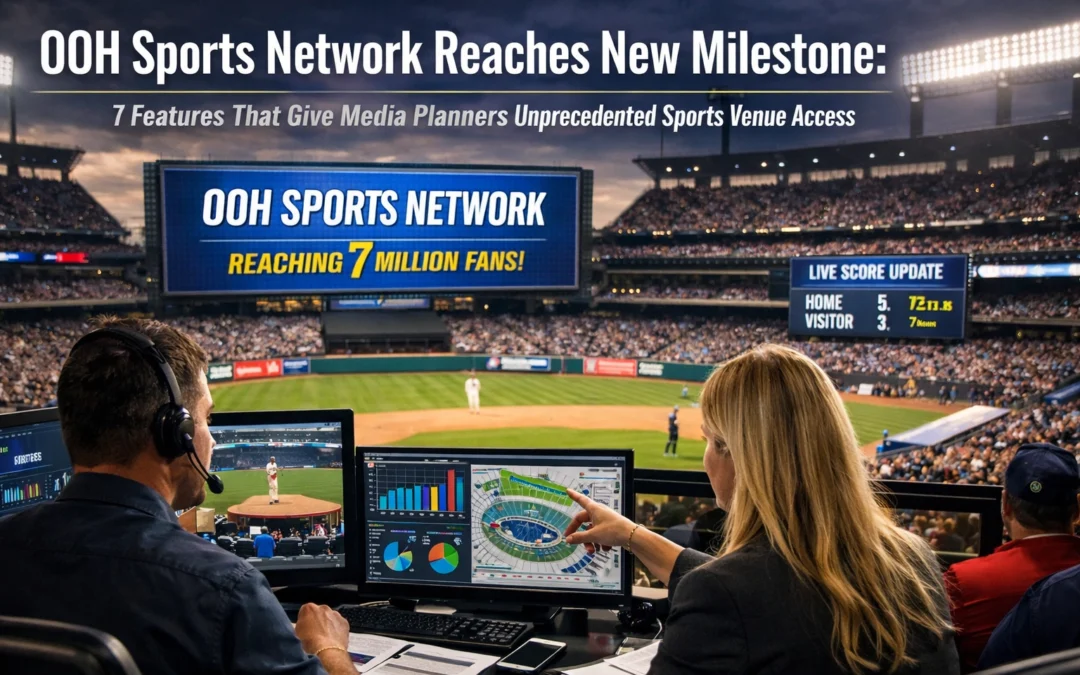
The OOH Sports network has expanded its digital out-of-home (DOOH) infrastructure to deliver comprehensive coverage across major sports venues and surrounding environments. This growth positions the network as a leading programmatic platform for brands seeking to connect with sports audiences through strategically placed digital screens.
The expansion provides media planners with access to high-traffic zones surrounding stadiums, arenas, and sports entertainment districts. Through programmatic technology and data-driven targeting capabilities, the network enables advertisers to activate campaigns that reach sports fans at critical moments in their journey to and from live events.
Network Growth Creates New Opportunities
The OOH Sports network now encompasses digital screens positioned in premium locations near professional and collegiate sports venues. These placements include highway corridors, major thoroughfares, transit hubs, and commercial districts frequented by sports fans before and after games.
This infrastructure development addresses a growing demand among advertisers for access to the sports audience beyond traditional stadium sponsorships. Brands can now activate campaigns without the long-term commitments and premium pricing associated with venue-specific deals.

Seven Core Features Driving Media Planner Adoption
The network's technical capabilities and strategic positioning deliver distinct advantages for campaign execution.
1. Programmatic Activation Across DSP Platforms
Media planners access the OOH Sports network through major demand-side platforms (DSPs), including StackAdapt, The Trade Desk, and Vistar Media. This integration enables real-time bidding, automated campaign deployment, and seamless management alongside other digital channels.
The programmatic approach eliminates traditional DOOH booking friction. Campaigns launch in hours rather than weeks, with the flexibility to adjust creative, targeting parameters, and flight dates as needed.
2. Geofencing and Proximity Targeting
The network employs precise geofencing technology to target screens within customizable radiuses of specific venues. Media planners define target zones ranging from immediate stadium perimeters to broader metropolitan areas, depending on campaign objectives.
This capability proves particularly valuable for brands seeking to intercept fans during their commute to events. Screens positioned along major ingress routes deliver messages when sports audiences are in a receptive mindset and physically moving toward the venue.
3. Event-Based Scheduling and Dayparting
Campaign scheduling aligns with specific games, tournaments, or sporting events. Media planners activate inventory during defined windows, such as three hours before kickoff through two hours post-game, maximizing exposure when sports audiences are concentrated in target zones.
This precision eliminates wasted impressions during non-event periods. Budgets focus exclusively on high-value windows when fan traffic peaks and brand messages achieve maximum relevance.

4. Audience Data Integration
The network incorporates first-party and third-party data sources to refine audience targeting beyond geographic parameters. Media planners layer demographic, behavioral, and interest-based criteria to reach specific fan segments.
Examples include targeting based on team affiliation, purchase history categories (such as sports betting or athletic apparel), mobile device activity, and visitation patterns. This data integration transforms location-based advertising into audience-based precision marketing.
5. Dynamic Creative Optimization
Screen-level creative customization enables personalized messaging based on location, event context, and audience characteristics. A campaign for a sports betting platform might display different odds or promotions depending on which stadium the screen serves, which teams are playing, and real-time game developments.
This dynamic capability increases message relevance and campaign performance. Rather than deploying generic creative across all placements, brands deliver contextually appropriate messages that resonate with local audiences and current sporting events.
6. Cross-Channel Attribution and Measurement
The network provides attribution methodologies that connect DOOH exposure to downstream actions. Through device ID matching, pixel tracking, and location-based verification, media planners measure foot traffic lift, website visits, app downloads, and conversions attributed to campaign exposure.
Post-campaign reporting includes metrics such as:
- Unique impressions delivered by venue and screen
- Frequency distribution across exposed audiences
- Attribution to physical store visits or venue entries
- Website traffic increases from exposed device IDs
- Conversion rates for retargeting campaigns
This measurement infrastructure addresses the historical challenge of quantifying DOOH impact. Media planners access concrete performance data that justifies budget allocation and informs optimization decisions.

7. Omnichannel Integration and Retargeting
Device IDs captured from DOOH exposure feed into retargeting pools for mobile, display, video, and social campaigns. This omnichannel approach extends the sports venue advertising impact beyond the physical screens.
A fan exposed to a brand message on digital billboards near the stadium subsequently encounters related creative on mobile apps, streaming platforms, and social media feeds. This coordinated exposure pattern drives higher recall, engagement, and conversion rates compared to isolated DOOH campaigns.
Strategic Value for Different Advertiser Categories
The network's features deliver specific advantages across advertiser verticals commonly interested in sports audiences.
Sports Betting and Gaming Platforms: Real-time creative updates based on game developments, combined with proximity targeting to venues in legal betting markets, enable timely promotional messaging when users are most likely to engage.
Beverage and CPG Brands: High-frequency exposure during pre-game and post-game windows captures audiences in celebratory mindsets. Geofencing around bars, restaurants, and retail locations near stadiums drives immediate purchase consideration.
Automotive Advertisers: Premium screen placements along major highways and commuter routes deliver brand messages to audiences in transportation contexts. Event-based scheduling ensures presence during high-traffic sporting event windows.
Financial Services and Insurance: Proximity to venues hosting professional sports provides access to affluent demographics with high propensities for investment products, premium credit cards, and insurance services.
Quick Service Restaurants and Food Delivery: Immediate proximity targeting combined with time-based scheduling drives foot traffic and app-based orders during peak fan activity periods before and after games.
Competitive Advantages Over Traditional Stadium Advertising
The network model presents distinct benefits compared to conventional venue sponsorships and in-stadium advertising placements.
Cost Efficiency: Programmatic pricing based on CPM models and real-time bidding provides more accessible entry points than fixed-fee stadium deals that often require six or seven-figure commitments.
Flexibility: Campaign durations range from single-game activations to full-season flights. Brands test messaging, optimize based on performance data, and scale investment in successful tactics without long-term contractual obligations.
Broader Reach: While stadium advertising captures only ticketed attendees, perimeter networks reach the full spectrum of sports fans, including those watching at nearby bars, participating in tailgate activities, or commuting through sports districts.
Speed to Market: Programmatic activation enables campaign launches within 24 to 48 hours. Traditional stadium deals involve lengthy negotiation, creative approval processes, and production timelines spanning weeks or months.
Performance Transparency: Digital measurement and attribution provide concrete performance metrics. Stadium sponsorships typically rely on estimated attendance figures and survey-based brand lift studies with limited precision.

Industry Context and Market Positioning
The DOOH sports advertising market continues expanding as brands seek alternatives to traditional broadcast and digital video placements. Rising streaming fragmentation has diluted the once-dominant reach of televised sports, while privacy regulations limit digital targeting precision.
This environment creates opportunity for location-based advertising solutions that reach sports audiences at physical touchpoints. The OOH Sports network addresses this demand through a combination of premium placement inventory, programmatic technology infrastructure, and data-driven targeting capabilities.
Network growth reflects broader industry trends toward digitization and automation in out-of-home advertising. Programmatic DOOH adoption has accelerated as buyers demand the same planning, activation, and measurement tools available in other digital channels.
Technical Infrastructure and Platform Partnerships
The network operates through integrations with leading DOOH supply-side platforms (SSPs) and DSPs. These partnerships ensure broad buyer access while maintaining technical standards for ad serving, verification, and reporting.
Screen specifications vary by location but generally include high-definition digital billboards, LED displays, and digital transit shelters. All inventory supports standard creative formats including static images, video, and HTML5 executions.
Campaign management occurs through familiar DSP interfaces. Media planners access OOH Sports inventory alongside other programmatic channels, apply consistent targeting logic, and view unified reporting across all media types.
Implications for Media Planning Workflows
The network's capabilities influence how media planners approach sports marketing strategies. Rather than treating DOOH as a standalone tactic or awareness driver, planners integrate it into comprehensive audience journeys.
A typical approach might include:
- DOOH exposure near stadiums to build awareness and consideration among sports fans
- Retargeting of exposed device IDs through mobile and video channels
- Conversion-focused messaging on social platforms to captured audiences
- Attribution analysis connecting all touchpoints to final conversions or sales
This integrated methodology maximizes return on investment across the entire media mix. DOOH functions as both an independent awareness driver and an audience capture mechanism that fuels performance across other channels.
The OOH Sports network expansion represents a significant development in sports marketing infrastructure. By combining strategic screen placements with programmatic technology and robust measurement capabilities, the platform delivers media planners unprecedented access to sports audiences through a flexible, data-driven advertising solution.