
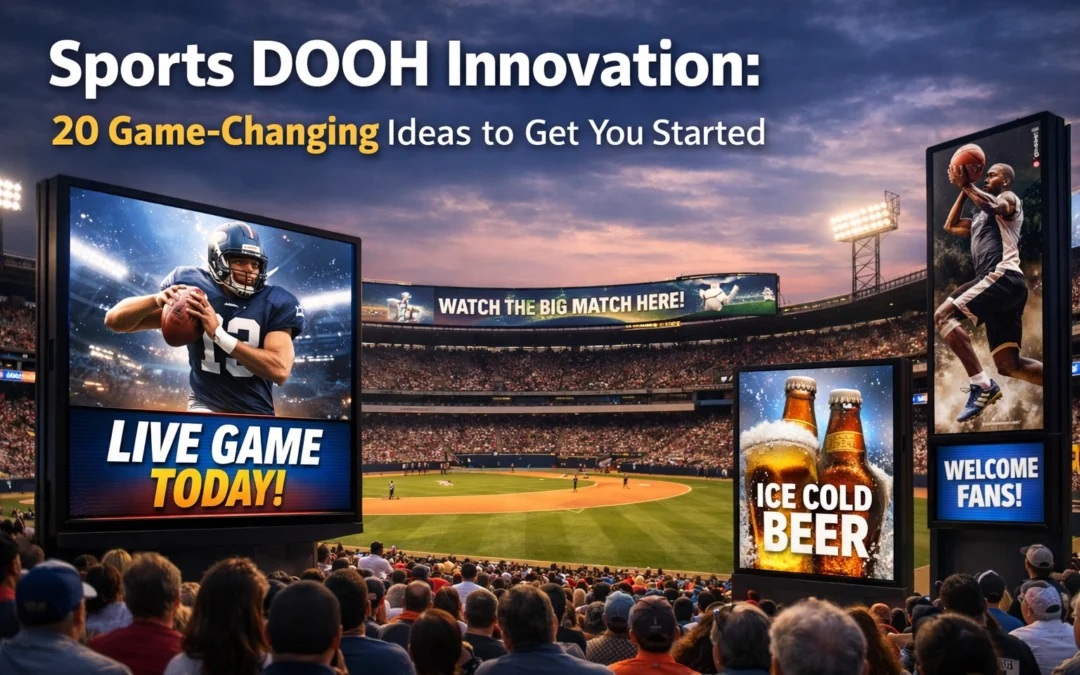
Sports DOOH advertising has evolved far beyond static billboards near stadiums. Media buyers and brand managers now have access to sophisticated tools that deliver real-time, contextually relevant messaging across the entire fan journey. The shift toward programmatic capabilities, dynamic creative optimization, and precision targeting has transformed how brands connect with sports audiences.
The following 20 ideas represent proven tactics that drive measurable results in sports DOOH campaigns. These strategies range from foundational approaches to advanced innovations, providing actionable starting points for campaigns of any scale.
Real-Time and Dynamic Content
1. Live Score Integration
Display real-time playoff scores, game countdowns, and tournament updates automatically populated into ad templates. This approach scales campaigns nationwide with minimal manual effort while maintaining contextual relevance throughout sporting events.
2. Event-Responsive Creative Pivoting
Adjust ad creative dynamically based on real-world game outcomes. Pre-event messaging transitions to celebratory content after victories, or shifts to motivational messaging following defeats. This responsiveness keeps brand messaging aligned with fan emotions.
3. Dynamic Inventory Adjustments
Automatically modify product availability, pricing, and promotional offers based on inventory levels and time of day. Restaurant brands, for example, can display different menu specials during pre-game versus post-game hours.

4. 3D Immersive Billboard Experiences
Deploy innovative 3D digital billboards featuring interactive elements that create suspense and drive social media amplification. Campaigns featuring opening shoeboxes, product reveals, or augmented reality effects generate organic sharing beyond the initial impression.
5. Automated Multi-Market Scaling
Use templated creative systems that automatically populate team names, colors, scores, and localized messaging across dozens of markets simultaneously. This reduces production costs while maintaining personalized relevance in each designated market area.
Location and Proximity Targeting
6. Stadium Surround Placements
Position screens across the complete fan journey, from residential lobbies to commute routes, tailgate areas, nearby restaurants, and stadium gates. This multi-touchpoint strategy increases frequency while reaching fans in various mindsets throughout game day.
7. Point-of-Interest Targeting
Place digital billboards strategically near arenas, venues, colleges, and universities to capture fan attention at peak engagement moments. These locations also enable device ID collection for subsequent retargeting campaigns.

8. Community Gathering Hub Activation
Activate screens at sports bars, public viewing areas, and fan festivals to reach audiences in high-engagement environments. These locations often deliver extended dwell times and group viewing dynamics that amplify brand exposure.
9. Post-Game Venue Optimization
Display congratulatory messages or limited-time offers on screens at restaurants and entertainment venues immediately following team victories. This timing capitalizes on elevated fan emotions and social activity.
10. Commute Route Domination
Identify primary transit corridors leading to major sports venues and secure screen placements along these high-traffic routes. Fans encounter brand messaging repeatedly during their journey to and from events.
Audience Engagement and Interactivity
11. Full-Funnel Retargeting Sequences
Connect in-stadium DOOH exposure with post-game CTV, digital audio, and display advertising to maintain brand presence across the fan journey. Device ID matching enables seamless transitions between out-of-home and digital channels.
12. QR Code Activation
Incorporate QR codes that direct fans to exclusive content, limited-time offers, or interactive experiences. This creates measurable engagement while transitioning audiences from physical screens to owned digital properties.

13. Live Social Media Feed Integration
Display real-time fan tweets, Instagram posts, or user-generated content directly on DOOH screens. This strategy increases engagement while providing social proof and authentic fan voices within brand messaging.
14. Countdown Timer Urgency
Deploy countdown timers for game start times, promotional deadlines, or limited availability offers. This tactic creates urgency and drives immediate action from viewers.
15. Multi-Touchpoint Sequenced Messaging
Coordinate different creative messages before, during, and after games to keep brands top-of-mind throughout the complete event experience. Sequential messaging builds narrative and reinforces key brand attributes through repeated, varied exposure.
Advanced Targeting and Personalization
16. Programmatic and Direct Buying Combinations
Blend programmatic DOOH placements with direct venue buys to reach fans near major sports facilities while maintaining creative flexibility. This hybrid approach optimizes both reach and contextual relevance.
17. Localized Messaging by Market
Tailor creative content for regional sports teams, college athletics, and minor league organizations to resonate with specific designated market areas. Team colors, local terminology, and regional references increase message relevance.
18. Game-Day Contextual Optimization
Automatically adjust ad visuals and messaging based on real-time data including weather conditions, tournament standings, and specific game locations. Contextual alignment increases engagement and brand recall.

19. Cord-Cutter and Ad-Free Subscriber Targeting
Reach audiences who avoid traditional television and subscribe to ad-free streaming services. Research indicates these segments respond more favorably to out-of-home advertising compared to CTV or linear TV exposure.
20. Influencer-Led Localized Creative
Deploy region-specific creative featuring local sports personalities, team alumni, or market-relevant influencers. This personalization strategy drives authenticity while leveraging existing fan relationships.
Measurement and Optimization
The effectiveness of these innovations depends on robust measurement frameworks. Brand lift studies consistently demonstrate the impact of strategic DOOH deployment in sports environments. Documented campaigns have achieved 80% lifts in purchase consideration, 121% increases in message association, and 103% improvements in brand favorability.
Attribution methodologies using device ID matching enable tracking of exposed audiences through conversion funnels. This data proves particularly valuable for media buyers seeking to justify DOOH investments and optimize future campaigns based on performance metrics rather than assumptions.
The cost advantages of DOOH compared to traditional television advertising, combined with the flexibility to adapt creative in real time, position these 20 strategies as foundational elements for modern sports marketing campaigns. Media buyers and brand managers can implement these tactics individually or in combination, scaling complexity based on campaign objectives and available resources.
Sports DOOH innovation continues to expand as technology platforms introduce new capabilities and measurement standards evolve. The ideas outlined here represent current best practices, providing actionable starting points for brands seeking measurable results in competitive sports marketing environments.