
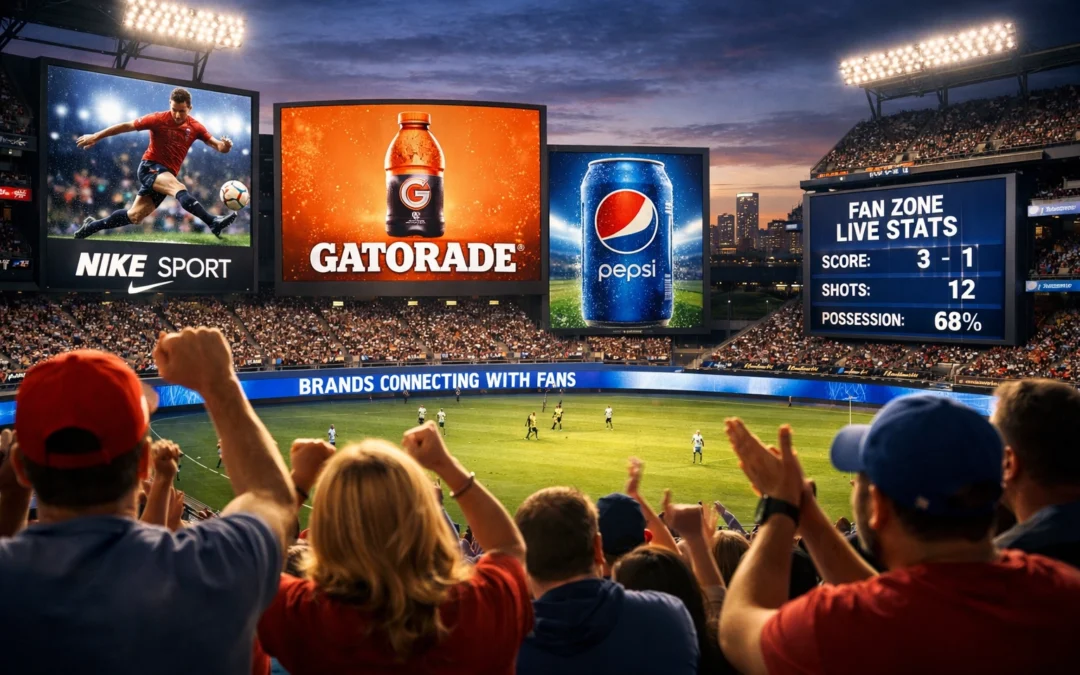
Digital out-of-home (DOOH) advertising in sports environments has evolved far beyond static billboards and pre-scheduled displays. Modern sports DOOH represents a fundamental shift in how brands reach and engage with fans, moving from broad, one-size-fits-all messaging to precision-targeted, contextually relevant campaigns that adapt in real time.
For media buyers and brand managers navigating increasingly complex advertising ecosystems, understanding these innovations is essential. The technology driving sports DOOH today enables campaigns that respond to live events, target fans based on actual behavior, and deliver measurable business outcomes that extend well beyond traditional impression metrics.
From Static Scheduling to Real-Time Responsiveness
Traditional out-of-home advertising operates on fixed schedules. A brand secures a billboard or screen, creates static creative, and runs the same message throughout the campaign period regardless of what happens in the game or around the venue.

Sports DOOH innovation disrupts this model through dynamic creative optimization (DCO). This technology allows advertisers to adapt messaging instantly based on live sporting events and real-world conditions. When a team scores, when weather changes dramatically, or when foot traffic surges unexpectedly, brands can shift creative to match the moment.
This real-time responsiveness transforms passive advertising into active participation in the cultural energy surrounding sporting events. Rather than competing for attention with generic messages, brands become part of the live experience fans are already emotionally invested in.
The implications for brand recall and engagement are significant. Contextually relevant messaging delivered at moments of peak attention generates substantially higher impact than static alternatives. A beer brand congratulating fans on a dramatic victory seconds after it happens creates a shared moment that generic advertising simply cannot replicate.
Behavioral Targeting Beyond Traditional Screen Selection
Sports DOOH has moved beyond selecting screens based solely on location demographics. Modern campaigns leverage geofencing, mobile device data, and behavioral signals to target audiences based on actual movement patterns and engagement behaviors.
This shift enables precision activation across the entire fan journey:
- Pre-event targeting in airports and transit hubs as fans arrive in host cities
- Venue proximity activation as attendees approach stadiums and arenas
- Fan zone engagement in entertainment districts where crowds gather before and after games
- Post-event messaging along high-traffic routes fans use when leaving venues
By mapping the complete fan journey rather than focusing exclusively on stadium perimeters, brands can maintain consistent presence across multiple high-intent touchpoints. A fan traveling to attend a major sporting event encounters relevant brand messaging from arrival through departure, creating repeated exposures during a period of heightened emotional engagement.
This behavioral approach also allows for audience segmentation based on movement patterns. Brands can differentiate messaging for fans attending multiple games versus casual attendees, or target business travelers passing through sports districts differently than dedicated fans making multi-day trips.
Interactive Elements and First-Party Data Collection
Modern sports DOOH incorporates interactive features that transform out-of-home from a passive viewing experience into active engagement channels. QR codes, mobile prompts, live polls, and social media integrations give fans immediate ways to respond to advertising in real time.

These interactive elements serve dual purposes. First, they deepen brand engagement by giving fans agency and participation. Second, they generate valuable first-party data that helps advertisers understand which locations, messages, and moments drive the strongest responses.
When fans scan a QR code on a DOOH display to claim a promotion or enter a contest, brands capture information about:
- Which specific screens generated the highest engagement rates
- What times of day and days of week produced optimal response
- How different creative variations performed across locations
- Which fan zones and venue approaches drove the most interaction
This data informs not just the current campaign but future sports marketing strategies. Over time, brands build sophisticated understanding of which touchpoints matter most for their specific objectives and audience segments.
The shift toward interactive DOOH also addresses a fundamental challenge in out-of-home advertising: attribution. By connecting digital engagement to physical advertising exposure, brands can trace results back to specific screens and placements with precision previously impossible in traditional OOH.
Programmatic Flexibility and Moment-Based Activation
Programmatic digital out-of-home (pDOOH) brings the flexibility of digital advertising to physical environments. Rather than committing to fixed placements weeks in advance, brands can activate messaging closer to key moments and adjust strategies based on real-world conditions.
This flexibility proves particularly valuable in sports marketing, where timing matters immensely. A brand promoting a new product during a championship series can:
- Secure premium screens near major venues in advance to guarantee inventory
- Use programmatic optimization to increase frequency during peak fan arrival times
- Adjust messaging based on game outcomes and series progression
- Scale budget toward locations showing highest engagement and foot traffic
The ability to pivot strategy mid-campaign based on performance data represents a significant evolution from traditional out-of-home buying models. Brands no longer face the choice between locking in placements early or missing prime inventory. Programmatic platforms enable both guaranteed access and flexible optimization.
This model also supports more sophisticated budget allocation. Rather than spreading spend evenly across a campaign period, media buyers can concentrate investment during moments of maximum impact, such as game days, pre-event hours, and post-victory celebrations when fan attention peaks.
Advanced Measurement Connecting Exposure to Outcomes
Perhaps the most transformative aspect of sports DOOH innovation lies in measurement capabilities that connect advertising exposure directly to real-world business outcomes.

Mobile location data enables sophisticated attribution modeling. When a DOOH campaign runs near stadium exits and retail locations, brands can measure:
- Foot traffic increases to nearby stores from exposed versus unexposed audiences
- App installation rates among device IDs that passed by activated screens
- Loyalty program enrollment spikes in specific markets during campaign periods
- Purchase behavior changes among audiences exposed to sports venue advertising
This level of measurement granularity allows media buyers to calculate return on ad spend with precision approaching digital channels. A quick-service restaurant chain running DOOH near sports venues can determine exactly how many incremental visits the campaign generated and at what average transaction value.
Brand lift studies add another measurement dimension, quantifying awareness, consideration, and preference changes among audiences exposed to sports DOOH campaigns. These studies frequently show double-digit lifts in key brand metrics, with some campaigns driving increases exceeding 100% in metrics like purchase consideration and positive brand perception.
The combination of behavioral measurement and brand impact data gives marketers comprehensive understanding of both short-term activation results and longer-term brand building effects. Sports DOOH delivers immediate traffic and engagement while simultaneously strengthening brand positioning among highly valuable fan audiences.
Strategic Implications for Brand Managers
The innovations transforming sports DOOH create several strategic opportunities for brands seeking to connect with fan audiences:
Moment marketing at scale. Real-time creative capabilities enable brands to participate in cultural moments as they happen, not hours or days later. This immediacy strengthens emotional connection and brand relevance.
Journey-based engagement. By targeting fans across multiple touchpoints throughout their event experience, brands can build frequency and reinforcement that single-location placements cannot achieve.
Data-informed optimization. Interactive features and sophisticated measurement tools provide feedback loops that improve campaign performance continuously rather than waiting for post-campaign analysis.
Flexible investment models. Programmatic platforms allow brands to test sports marketing initiatives at various scales before committing to major sponsorships or long-term placements.
For media buyers, these capabilities mean sports DOOH can now deliver outcomes that justify inclusion in omnichannel strategies alongside digital and broadcast investments. The channel offers unique advantages in reaching fans during moments of peak attention and emotional engagement while providing measurement rigor comparable to digital platforms.
Looking Forward
As sports DOOH technology continues advancing, the gap between digital and physical advertising narrows further. Brands gain increasingly sophisticated tools for targeting, creative optimization, and measurement while maintaining the scale and impact advantages that make out-of-home uniquely effective in sports environments.
The brands achieving the strongest results recognize sports DOOH not as a standalone tactic but as an integrated component of comprehensive sports marketing strategies. When combined with sponsorship activations, social media engagement, and broadcast advertising, innovative DOOH creates connective tissue that reinforces messaging across every fan touchpoint.
For organizations seeking to maximize impact in sports marketing, understanding and leveraging these DOOH innovations represents not just an opportunity but an increasingly essential capability in reaching and influencing passionate fan audiences.