
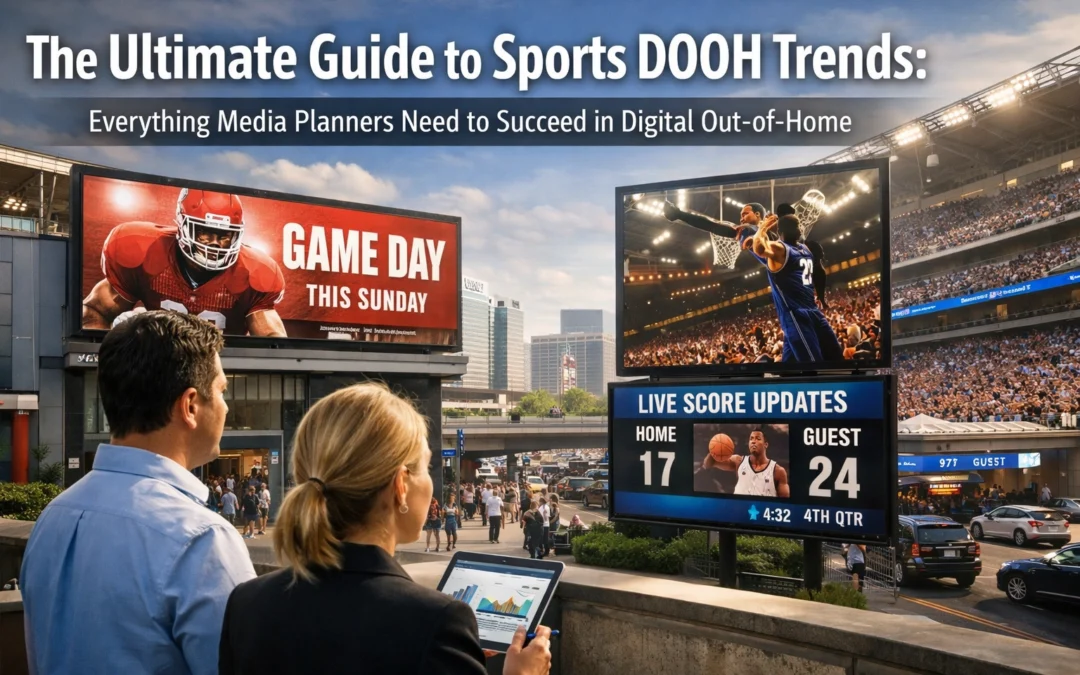
The sports advertising landscape is shifting fast, and digital out-of-home is leading the charge. If you're a media planner trying to navigate this space, you've probably noticed that what worked a few years ago isn't cutting it anymore. Fans are consuming sports differently, technology is opening up new possibilities, and the old playbook for sports marketing is getting rewritten in real time.
Here's the good news: the opportunity is massive. Nearly 60% of US adults recall seeing an OOH ad for a major sporting event, and an impressive 90% take action after seeing one, whether that's tuning in, sharing online, or talking about it with friends. But capturing that attention requires understanding where the market is headed and how to adapt your strategies accordingly.
Let's break down the trends that are reshaping sports DOOH and what media planners need to do to succeed.
The Market Is Growing, and Fast

Digital out-of-home is no longer the "nice to have" channel it once was. By 2028, DOOH will account for 45.2% of total OOH ad spending, up from just 22% in 2016. That's not incremental growth: that's a fundamental shift in how brands allocate their advertising budgets.
The physical infrastructure supporting this growth has expanded dramatically. Thousands of digital screens now surround sports venues, creating a network of touchpoints that reach fans throughout their entire journey. From the moment they leave home to their arrival at the stadium and back again, fans are encountering digital advertising in ways that were impossible just a few years ago.
This infrastructure expansion isn't limited to domestic venues either. Global events continue to introduce more digital capabilities for DOOH ads, creating opportunities for brands to engage fans on both local and international stages.
Key Trends Reshaping Sports DOOH
Multi-Screen Engagement Is the New Normal
Fans don't watch sports with their phones in their pockets anymore. About 80% of fans use a second device like a smartphone during live events, and that number jumps to 83% for Gen Z viewers. They're checking stats, chatting with friends, and following real-time action across multiple platforms simultaneously.
This behavior creates prime opportunities for DOOH campaigns. When fans are in multi-screen mode, they're highly engaged and receptive to relevant messaging. Your DOOH strategy needs to account for this split attention and work in concert with digital experiences rather than competing against them.
Pause-Based Moments Capture Maximum Attention

Commercial breaks and natural pauses in sports programming represent golden windows for brand exposure. Research shows that 92% of viewers pause for longer than 30 seconds during these moments, and 42% of sports viewers stay in the room rather than wandering off.
These pause-based engagement moments create opportunities for DOOH activations to capture attention when it's most available. Rather than fighting for eyeballs during intense game action, smart media planners are timing their DOOH campaigns to coincide with these natural breaks in the action.
Streaming Is Delivering Stronger Results
The streaming versus broadcast debate is over, and streaming won. Streaming-exclusive games delivered 66% stronger ad effectiveness than the broadcast and cable average. During major events, the gap becomes even more pronounced, with ads being up to 243% more effective in premium streaming environments versus traditional TV.
For media planners, this means rethinking where premium inventory lives. It's no longer just about securing stadium placements or broadcast slots. The most effective sports campaigns integrate DOOH with streaming and digital platforms to create cohesive, multi-channel experiences.
Activation Beats Passive Sponsorship

The days of slapping a logo on a stadium wall and calling it a day are fading fast. Brands are shifting toward creating immersive experiences through activations rather than relying solely on passive logo placement.
The most successful sports marketers are deploying what industry insiders call "lots of littles": many small, fast, platform-native activations stitched into one coherent story across the season. DOOH serves as a key activation channel for these distributed campaigns, allowing brands to show up consistently without betting everything on a single hero moment.
Strategic Recommendations for Success
Think Beyond the Stadium
Your brand doesn't need an exclusive sponsorship deal to participate in sports conversations. Premium DOOH options now reach sports audiences across their complete journey, not just at the venue but along the way. Digital infrastructure supports dynamic, location-based campaigns that can target fans wherever they are.
Stadium perimeter targeting and geo-based strategies allow brands to create relevant touchpoints without paying for official sponsorship rights. The key is understanding fan behavior patterns and placing your message where attention is already focused.
Leverage Behavioral Data for Personalization
Generic sports messaging doesn't cut through anymore. The most successful campaigns use real-time behavioral insights to understand how target fans engage with their favorite teams across preferred channels and time messaging accordingly.
Major sports organizations collect millions of data points to deliver personalized content across email, apps, and web platforms. Media planners should deploy similar behavioral data strategies to ensure DOOH campaigns reach the right audiences with relevant messages at optimal times.
Integrate DOOH with Owned Digital Channels
Sports apps and owned media provide deeper audience insight and engagement opportunities. Building campaigns that connect DOOH touchpoints with owned platforms creates cohesive experiences that move fans through the entire journey from awareness to action.
When DOOH campaigns integrate with dedicated apps where fans access exclusive content and gamified experiences, brands can track high-intent user behavior and chart the complete fan journey. This integration provides the data needed to continuously optimize campaign performance.
Prioritize Content Sequencing and Format
DOOH creative works best when designed for short-form distribution and built to be inherently shareable. Structure your creative to work as standalone moments and social content, not just traditional advertising.
The most effective sports DOOH campaigns achieve cultural relevance at scale because they're built for how fans actually consume and share content. Jersey reveals, stadium takeovers, and city-scale moments naturally travel through social feeds when the creative is designed with that distribution in mind.
Capitalize on Continuous Sports Programming
With major sports programming happening year-round, plus marquee events that draw massive audiences, media planners have continuous opportunities to reach engaged fans. The key is maintaining presence across both physical and digital touchpoints throughout the season rather than going dark between big moments.
Programmatic DOOH capabilities enable brands to activate and adjust campaigns quickly, responding to game outcomes, player performances, and cultural moments as they unfold. This agility is essential for staying relevant in fast-moving sports conversations.
Moving Forward
Sports DOOH success requires moving beyond one-off sponsorships toward integrated, multi-screen strategies that meet fans where they are, both physically and digitally. The brands winning in this space are deploying timely, relevant activations that feel native to how fans actually consume sports.
The infrastructure is in place, the audience is engaged, and the measurement capabilities are more sophisticated than ever. The question isn't whether sports DOOH should be part of your media plan. It's whether you're ready to adapt your approach to capture the opportunity that's already here.
The playbook is changing. Make sure your strategy changes with it.