
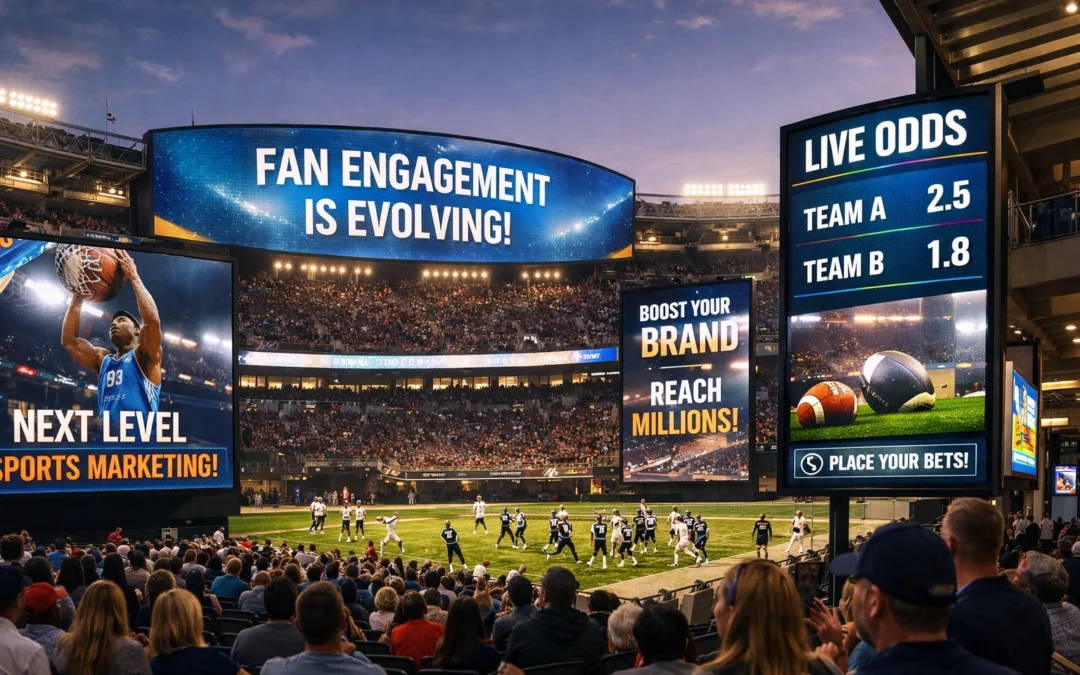
Sports DOOH innovation has become the focus of forward-thinking media buyers and brand managers for a straightforward reason: the convergence of expanded infrastructure, precise targeting technology, and massive global sporting events has created an unprecedented opportunity for brands to reach highly engaged audiences at scale.
Digital out-of-home advertising in sports contexts is no longer limited to static billboards surrounding stadiums. The category now encompasses thousands of digital screens in airports, transit hubs, fan zones, entertainment districts, and venue perimeters, all capable of displaying dynamic, real-time messaging that responds to game outcomes, weather shifts, and audience behavior patterns.
The Infrastructure Advantage
The physical landscape for sports DOOH has transformed substantially. Sports venues and their surrounding environments now feature digital screen networks numbering in the thousands, creating multiple touchpoints throughout the fan journey. This infrastructure expansion coincides with a calendar packed with major sporting events, including FIFA World Cups, Olympic Games, and continuous professional league programming across the NFL, NBA, NHL, and college athletics.

Major global events create concentrated audience movement patterns. The FIFA World Cup alone generates more than five million attendees across matches and fan zones, with billions watching worldwide. These events produce predictable foot traffic in specific geographic zones, making location-based targeting highly effective. Unlike traditional media buys that cast a wide net, sports DOOH allows brands to concentrate spend in high-intent environments where audiences are already primed for engagement.
The scale extends beyond event days. Fans congregate in sports bars, retail districts, and transit corridors for weeks surrounding major tournaments and playoff seasons. This extended engagement window provides multiple impression opportunities throughout the customer journey.
Proven Audience Response Patterns
Data supporting DOOH effectiveness in sports contexts demonstrates measurable impact across awareness, engagement, and conversion metrics. Nearly six in ten fans recall seeing OOH advertising around major sporting events. More significantly, over 90 percent of those who notice these ads take a follow-up action, whether visiting a website, searching for more information, or making a purchase.
Economic impact data reveals that 99 percent of attendees who see OOH advertising before attending a game spend money locally, creating opportunities for both national brands and regional businesses. Additionally, 42 percent of consumers discuss sporting events with friends or family after seeing OOH ads, amplifying reach through organic word-of-mouth beyond the initial impression.
These behavioral patterns indicate that sports audiences are receptive to brand messaging in venue-adjacent environments. The context matters. Fans encountering ads while traveling to games, gathering at sports bars, or navigating fan zones are in a mindset conducive to brand recall and action.
Technology Enabling Real-Time Adaptation
The technical capabilities driving sports DOOH innovation center on three core functions: dynamic creative optimization, programmatic buying, and location-based triggering.
Dynamic Creative Optimization (DCO) allows advertisers to modify messaging based on real-time inputs. A campaign can display different creative depending on whether the home team wins or loses, whether rain delays a match, or whether foot traffic patterns indicate crowds are moving toward specific venue entrances. This responsiveness keeps messaging relevant and timely.

Programmatic digital OOH (pDOOH) introduces automation and data-driven buying to the category. Rather than purchasing screen inventory through manual negotiations weeks in advance, programmatic platforms enable advertisers to activate screens based on audience conditions. Campaigns can scale up during peak engagement windows or redirect spend toward higher-performing locations as data accumulates.
Geofencing and device data integration extend targeting precision beyond screen selection. Advertisers can trigger ads when specific audience segments enter defined geographic zones or correlate DOOH exposure with mobile device IDs for attribution and retargeting. This closed-loop measurement connects outdoor impressions to downstream actions like app downloads, store visits, and online purchases.
Strategic Implications for Campaign Planning
The capabilities of modern sports DOOH require adjustments to traditional campaign planning frameworks. Success in this environment prioritizes quality of placement over broad reach, dynamic creative over static messaging, and integration across channels rather than isolated executions.
Location and Timing Over Volume
Effective sports DOOH strategies focus on premium environments where attention converts. High-value placements include airport terminals where traveling fans spend extended dwell time, transit hubs serving stadium routes, entertainment districts adjacent to venues, and fan zones hosting pre-game and post-game gatherings.
Timing activations around key moments amplifies impact. Campaigns that activate during playoff runs, championship games, or tournament finals benefit from heightened audience attention and emotional investment. The goal is not omnipresence but strategic visibility during moments when sports audiences are most receptive.
Context-Aware Creative Development
Static creative underperforms in sports DOOH contexts. Audiences expect messaging that reflects the live nature of sporting events. Incorporating real-time elements like game scores, player statistics, or match countdowns increases relevance and engagement.

Interactive features transform passive impressions into active participation. QR codes enabling mobile app downloads, SMS prompts for exclusive offers, and live polls inviting fan opinions create pathways from awareness to action. These engagement mechanisms also generate first-party data for remarketing and attribution.
Mixed reality and augmented reality integrations allow brands to create immersive experiences without physical installations. A campaign can overlay digital content onto physical environments through mobile devices, making it possible to localize messaging by city, team, or player without producing multiple physical builds.
Execution Framework for Sports DOOH Campaigns
Translating strategy into execution requires attention to planning timelines, creative flexibility, and measurement infrastructure.
Advance Planning with Programmatic Flexibility
Premium screen inventory surrounding major sporting events experiences high demand. Securing desirable placements requires advance commitments, particularly for marquee events like championship finals or international tournaments. However, locking in all inventory upfront limits the ability to respond to emerging opportunities.
A balanced approach combines reserved buys for guaranteed premium placements with programmatic allocations that activate based on real-time conditions. This structure provides baseline presence while maintaining flexibility to capitalize on unexpected moments like underdog victories, record-breaking performances, or viral social media trends connected to the event.
Omnichannel Integration
Sports DOOH functions most effectively as part of a coordinated media strategy rather than a standalone tactic. Modern sports sponsorships span broadcast television, streaming platforms, social media, and physical environments. DOOH should connect to other touchpoints in the customer journey.
For example, a DOOH campaign promoting a mobile app can retarget users who passed exposed screens with mobile display ads, reinforcing the message and providing another conversion opportunity. Similarly, DOOH creative can drive traffic to landing pages optimized for mobile, where users can complete actions initiated by the outdoor impression.
This integration extends to content strategy. Brands succeeding in sports marketing increasingly act as publishers, creating highlight clips, player interviews, and behind-the-scenes content that lives across platforms. DOOH can promote this content, driving audiences from physical environments to digital properties where deeper engagement occurs.
Measurement and Attribution
Demonstrating ROI requires establishing clear measurement frameworks before campaigns launch. Key metrics include brand lift studies measuring shifts in awareness and preference, foot traffic analysis tracking store visits among exposed audiences, and device-level attribution connecting DOOH impressions to app downloads or online purchases.
Brand lift studies should measure specific attitudinal changes like aided awareness, message association, and purchase intent. Comparing these metrics between exposed and control groups quantifies campaign impact beyond impression delivery.
Foot traffic measurement uses aggregated, anonymized mobile location data to determine whether individuals exposed to DOOH ads subsequently visit advertised locations. This metric proves particularly valuable for retail, restaurant, and entertainment brands seeking to drive physical visits.
Device-level attribution connects outdoor impressions to digital actions. By correlating device IDs that passed DOOH screens with subsequent app installations, website visits, or online purchases, advertisers can calculate cost-per-acquisition and compare DOOH performance to other digital channels.
The Opportunity Ahead
Sports DOOH innovation represents a maturation of out-of-home advertising from a broadcast medium into a targeted, measurable, and dynamic channel. The combination of expanded infrastructure, advanced technology, and concentrated audience attention around sporting events creates conditions favorable for brands willing to invest in strategic, well-executed campaigns.
For media buyers and brand managers evaluating their next sports marketing initiative, the question is not whether to include DOOH but how to deploy it most effectively. Brands that prioritize premium placements, develop context-aware creative, integrate across channels, and establish rigorous measurement frameworks will capture the attention of highly engaged sports audiences during moments when their receptivity to brand messaging peaks.
The interactive features now available through DOOH platforms enable sports marketing campaigns that move beyond passive impressions toward active engagement, creating opportunities to convert awareness into measurable business outcomes.