
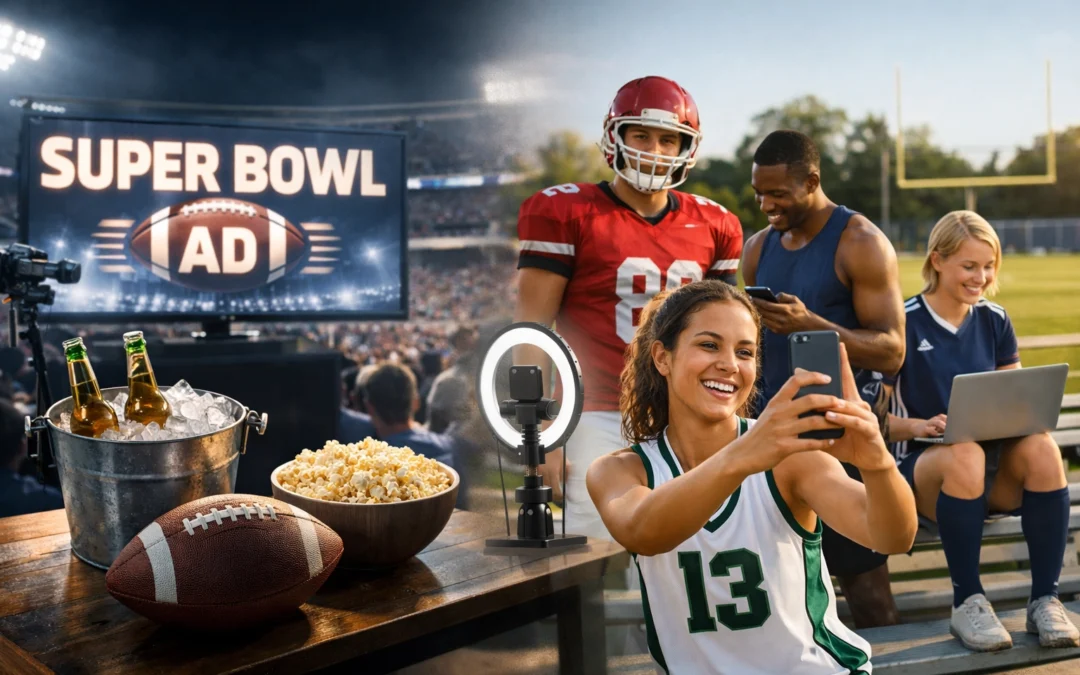

Traditional Super Bowl advertising is not dead, but the landscape has shifted dramatically. A 30-second broadcast spot still costs upwards of $7 million, yet audiences have fragmented across platforms in ways that make a single broadcast moment insufficient. Brands now face a challenge: how to reach diverse, mobile-first audiences who consume content on TikTok, Instagram, X, and YouTube rather than sitting through commercial breaks.
The answer is emerging from an unexpected source. Over 20,000 student-athletes, empowered by Name, Image, and Likeness (NIL) rights, represent a new frontier in Super Bowl marketing that extends far beyond the broadcast window.
The Audience Fragmentation Problem
Media buyers preparing for major events face a fundamental shift. Different platforms drive different conversations. X dominates sports betting discourse. Instagram and TikTok control cultural conversation. Traditional broadcast reaches fewer viewers each year, particularly among younger demographics who represent the highest lifetime value customers.
A single celebrity endorsement no longer carries a message across fragmented audiences. Brands must deploy multi-platform strategies that account for how different demographics consume content, when they engage, and which voices resonate most authentically.

This fragmentation creates both risk and opportunity. Risk, because a $7 million broadcast spot reaches a smaller percentage of target audiences than in previous decades. Opportunity, because authentic, platform-native content can outperform traditional advertising when executed with the right voices.
The Student-Athlete Advantage
Student-athletes represent a unique asset for media buyers. With NIL rights now established, over 20,000 college athletes across multiple sports provide access to diverse, engaged audiences. These athletes are not traditional influencers. They represent authentic community voices with built-in local and regional followings.
The strategic value extends beyond follower counts. Student-athletes connect with:
- Local and regional communities with high engagement rates
- Alumni networks that span demographics and income levels
- Sports fans who consume content across multiple platforms
- Younger audiences who prioritize authenticity over celebrity endorsement
Each athlete brings a distinct audience profile. A basketball player at a major university reaches a different demographic than a volleyball player at a regional school. This diversity allows media buyers to construct campaigns that reach overlapping audiences without redundant messaging.
https://www.youtube.com/watch?v=l6J-0zileKE
How the Platform Works
The NIL platform provides media buyers with access to a network of over 20,000 verified student-athletes. Campaign activation follows a structured process designed for speed and scale.
Media buyers define target demographics, geographic markets, and campaign objectives. The platform matches campaigns with appropriate athletes based on audience alignment, engagement metrics, and content style. Athletes create platform-native content, from Instagram Stories to TikTok videos to X posts, that promotes brand messaging while maintaining their authentic voice.

This approach differs fundamentally from traditional influencer marketing. Student-athletes are not paid to pretend enthusiasm for products. They receive compensation for authentic endorsements that align with their personal brand and audience expectations. The result is content that performs better because it reads as genuine rather than scripted.
Campaigns can activate within 48 hours. For Super Bowl marketing, this speed allows brands to respond to cultural moments, adjust messaging based on real-time engagement data, and extend campaigns beyond the single broadcast window.
Measurable Outcomes and Attribution
The platform provides detailed performance metrics. Media buyers track impressions, engagement rates, click-through rates, and conversion data across all athlete posts. Device ID tracking allows for audience retargeting and attribution to in-store visits or online purchases.
Brand lift studies measure changes in awareness, consideration, and preference before and after campaigns. These metrics demonstrate ROI beyond vanity metrics like impressions or likes. Media buyers can quantify how student-athlete content drives actual business outcomes.

Recent campaigns demonstrate the impact. Brands activating student-athlete networks for major sporting events see engagement rates that exceed traditional influencer campaigns by significant margins. The authenticity factor drives both engagement and conversion, particularly among demographics that are increasingly skeptical of traditional advertising.
Integration with Broader Super Bowl Strategy
Student-athlete content does not replace traditional Super Bowl advertising. It amplifies and extends it. A brand investing in a broadcast spot can activate hundreds of student-athletes to create complementary content before, during, and after the game.
This creates the "halo effect" that modern Super Bowl marketing requires. Rather than relying on a single broadcast moment, brands build multi-week campaigns that generate sustained buzz. Student-athletes post teaser content in the weeks leading up to the game, live reactions during the event, and follow-up content that extends the conversation.
The geographic distribution of student-athletes provides another advantage. Brands can target specific markets based on venue proximity or regional campaign objectives. A brand activating around the Super Bowl in New Orleans can prioritize athletes from Louisiana schools, SEC conference teams, and regional markets within driving distance of the venue.
Cost Efficiency and Scalability
Activating 100 student-athletes costs significantly less than a single broadcast spot while reaching audiences that traditional advertising struggles to engage. The platform allows media buyers to scale campaigns based on budget and objectives.
Small to mid-size brands that cannot justify $7 million for 30 seconds of broadcast time can still participate in Super Bowl marketing. By activating targeted groups of student-athletes, these brands reach relevant audiences without competing for broadcast inventory.
Larger brands use student-athlete networks to extend reach beyond broadcast limitations. Rather than choosing between broadcast and digital, these brands deploy integrated campaigns that leverage both traditional and athlete-driven content for maximum impact.
Authenticity as Competitive Advantage
The most significant advantage student-athletes provide is authenticity. Audiences, particularly younger demographics, have developed sophisticated filters for inauthentic marketing. A scripted celebrity endorsement reads differently than a college athlete sharing genuine excitement about a brand they actually use.
Student-athletes live in their communities. They attend classes, participate in campus events, and maintain real relationships with their followers. When they endorse a brand, it carries weight that celebrity endorsements increasingly lack.
This authenticity translates to performance. Content from student-athletes generates higher engagement rates, longer view times, and stronger conversion metrics than equivalent content from traditional influencers or brand channels.

The Future of Event Marketing
As media consumption continues to fragment, event marketing must evolve. The Super Bowl remains the largest single advertising moment in sports, but the game itself represents only one component of a successful campaign.
Student-athletes, empowered by NIL rights, provide media buyers with a scalable, authentic, and measurable solution. The platform connecting over 20,000 athletes with brands represents a fundamental shift in how major events are marketed to fragmented audiences.
Traditional Super Bowl ads are not dead. They are transforming. Brands that integrate broadcast moments with authentic, athlete-driven content across platforms will outperform competitors relying solely on the traditional model. The 20,000 student-athletes now available through NIL partnerships represent the infrastructure this transformation requires.
Media buyers preparing for Super Bowl campaigns have a choice. They can invest exclusively in traditional broadcast inventory and hope for impact. Or they can build integrated campaigns that leverage authentic student-athlete voices to reach audiences wherever they consume content. The data increasingly supports the latter approach.