
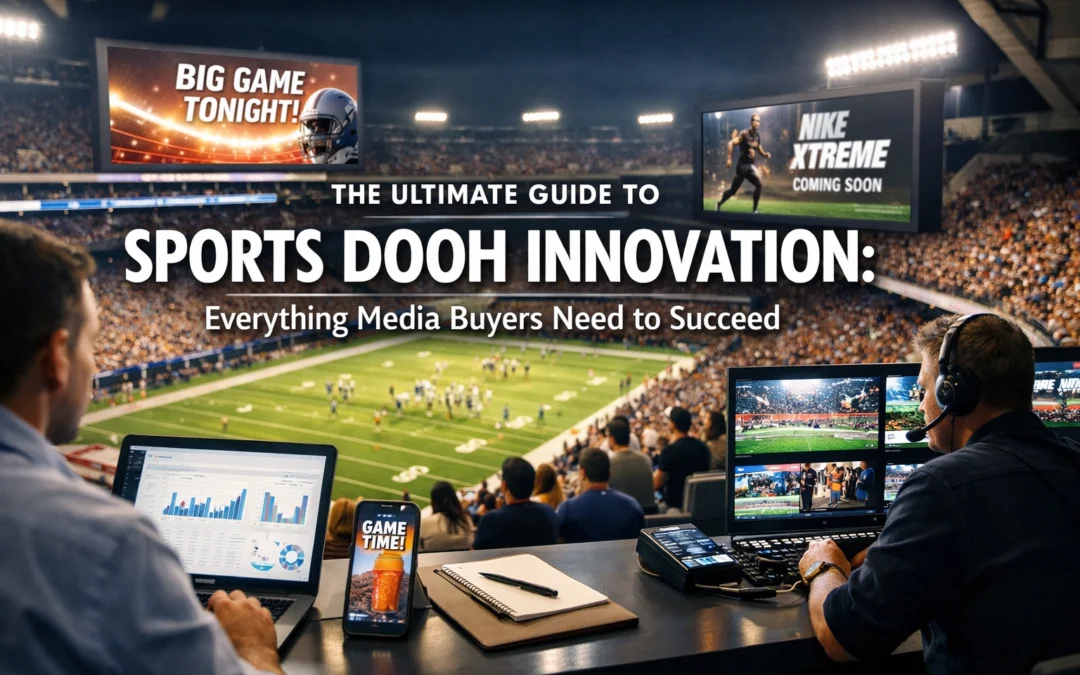
Digital out-of-home advertising has evolved from static billboards into a sophisticated, data-driven channel capable of delivering targeted, measurable campaigns. For media buyers focused on sports marketing, DOOH represents a strategic opportunity to reach highly engaged audiences during moments of peak emotional connection and community energy.
This guide examines the core strategies, technologies, and execution tactics that define successful sports DOOH campaigns, providing media buyers and brand managers with a framework to maximize return on investment while navigating an increasingly complex advertising landscape.
Strategic Advantages of Location-Based Sports Targeting
DOOH captures sports audiences at critical moments throughout the fan journey. Unlike traditional broadcast channels that compete for divided attention, DOOH engages fans in physical environments where sports enthusiasm concentrates naturally. These locations include stadium perimeters, sports bars, public viewing areas, and neighborhoods surrounding venues.

The precision of location-based targeting allows brands to deploy campaigns where fan passion peaks. National advertisers gain access to concentrated audiences across multiple markets, while regional and local brands can reach specific geographic segments without requiring the infrastructure or budgets typically associated with major sports sponsorships.
The temporal advantage of DOOH extends beyond game-day activation. Traditional broadcast spots create brief impression windows, but DOOH maintains brand presence before, during, and after events. This sustained visibility meets fans at every stage of their game-day experience, from pre-game anticipation through post-game discussion and analysis.
Building Integrated Omnichannel Campaigns
Effective sports DOOH functions as a component within broader omnichannel strategies rather than as an isolated tactic. The optimal campaign architecture sequences multiple touchpoints to guide audiences through the marketing funnel.
Upper-funnel awareness campaigns typically begin with connected TV or social media placements that introduce brand messaging before major sporting events. This initial exposure establishes recognition and primes audiences for subsequent interactions.
Mid-funnel activation occurs through high-impact DOOH placements deployed when excitement and foot traffic reach maximum levels. These placements reinforce the brand narrative at moments when audience receptivity is highest and purchase consideration is most actionable.

Lower-funnel conversion tactics include post-event retargeting through CTV, digital audio, or display advertising. This sequencing maintains brand visibility after the emotional peak of live sports, driving consideration during more deliberate purchase decision phases.
This approach mirrors actual consumption patterns, where sports fans engage across multiple screens, platforms, and physical locations throughout the game-day experience. Each touchpoint reinforces messaging while accommodating different contexts and mindsets.
Programmatic DOOH and Dynamic Content Delivery
Programmatic DOOH represents the technological frontier for sports marketing innovation. The platform enables real-time content synchronization with live game updates, scoring changes, and event milestones, creating a sense of immediacy and relevance that static advertising cannot match.
Practical applications include updating creative to highlight product availability at nearby retail locations, integrating social media content and live scores, launching ads immediately following significant game moments, and delivering location-specific messaging that responds to game outcomes or weather conditions.
For regional brands, programmatic capabilities level competitive dynamics by providing flexible, cost-efficient access to premium inventory in targeted geographic areas. The technology removes traditional barriers associated with long-term commitments and minimum spend requirements, allowing mid-market advertisers to compete effectively in high-value sports environments.
Real-time optimization capabilities enable media buyers to adjust campaigns based on performance data, audience engagement metrics, and external factors such as weather or attendance levels. This responsiveness maximizes efficiency while minimizing wasted impressions.
Emerging Technologies Expanding Engagement Opportunities
Beyond programmatic capabilities, sports DOOH is incorporating augmented reality, virtual reality, and artificial intelligence to create interactive brand experiences that extend beyond passive viewing.

Augmented reality filters and virtual experiences allow fans to engage with brands through their mobile devices while in proximity to DOOH displays. These interactions create shareable content that amplifies reach through organic social distribution.
Virtual reality implementations enable immersive fan experiences and virtual watch parties that build emotional connections even when physical attendance is not possible. These technologies proved particularly valuable during periods of restricted venue capacity and continue to offer engagement opportunities for distributed audiences.
AI-driven personalization delivers hyper-targeted content to specific audience segments based on demographic data, behavioral patterns, and real-time contextual factors. Advanced analytics platforms process multiple data streams to optimize creative selection, placement timing, and frequency management.
These technologies transform DOOH from a broadcast medium into an interactive platform capable of two-way communication between brands and consumers. The shift creates opportunities for data collection, audience insights, and attribution measurement that were previously unavailable in traditional out-of-home advertising.
Tactical Planning and Inventory Management
Successful sports DOOH execution requires strategic planning aligned with the sports calendar and inventory availability cycles. High-demand screens near stadiums and fan zones typically sell out months in advance, particularly for championship games, playoff series, and major tournaments.
Media buyers should secure premium inventory early as part of broader seasonal strategies that span multiple events rather than isolated games. This approach provides cost advantages through volume commitments while ensuring access to optimal placements during peak demand periods.

Coordination with sports teams, venue operators, and local partnerships can maximize authentic community engagement while providing access to exclusive inventory. These relationships often yield creative collaboration opportunities that enhance campaign relevance and fan receptivity.
For national sporting events that attract widespread attention, inventory competition intensifies significantly across all major markets. Advance reservations become essential for brands seeking prominent placement during these high-profile moments.
Measurement Frameworks and Performance Attribution
Connecting DOOH placements to measurable business outcomes requires sophisticated attribution methodologies that link exposure to downstream actions. Geographic targeting enables foot traffic analysis that correlates audiences near DOOH displays with actual store visits or venue entries.
Data-driven retargeting allows brands to identify device IDs exposed to DOOH ads and serve follow-up messages across digital channels. This cross-platform tracking creates closed-loop measurement systems that quantify DOOH's role in the conversion path.
Real-time performance tracking of programmatic campaigns provides continuous optimization feedback, enabling media buyers to adjust targeting parameters, creative rotation, and budget allocation based on observed engagement patterns.
Attribution modeling ties DOOH impressions to specific outcomes through multi-touch analysis that accounts for all customer touchpoints across the journey from awareness to conversion. Integration with CTV, digital audio, and display channels enables comprehensive funnel tracking that quantifies DOOH's incremental contribution.
Budget Flexibility and Market Democratization
DOOH removes traditional barriers that restricted sports advertising to major national brands with substantial budgets. The channel's flexibility allows regional sports marketing focused on college athletics, minor league teams, or local sporting events to achieve meaningful reach within designated market areas.
Programmatic access eliminates minimum spend requirements that previously made premium sports inventory inaccessible to mid-market advertisers. Brands can deploy test campaigns with modest budgets, gather performance data, and scale investment based on proven results rather than committing large sums upfront.
This democratization expands the competitive landscape while providing smaller brands with tools previously available only to major corporations. The shift creates opportunities for authentic, localized messaging that resonates with specific fan communities rather than relying on broad national narratives.
For media buyers managing diverse client portfolios, DOOH's budget flexibility enables sports marketing strategies across multiple budget tiers. Premium national campaigns and targeted regional activations can operate simultaneously within a unified strategic framework, maximizing total addressable market coverage while maintaining cost efficiency.
The evolution of sports DOOH from simple billboard placements to sophisticated, data-driven platforms has created new opportunities for brands to connect with passionate fan audiences. Media buyers who master the strategic fundamentals, leverage emerging technologies, and implement rigorous measurement frameworks position their clients to capitalize on one of advertising's most dynamic and engaging channels.