
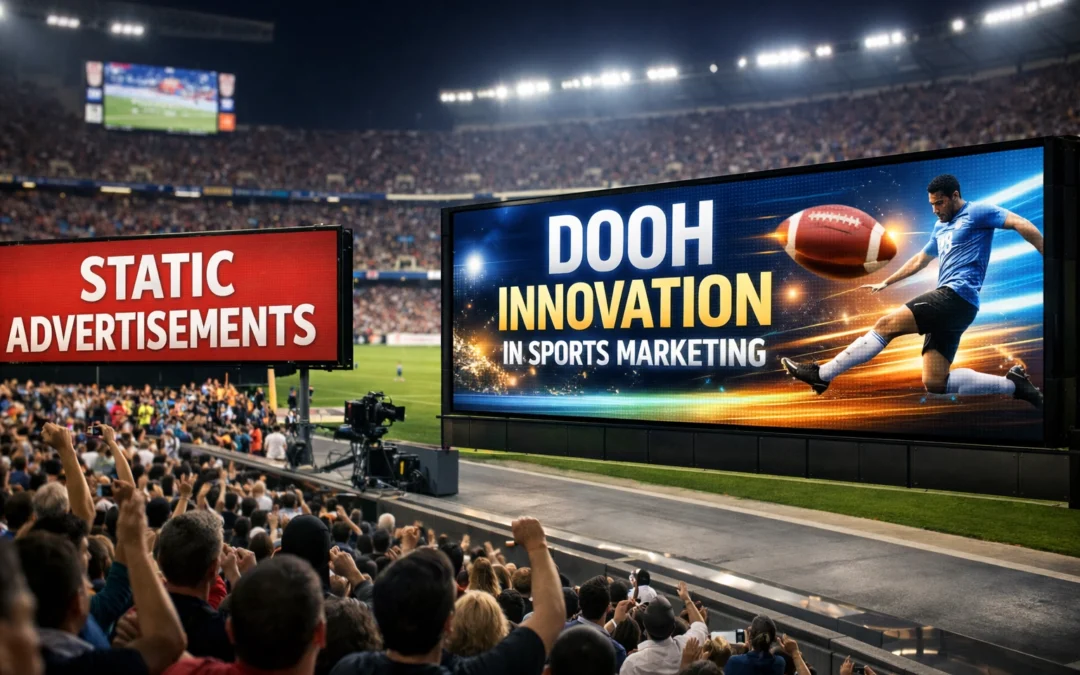
Static stadium advertising is not entirely dead, but it is rapidly becoming obsolete. Digital out-of-home (DOOH) technology has fundamentally altered the landscape of sports marketing, offering capabilities that fixed signage simply cannot match. For media buyers and brand managers navigating this transition, understanding the mechanics and advantages of DOOH innovation is no longer optional.
The Shift from Static to Dynamic
Traditional static stadium placements operate on a simple model: a brand secures a fixed location, produces physical signage, and that message remains unchanged for the duration of a contract period. This approach lacks flexibility and fails to capitalize on the dynamic nature of live sports.
DOOH technology replaces this rigidity with adaptability. Programmatic digital out-of-home (pDOOH) enables real-time message updates that respond to game conditions, crowd behavior, and external factors. When a team scores, when weather conditions shift, or when foot traffic patterns change, messaging can adapt instantly to match the moment.

Programmatic DOOH: The Core Technology Shift
Programmatic DOOH represents the most significant transformation in sports advertising infrastructure. Rather than negotiating fixed placements months in advance, media buyers can now purchase inventory that adjusts based on real-time data inputs.
The pDOOH model functions through automated bidding systems that allow advertisers to target specific moments, audiences, and conditions. This creates several distinct advantages:
- Inventory can be purchased closer to game time, reducing planning cycles and allowing for campaign adjustments based on team performance or cultural momentum
- Creative assets update automatically based on triggers such as score changes, time of day, or audience composition
- Budget allocation becomes more efficient, with spend concentrated on high-value moments rather than distributed evenly across all game time
Dynamic Creative Optimization (DCO) extends this capability further. Advertisers deploy multiple creative variations, and the system selects the most appropriate version based on contextual factors. A beverage brand might display different messaging at halftime versus post-game, or adjust creative based on temperature readings outside the venue.
Virtual and AI-Rendered Signage
Physical signage installation imposes constraints on both placement options and change frequency. Virtual signage technology eliminates these limitations entirely.
AI-rendered signage overlays digital advertisements onto broadcast feeds and in-venue displays without requiring physical installation. This approach creates several operational advantages:
- New ad placements can be introduced without venue modifications or construction delays
- Messaging changes instantly across multiple screens and camera angles
- Leagues generate incremental revenue from virtual inventory that does not compete with physical placements
- Ads appear at natural moments in gameplay rather than requiring disruptive commercial breaks
Virtual signage also enables geo-targeted messaging. Broadcast viewers in different regions see different advertisements during the same live event, maximizing relevance for local or regional campaigns.

Extended Visibility Beyond Game Day
Stadium advertising extends far beyond the venue itself. DOOH placements surrounding sports facilities capture audiences during extended campaign windows that span weeks rather than hours.
A four-week billboard placement near a stadium engages not only game-day attendees but also daily commuters, local residents, and workers passing the location repeatedly. This sustained exposure generates cumulative brand awareness that significantly exceeds the reach of in-game placements alone.
Strategic placement around stadium exits, transit stations, and parking areas captures audiences during high-attention moments. Post-game emotional states create receptivity to messaging that leverages the excitement, disappointment, or celebration fans just experienced.
Measurement Precision and Attribution
Traditional static advertising offered limited measurement beyond estimated impressions based on attendance figures. DOOH technology provides granular performance data that connects exposure to measurable outcomes.
Geo-fencing technology tracks mobile devices exposed to DOOH placements, creating audience segments for retargeting and measurement. This approach reveals:
- Foot traffic to retail locations following ad exposure
- Website visits and app downloads attributed to specific placements
- Time spent in proximity to advertised locations
- Cross-channel behavior patterns among exposed audiences
Mobile location data demonstrates how ads placed near specific venue exits or transit lines influenced real-world visits to stores, restaurants, or other advertised destinations. Attribution models connect DOOH exposure to conversion events, providing ROI calculations that were previously impossible with static placements.

Interactive Elements and First-Party Data
DOOH technology transforms passive advertising into active engagement channels. Interactive elements embedded in digital placements create two-way communication between brands and audiences.
Common interactive approaches include:
- QR codes linking to mobile experiences, exclusive content, or promotional offers
- Live polling and voting displayed in real-time on stadium screens
- Gamification elements that reward participation with prizes or recognition
- Mobile prompts encouraging photo sharing or social media engagement
These interactive moments serve dual purposes. They enhance fan experience and entertainment value while simultaneously generating first-party data. Brands capture contact information, preference data, and behavioral insights from willing participants rather than relying solely on third-party data sources.
Augmented reality overlays add another dimension to interactive DOOH. Fans pointing smartphones at digital placements unlock additional content, 3D product visualizations, or immersive brand experiences that extend beyond the physical advertisement.
The Success Formula for Modern Sports Marketing
Effective DOOH sports marketing requires balancing strategic planning with tactical flexibility. The most successful campaigns employ a hybrid approach:
Strategic Foundation:
- Secure high-value inventory early through direct partnerships with venues and leagues
- Establish baseline messaging and brand positioning that remains consistent
- Build creative asset libraries with multiple variations ready for deployment
Tactical Execution:
- Reserve budget allocation for real-time activations closer to game day
- Deploy dynamic creative that responds to live game conditions and cultural moments
- Target audiences based on actual movement patterns and venue proximity
- Adjust spending based on team performance, playoff positioning, and fan engagement levels
Measurement and Optimization:
- Track mobile behavior among exposed audiences to measure real-world impact
- Compare performance across different placements, venues, and game conditions
- Build attribution models connecting exposure to conversion events
- Refine targeting parameters based on performance data from previous activations

Technology Infrastructure Requirements
Implementing sophisticated DOOH campaigns requires integration with several technology platforms. Media buyers should evaluate partnerships with:
- Demand-side platforms (DSPs) specializing in programmatic DOOH inventory
- Data management platforms (DMPs) for audience segmentation and targeting
- Creative management platforms supporting dynamic creative optimization
- Attribution and measurement partners offering location-based analytics
The complexity of this infrastructure often necessitates working with specialized agencies or partners experienced in DOOH sports marketing rather than attempting to build capabilities in-house.
Budget Allocation Considerations
The shift toward DOOH does not eliminate the value of all traditional sponsorships. The optimal approach combines long-term brand positioning through naming rights and major sponsorships with flexible DOOH spending that capitalizes on specific moments and opportunities.
A balanced allocation might reserve 60-70% of budget for foundational sponsorships and guaranteed placements, while maintaining 30-40% for programmatic DOOH activations that respond to real-time conditions. This structure provides both stability and agility.
The Competitive Landscape
Early adopters of DOOH technology gain significant advantages in cluttered sports marketing environments. As more brands shift toward dynamic, moment-responsive campaigns, static placements become increasingly invisible to audiences accustomed to relevant, contextual messaging.
The transition period creates opportunity for media buyers willing to invest in new capabilities. Audiences trained by personalized digital experiences expect the same relevance from physical advertising. Brands delivering static, unchanging messages in dynamic sports environments risk appearing outdated regardless of placement quality or visibility.
Sports marketing continues evolving toward greater precision, flexibility, and measurability. DOOH technology provides the infrastructure enabling this evolution. For media buyers and brand managers, the question is not whether to adopt these capabilities, but how quickly to integrate them into existing strategies before competitive disadvantage becomes irreversible.