
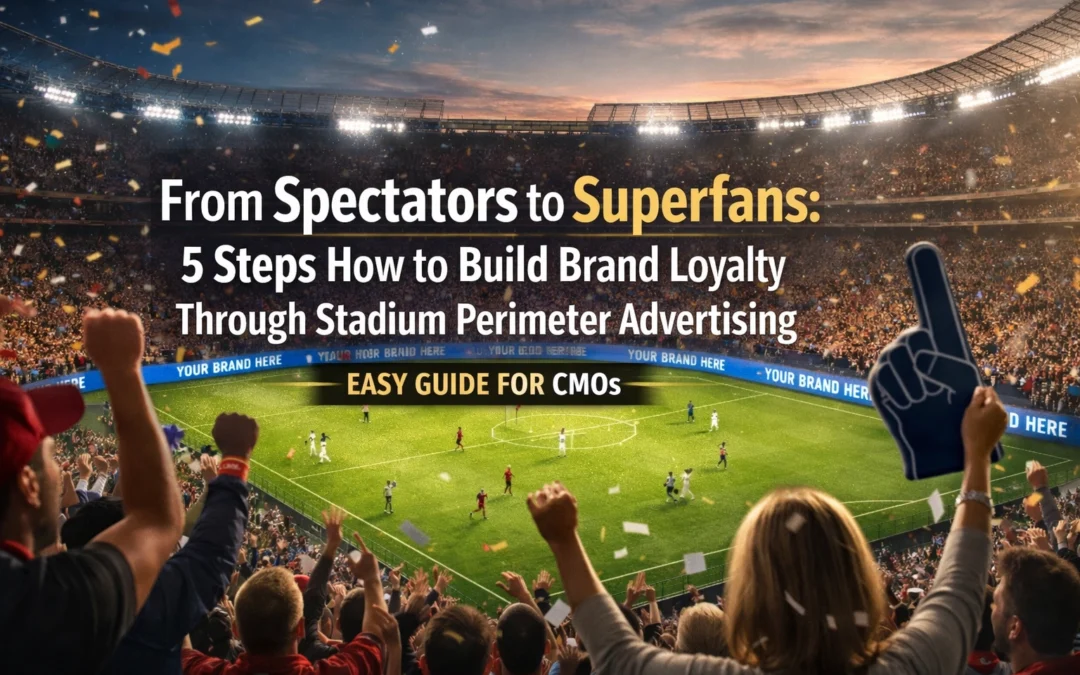
Stadium perimeter advertising represents one of the most underutilized tools in the modern CMO's arsenal. While many marketing leaders chase the latest digital trends, perimeter boards offer something increasingly rare: sustained attention from highly engaged audiences during moments of genuine emotional investment.
The challenge facing creative directors and CMOs centers on transforming passive spectators into brand advocates. Stadium perimeter advertising provides a unique environment where fans willingly spend hours watching their teams, creating natural opportunities for brand association without the resistance typically encountered in traditional advertising channels.
Understanding the Stadium Advertising Advantage
The fundamental difference between stadium perimeter advertising and conventional marketing channels lies in context. Fans attending or watching sporting events enter a state of heightened emotional engagement. This psychological receptiveness creates an environment where brand messages integrate naturally into the experience rather than interrupting it.
Research demonstrates that fans appreciate sponsors who support their clubs. This goodwill translates directly into purchase consideration, with audiences showing measurably higher likelihood of considering products or services from brands visible during matches. The key lies in positioning the brand as a supporter of the team rather than an interloper in the fan experience.

For major leagues operating over extended seasons, the compounding effect of repeated exposure becomes particularly valuable. A single minute of perimeter advertising multiplies across multiple broadcasts, creating up to 156 minutes of global on-screen visibility. This sustained presence builds familiarity and reinforces brand recall without triggering advertising fatigue.
Step 1: Build Authentic Emotional Connections
The first step in converting spectators to superfans involves leveraging the existing emotional bond between fans and their teams. Successful stadium perimeter campaigns recognize that fans' feelings toward their team directly influence brand perception.
Rather than attempting to create separate emotional narratives, effective perimeter advertising aligns brand messaging with team support. This strategy positions the brand as part of the fan's team loyalty ecosystem. When fans see a brand consistently supporting their club through perimeter presence, they transfer positive team sentiment to the sponsor.
The psychological mechanism operates on association principles. Repeated pairing of brand visibility with positive team experiences creates neural connections that strengthen over time. This process occurs subconsciously, making it particularly powerful for building lasting brand affinity.
Implementation requires understanding team culture and fan demographics. Brands must ensure messaging resonates with specific audience values and avoids conflicts with established fan sentiment. Creative directors should develop visual assets that complement rather than compete with the stadium environment.
Step 2: Maximize Sustained, Non-Intrusive Visibility
Perimeter advertising succeeds precisely because it minimizes disruption to the viewing experience. Unlike commercial breaks or pop-up ads that interrupt content consumption, perimeter boards exist as ambient elements within the natural stadium environment.

This non-intrusive presence allows brands to forge connections while fans remain focused on game action. The boards become part of the stadium landscape, visible but not demanding, present but not pushy. This positioning proves particularly effective for building long-term brand recognition.
For leagues operating across extended seasons, consistency amplifies impact. Regular presence throughout hundreds of matches creates cumulative exposure that compounds over time. Each viewing instance reinforces previous exposures, strengthening memory encoding and brand recall.
Strategic scheduling maximizes this effect. Brands should prioritize consistent presence over sporadic high-intensity campaigns. The goal centers on becoming a familiar fixture in the fan's viewing experience rather than a temporary intrusion.
Step 3: Deploy Strategic Visual Design and Dynamic Content
Visual execution determines the effectiveness of perimeter advertising campaigns. Clear brand names and logos form the foundation, but sophisticated campaigns leverage the full capabilities of modern LED systems to create engaging, memorable content.
Larger, more dynamic displays with product animations capture attention more effectively than static logos. Movement draws the eye naturally, particularly in the peripheral vision where perimeter boards typically register during game viewing. Research indicates that fans better remember brands using engaging visual content compared to simple logo placements.
Creative directors should optimize designs for different viewing contexts. Cameras capture perimeter boards differently than human eyes perceive them in-stadium. Testing designs across both contexts ensures effectiveness for both live attendees and broadcast audiences.
Demographic considerations influence design choices significantly. Younger and more educated viewers demonstrate more positive perception of stadium advertising, making sophisticated visual approaches particularly valuable for premium audience segments. Brands targeting these demographics should invest in cutting-edge creative executions that showcase innovation and design excellence.

Step 4: Implement Regional Targeting and Personalization
Modern LED perimeter systems enable unprecedented targeting capabilities. Region-specific advertising during global broadcasts allows brands to show different messages to UK viewers versus Asian audiences simultaneously from the same physical board.
This technology transforms perimeter advertising into a personalized, globally adaptable medium. Brands can optimize messaging for cultural contexts, language preferences, and regional product availability without sacrificing the efficiency of centralized campaign management.
Temporal personalization adds another dimension. Running different offers in the first half versus the second half keeps messaging fresh throughout the match. Brands can leverage game momentum, showing more aggressive calls-to-action during high-excitement moments when viewer engagement peaks.
Implementation requires coordination between creative teams, technology partners, and broadcast rights holders. The complexity increases with the number of regions targeted, but the efficiency gains and performance improvements justify the investment for brands operating in multiple markets.
Step 5: Activate Interactive Engagement Channels
The final step in building superfan loyalty involves creating pathways for active engagement beyond passive viewing. Modern perimeter advertising extends beyond one-way messaging to enable interactive experiences that deepen brand connections.
QR codes integrated into perimeter displays allow fans to unlock live stats, exclusive content, or merchandise discounts by scanning with their smartphones. These codes can appear dynamically during key moments in play, creating immediate conversion opportunities when fan engagement reaches peak levels.

AR-enabled broadcasts represent another frontier. Fans using mobile apps can point their devices at perimeter boards to access augmented reality experiences, from virtual product demonstrations to interactive games tied to match action.
The simultaneous use of social media during matches creates additional amplification opportunities. Research indicates that 50% of fans watching matches at home also use social networks simultaneously. Coordinated social media campaigns that reference perimeter board content can drive conversation and extend reach beyond the immediate viewing audience.
Second-screen strategies should integrate seamlessly with perimeter messaging. Hashtags, calls-to-action, and social media handles displayed on boards should connect to active campaigns running across digital channels, creating a cohesive omnichannel experience.
Building Long-Term Brand Affinity
Transforming spectators into superfans requires commitment beyond single-season campaigns. Multi-season sponsorships foster brand affinity and community loyalty more effectively than one-off activations. Consistency allows brands to become embedded in team culture and fan identity.
Long-term relationships enable brands to evolve messaging based on performance data and changing fan preferences. This iterative approach optimizes campaigns over time, identifying what resonates and doubling down on successful tactics.
The investment in stadium perimeter advertising pays dividends through sustained brand building rather than immediate conversion. While direct response metrics provide valuable feedback, the true value emerges in strengthened brand equity and customer lifetime value among the passionate fan base.
For creative directors and CMOs evaluating stadium perimeter opportunities, the strategic question centers not on whether to invest, but on how to maximize impact through thoughtful execution across these five steps. The brands that succeed will be those that view perimeter advertising not as a standalone tactic, but as an integrated component of comprehensive fan engagement strategies designed to build lasting loyalty.