
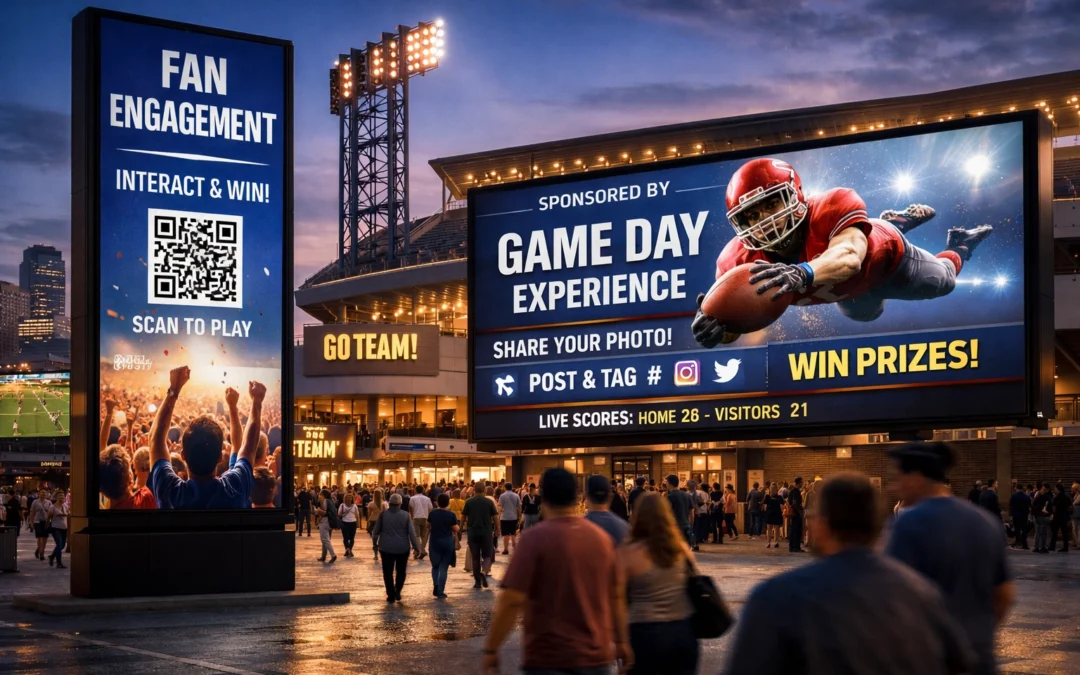
The sports marketing landscape has undergone a fundamental transformation. While traditional stadium sponsorships once dominated brand visibility strategies, leading brands now deploy Digital Out-of-Home (DOOH) advertising across strategic touchpoints that extend far beyond venue walls. This approach delivers measurable engagement throughout the entire fan journey, from pre-game anticipation to post-event celebration.
The Multi-Touchpoint Advantage
Top-performing brands recognize that fan engagement begins long before the opening whistle and continues after the final buzzer. Modern DOOH campaigns activate digital displays across multiple locations, creating a connected brand experience that mirrors the complete fan journey.
Strategic placement includes city center digital billboards that capture commuter attention during the workday, transit screens that build anticipation during the journey to the venue, stadium entrance displays that welcome arriving fans, and post-game activations at nearby restaurants and bars where fans congregate to discuss the outcome.

This comprehensive coverage ensures brand visibility at every stage of fan excitement, maximizing impression frequency while avoiding the oversaturation that occurs when a single touchpoint receives excessive exposure. Media buyers who deploy this strategy report higher brand recall compared to venue-only activations.
Real-Time Content Delivery
Static advertising no longer meets the expectations of sports audiences accustomed to instant updates and live data. Successful DOOH campaigns leverage dynamic content capabilities to deliver information that reflects current game conditions, player performance, and real-time scoring.
Stadium concourse screens display live athlete statistics, play highlights, and performance metrics that enhance the in-venue experience. Digital displays in airports and transit hubs update with current scores and game summaries for fans who cannot attend in person. This approach transforms DOOH from passive brand messaging into an engagement tool that provides value to the audience.
The technical infrastructure supporting these capabilities includes programmatic DOOH platforms that enable rapid content updates without manual intervention. Brands can trigger specific creative based on game outcomes, player achievements, or scoring thresholds, ensuring messaging remains relevant and timely.
Location-Based Targeting Precision
Geographic targeting capabilities have elevated DOOH effectiveness in sports marketing contexts. Advanced platforms enable brands to activate specific screen networks based on venue proximity, commute patterns, and fan density.

High-impact placements near stadiums and arenas capture audiences when excitement and foot traffic reach peak levels. Digital billboards along major routes leading to venues intercept fans during their commute, building anticipation through countdown messaging and game-day promotions. Post-game activations in entertainment districts extend brand visibility during the emotional high that follows compelling sporting events.
This precision allows media buyers to allocate budget toward screens with the highest probability of reaching target audiences, improving cost efficiency compared to broad geographic campaigns that lack sports-specific focus.
Omnichannel Strategy Integration
Leading brands treat DOOH as one component within a coordinated marketing ecosystem rather than an isolated tactic. This integration amplifies campaign impact through consistent messaging across multiple channels.
The strategy typically follows this sequence:
- Pre-game awareness: DOOH displays along commute routes and in city centers introduce campaign messaging and build anticipation.
- Event-day activation: Stadium proximity screens deliver high-frequency exposure when fan engagement peaks.
- Digital retargeting: Device IDs exposed to DOOH campaigns feed into retargeting audiences for connected TV, digital audio, and display advertising.
- Website conversion: Coordinated messaging across channels drives traffic to branded websites where fans can take action on limited-time offers.
This approach creates multiple touchpoints with the same audience across different contexts, reinforcing brand messaging and increasing the likelihood of conversion. Attribution studies demonstrate that campaigns combining DOOH with digital retargeting produce higher conversion rates than single-channel strategies.

Bridging Offline and Online Engagement
Effective DOOH campaigns include mechanisms that connect physical world exposure to digital interaction. Top brands prominently display social media handles, campaign hashtags, and URLs on DOOH creative, providing clear pathways for audiences to extend their engagement beyond the initial impression.
QR codes enable instant mobile interaction, directing fans to exclusive content, promotional offers, or interactive experiences. Campaign-specific hashtags encourage user-generated content and social sharing, expanding organic reach beyond paid placements.
This integration serves dual purposes. It provides immediate conversion opportunities for interested audiences while generating first-party data that informs future targeting and creative optimization.
Measurement and Attribution Methods
The evolution of DOOH measurement capabilities has transformed the channel from difficult-to-measure to one of the most trackable forms of advertising. Modern platforms provide detailed analytics on impression delivery, audience composition, and downstream behavior.
Key measurement approaches include:
- Device ID matching: Identifying mobile devices exposed to DOOH placements and tracking subsequent website visits, app installations, or retail visits.
- Brand lift studies: Surveying audiences exposed to DOOH campaigns versus control groups to measure changes in brand awareness, consideration, and preference.
- Venue-based sensors: Using foot traffic counters and audience detection technology to verify impression delivery and measure dwell time near DOOH placements.
- Attribution modeling: Connecting DOOH exposure to conversion events through multi-touch attribution frameworks that account for all campaign touchpoints.
These methodologies provide media buyers with the data required to demonstrate DOOH contribution to marketing objectives and optimize budget allocation across channels.

Creative Best Practices for Sports Contexts
DOOH creative designed for sports environments requires specific considerations that differ from general awareness campaigns. Successful executions prioritize clarity, immediate comprehension, and emotional resonance.
High-performing creative elements include bold typography that remains legible at distance and speed, dynamic motion that captures attention in crowded environments, team colors and imagery that trigger emotional connections, and concise messaging that communicates value within brief exposure windows.
The most effective campaigns balance brand visibility with content utility, providing fans with information or entertainment that enhances their experience rather than purely promotional messaging.
Strategic Timing and Seasonality
Sports marketing operates on predictable cycles that create natural opportunities for DOOH activation. Brands that align campaigns with peak fan engagement periods maximize impact and efficiency.
Key timing considerations include season kickoffs that generate heightened anticipation and media attention, playoff periods when casual fans increase engagement, rivalry game weeks that produce elevated emotional investment, and championship events that attract the broadest possible audience.
Pre-event activation typically begins several days before major games, building awareness as excitement escalates. Post-event messaging capitalizes on the emotional peak that follows compelling contests, particularly when congratulatory messaging acknowledges winning fans.
Implementation Considerations for Media Buyers
Deploying effective DOOH sports marketing campaigns requires coordination across multiple operational dimensions. Media buyers should establish clear relationships with DOOH platform providers that offer programmatic access to sports-adjacent inventory, creative production capabilities that support rapid content updates and dynamic elements, and measurement partners that can provide attribution and brand lift analysis.
Budget allocation should reflect the multi-touchpoint strategy, distributing investment across pre-game awareness, event-day activation, and post-game retargeting phases. Testing different creative approaches, messaging strategies, and geographic concentrations provides data for optimization in subsequent campaigns.

The sports DOOH opportunity continues expanding as venues upgrade to digital displays and programmatic platforms increase inventory access. Brands that deploy these proven strategies position themselves to capture fan attention throughout the complete event experience, driving measurable outcomes that justify continued investment in this growing channel.