
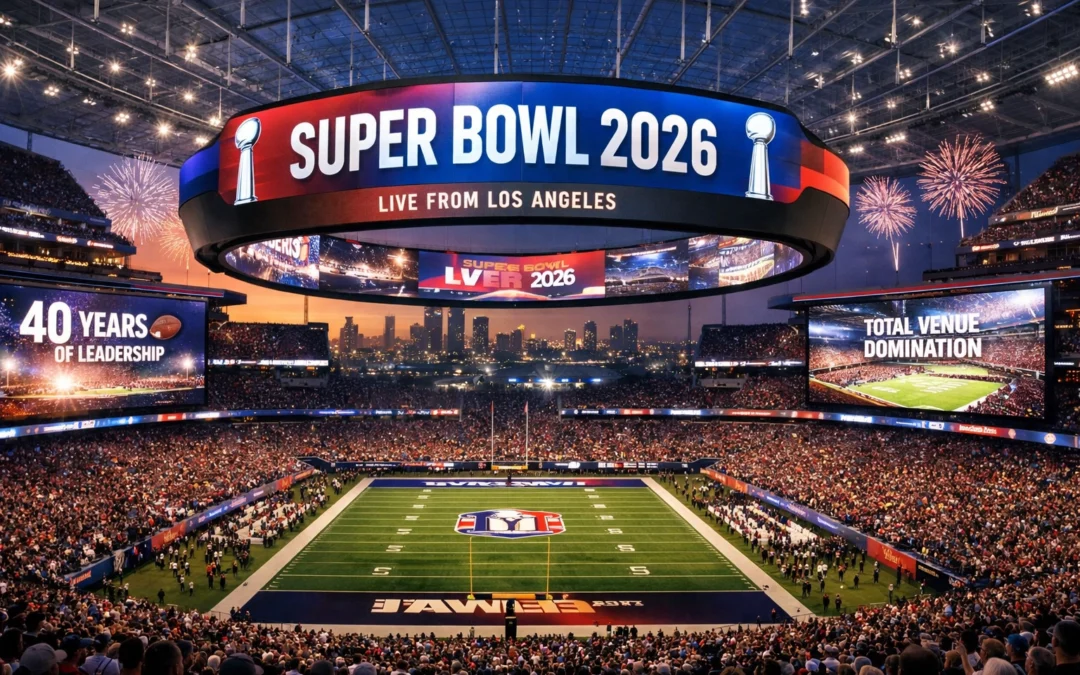
Super Bowl LX just wrapped up, and once again, the biggest game in sports proved that advertising during this event isn't just about the 30-second TV spots anymore. For brands looking to make a real impact, the conversation has shifted dramatically. Total venue domination is the new playbook, and that means owning every surface, every screen, and every moment from the parking lot to the locker room tunnel.
OOH Sports has been in the out-of-home advertising game for four decades. That's 40 years of understanding what works, what doesn't, and how to make brands impossible to ignore during the most-watched sporting event of the year. This year's Super Bowl showcased exactly why experience matters when millions of eyeballs are looking everywhere except their phones.
Four Decades of Advertising Evolution
The landscape of Super Bowl advertising has transformed since the 1980s. Back then, a single billboard near the stadium and a TV commercial represented peak advertising strategy. Fast forward to 2026, and brands now have access to hundreds of advertising touchpoints across an entire venue and surrounding area.

What changed? Technology, data, and the ability to activate campaigns across multiple formats simultaneously. The evolution from static billboards to dynamic digital displays opened new possibilities. Brands can now adjust messaging in real-time, target specific audience segments as they move through different zones, and measure actual foot traffic and engagement.
OOH Sports spent these 40 years building relationships with venue operators, understanding traffic patterns, and developing proprietary targeting strategies that maximize impact. This institutional knowledge translates directly into better campaign performance for clients during high-stakes events like the Super Bowl.
Total Venue Coverage: From Floors to Digital Billboards
Modern Super Bowl advertising strategy requires thinking beyond traditional media placements. Total venue domination means controlling the entire visual environment where fans experience the game.
Ground Level Assets
Floor graphics in high-traffic areas create unavoidable brand impressions. Concourse walkways, entrance tunnels, and retail zones feature branded floor decals that generate millions of impressions as fans navigate the stadium. These placements work particularly well because they catch attention during natural pause points like lines and crowd bottlenecks.
Wall and Column Wraps
Vertical surfaces throughout the venue provide massive branding opportunities. Column wraps in concourses, wall graphics in bathrooms, and tunnel branding as teams enter the field all contribute to surrounding fans with consistent brand messaging. The repetition builds familiarity and recall long after the game ends.

Digital Display Network
The real game-changer comes from digital screens scattered throughout modern stadiums. These displays allow for dynamic content that can change based on time of day, game situation, or audience demographics in specific sections. Brands can serve different messages to different areas simultaneously, maximizing relevance and impact.
Exterior Perimeter
The advertising doesn't stop at the stadium walls. Exterior digital billboards, parking structure branding, and transit shelter takeovers create brand presence before fans even enter the venue. This extended perimeter strategy captures audiences during their entire game-day journey, not just the few hours inside the stadium.
https://www.youtube.com/watch?v=l6J-0zileKE
Strategic Advantages of Comprehensive Coverage
Brands that invest in total venue domination during Super Bowl weekend gain several competitive advantages over those focused solely on TV spots.
Extended Exposure Windows: Unlike a 30-second TV commercial, venue-based advertising delivers continuous exposure over 8-10 hours of game day activity. Fans arrive early, stay late, and spend significant time moving through branded spaces.
Captive Audience Engagement: Stadium attendees can't skip, mute, or look away from environmental branding. The physical space demands attention in ways that digital advertising often struggles to achieve.
Multi-Touchpoint Strategy: Research shows that consumers need multiple brand exposures before taking action. Total venue coverage ensures that fans encounter brand messaging 15-20 times throughout their experience, significantly boosting recall and consideration.

Measurable Foot Traffic: Modern venue advertising technology tracks actual foot traffic past specific placements. Brands receive concrete data about impressions, dwell time near branded areas, and movement patterns that inform future campaign optimization.
Integration with Broader Marketing Campaigns
The most successful Super Bowl advertising strategies don't treat venue domination as a standalone tactic. Instead, they integrate physical presence with digital campaigns, social media activations, and broadcast advertising for a truly omnichannel approach.
Venue-based campaigns can drive specific actions through QR codes, hashtag campaigns, or mobile app interactions. Fans who engage with physical advertising inside the stadium become retargeting audiences for post-game digital campaigns. This creates a continuous engagement loop that extends campaign impact well beyond game day.
OOH Sports has developed proprietary technology that connects venue-based impressions with digital attribution models. Brands can now trace the customer journey from seeing a floor graphic to making an online purchase weeks later. This level of measurement transforms out-of-home advertising from a branding play into a performance marketing channel.
Planning Considerations for Super Bowl Campaigns
Executing a successful total venue domination strategy during the Super Bowl requires significant advance planning. Here are the key considerations:
Timeline: Venue placements for Super Bowl typically need to be secured 12-18 months in advance. Premium locations go quickly, so early commitment is essential.
Creative Adaptation: Different surfaces require different creative approaches. What works on a digital billboard won't necessarily translate to a floor graphic. Planning for multiple creative executions adds complexity but dramatically improves effectiveness.

Measurement Framework: Establishing success metrics before the campaign launches ensures proper data collection. Whether the goal is brand awareness, foot traffic to a specific location, or digital engagement, the measurement strategy needs to align with objectives.
Budget Allocation: Total venue coverage requires substantial investment, but the ROI typically justifies the spend when executed properly. Brands should expect to invest significantly more than a single TV commercial but receive exponentially more impressions and longer exposure windows.
The Future of Super Bowl Advertising
As technology continues advancing, the possibilities for venue-based advertising will expand further. Augmented reality integrations, personalized messaging based on individual fan data, and real-time content optimization represent the next frontier.
What won't change is the fundamental advantage of physical presence. In an increasingly digital world, owning the physical environment where fans experience the biggest game of the year creates lasting impressions that digital advertising alone can't replicate.
OOH Sports continues innovating in this space, developing new formats and measurement capabilities that keep venue-based advertising at the forefront of Super Bowl marketing strategy. Four decades of experience means understanding not just where fans look, but when they're most receptive to brand messaging.

Making the Most of Every Surface
Super Bowl LX demonstrated once again that the most successful brands think beyond the TV commercial. They understand that game day represents a complete immersive experience, and owning that experience from parking lot to post-game celebration creates unmatched marketing impact.
Total venue domination isn't just about visibility. It's about creating an environment where brand presence feels natural, engaging, and memorable. When executed with the expertise that comes from 40 years in the industry, this approach transforms how audiences perceive and remember brands long after the final whistle blows.
For brands planning their Super Bowl LXI strategy, the message is clear: think bigger than a 30-second spot. Think about every surface, every screen, and every moment that fans spend experiencing the biggest game in sports. That's where the real advertising victory happens.