
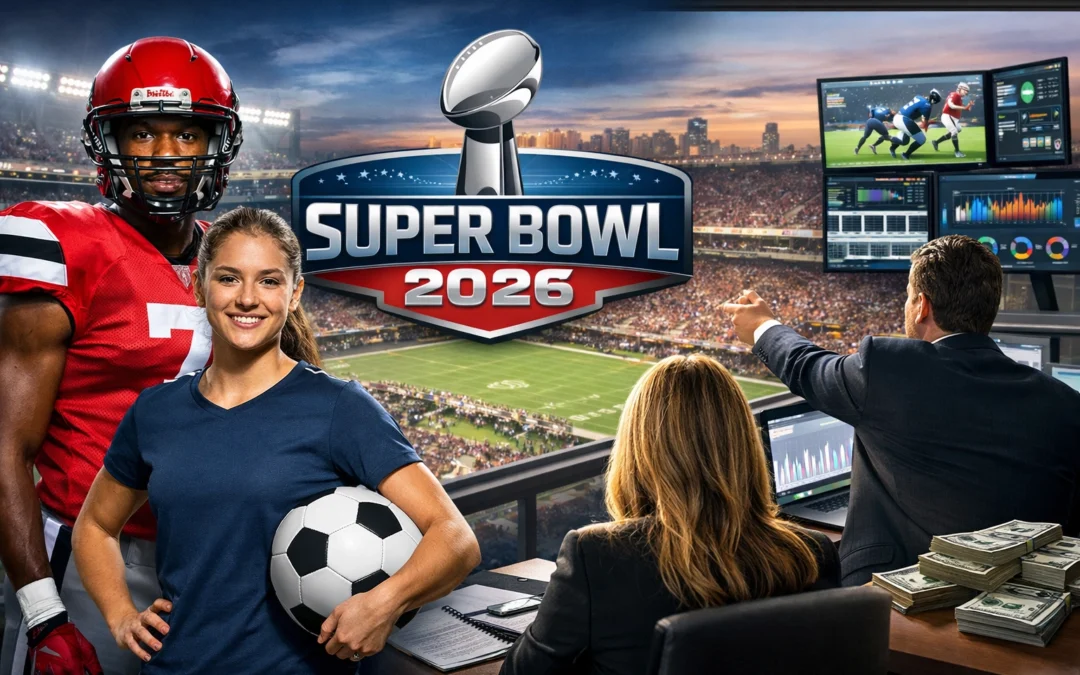
Super Bowl 2026 is heading to Phoenix, and something different is happening behind the scenes. While most brands are scrambling for 30-second commercial spots at $7 million a pop, smart media buyers are looking at a completely different playbook. They're tapping into a network of over 20,000 student-athletes who are ready to amplify brand messages in ways traditional advertising simply can't match.
The shift isn't subtle. Student-athlete marketing through NIL (Name, Image, Likeness) partnerships is fundamentally changing how brands approach the biggest advertising event of the year. This isn't about replacing Super Bowl commercials. It's about surrounding them with authentic voices that actually connect with audiences before, during, and long after game day.
The Authenticity Gap That Student-Athletes Fill
Traditional Super Bowl advertising faces a trust problem. Viewers know they're watching paid celebrity endorsements. When a Hollywood A-lister holds up a product between takes, audiences see it for what it is: a transaction.
Student-athletes operate differently. When a Division 1 quarterback posts about a brand, followers see someone who's genuinely connected to their community. The endorsement carries weight because these athletes are still building their personal brands, not just cashing checks. Their followers understand they're selective about partnerships because their reputation on campus and in their sport actually matters.

This authenticity becomes particularly valuable during Super Bowl season when advertising noise reaches peak levels. A single commercial might get lost in the shuffle of 50 other ads. But when dozens of student-athletes across different sports and schools are creating content around a brand message, that's when real saturation happens.
The geographic advantage amplifies this effect. While a national celebrity speaks to everyone (and therefore no one specifically), a college athlete in Phoenix commands genuine loyalty in that exact market. Multiply that by athletes in Dallas, Atlanta, Columbus, and other college towns, and brands suddenly have hyperlocal credibility in markets that matter most to them.
Content Creation at Scale
Here's where the math gets interesting for media buyers. A traditional Super Bowl commercial is one piece of content. Expensive, polished, and fleeting. Student-athlete partnerships flip this model entirely.
These athletes are already creating content daily. They're posting workout videos, game day preparation, campus life moments, and brand collaborations. When they partner with a brand for Super Bowl activation, they're not just creating one post. They're integrating brand messaging into an ongoing content stream that their audiences already engage with.
The result is an always-on content machine. Two weeks before the Super Bowl, student-athletes can start priming their audiences with predictions, game day plans, and brand-integrated content. During the game, they're posting real-time reactions. After the game, they're creating highlight reels and commentary. Each piece of content drives engagement beyond what a single commercial placement can achieve.
Media buyers looking at cost per impression should pay attention to this model. Instead of buying one expensive moment, brands get continuous exposure across dozens or hundreds of authentic voices. The content lives on social platforms, gets reshared, and generates organic engagement that traditional advertising can't buy.
Strategic Execution for Media Buyers
The opportunity exists, but capturing it requires strategic thinking. Random student-athlete partnerships won't move the needle. Media buyers need structured approaches that maximize both reach and impact.
Phase One: Pre-Game Priming
Launch student-athlete campaigns two weeks before the Super Bowl. Select athletes across multiple sports (not just football) to broaden audience reach. Basketball players draw different demographics than track athletes or volleyball players. The goal is saturation across interest groups, not just sports fans.
Athletes create user-generated content that feels native to their existing content style. No forced scripts or awkward product placements. The messaging should feel like a natural extension of their Super Bowl excitement.

Phase Two: Game Day Saturation
Real-time engagement during the Super Bowl creates viral moment potential. Student-athletes post reactions to commercials, game plays, and halftime performances while naturally integrating brand messaging. The key is speed and authenticity. These posts need to feel spontaneous, not pre-scheduled.
Media buyers should have rapid response teams ready to amplify the best-performing content. When a student-athlete's post starts gaining traction, paid promotion can multiply its reach exponentially. This turns organic moments into advertising gold.
Phase Three: Post-Game Conversion
The game ends, but the campaign doesn't. Student-athletes continue creating content that ties back to brand messaging. Post-game analysis, highlight reactions, and looking-ahead-to-next-season content keeps the conversation alive.
This phase transforms short-term activation into long-term brand building. Media buyers can track engagement metrics, identify top-performing athletes, and build ongoing partnerships that extend beyond the Super Bowl cycle.
Beyond Game Day: Infrastructure Plays
Forward-thinking media buyers are using Super Bowl budgets to create lasting assets, not just temporary campaigns. Student-athlete partnerships open doors to infrastructure investments that generate returns for years.
Consider esports education centers sponsored by brands. These facilities serve student-athletes year-round while maintaining brand presence on campus. Students train, create content, and build skills in spaces that bear brand logos and messaging. The visibility compounds over time as new student cohorts cycle through.

Scholarship programs create another opportunity. Brands can sponsor student-athlete innovation labs where athletes develop business skills, content creation expertise, and marketing knowledge. These programs build genuine relationships between brands and future professionals while generating positive brand sentiment across campus communities.
The infrastructure approach transforms advertising spend into talent pipeline investment. Student-athletes who partner with brands during college become familiar with those brands' values, messaging, and culture. When they graduate and enter the workforce, they're potential hires who already understand the brand from the inside.
The Talent Pipeline Advantage
Student-athlete partnerships shouldn't be viewed simply as endorsement deals. They're extended job interviews with proven content creators who understand audience engagement.
A student-athlete who successfully promotes a brand during their college years demonstrates valuable marketing skills. They understand how to create authentic content, engage audiences, and maintain brand voice across platforms. These are exactly the skills brands need in marketing coordinators, content creators, and social media strategists.
Media buyers who think long-term recognize this opportunity. Super Bowl campaigns become talent scouting operations. The athletes who excel at brand partnerships, demonstrate creativity, and drive measurable engagement become recruiting targets. Brands gain marketing employees who already proved their worth through measurable campaign results.
This approach addresses a persistent industry challenge: finding marketing talent who genuinely understand social media and content creation. Student-athletes live this reality daily. They know what resonates with audiences because they've built their own followings from scratch.
Measuring Impact Beyond Impressions
Traditional Super Bowl advertising relies heavily on reach and frequency metrics. Student-athlete campaigns demand more sophisticated measurement approaches.
Engagement rates matter more than pure impression counts. A student-athlete with 10,000 highly engaged followers delivers more value than one with 100,000 passive followers. Media buyers should prioritize athletes whose audiences actively comment, share, and interact with content.

Conversion tracking becomes essential. Student-athletes can use unique promo codes, custom landing pages, or trackable links that measure actual sales or sign-ups generated by their content. This data reveals which athletes drive real business results, not just vanity metrics.
Sentiment analysis adds another dimension. Are audiences responding positively to brand partnerships? Does the athlete's association enhance or dilute brand perception? These qualitative measures complement quantitative metrics to provide complete campaign pictures.
Geographic penetration tracking shows where campaigns achieve density. If the goal is market dominance in Phoenix ahead of Super Bowl 2026, media buyers need to know which neighborhoods and demographics are seeing the most student-athlete content. Heat maps of engagement by location inform strategic adjustments.
The Opportunity for Media Buyers
Super Bowl 2026 represents a unique moment. The game comes to Phoenix while NIL partnerships have matured enough to offer proven strategies but haven't become oversaturated. Media buyers who move now can establish student-athlete networks before competitors recognize the opportunity.
The 20,000-plus student-athletes across college sports create unprecedented reach potential. Rather than betting everything on one expensive commercial, brands can surround the Super Bowl with authentic voices that actually influence purchase decisions. The content persists beyond game day, builds genuine community connections, and creates talent pipelines that deliver value for years.
Traditional Super Bowl advertising isn't going anywhere. But the brands that win Super Bowl 2026 will be those that recognize advertising has evolved beyond 30-second spots. Student-athletes offer authenticity, scale, and engagement that traditional celebrity endorsements can't match. For media buyers ready to think differently, the opportunity is significant. The question isn't whether to explore student-athlete partnerships. It's whether to lead this shift or follow once everyone else figures it out.