
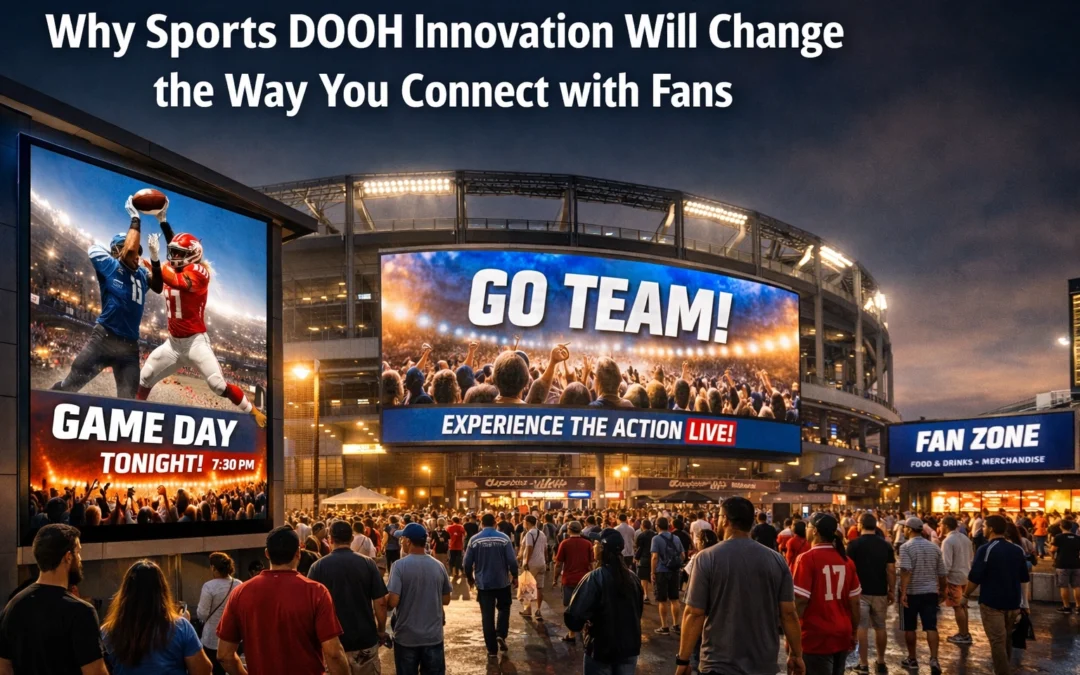
The landscape of sports marketing has undergone a fundamental transformation. Traditional broadcast advertising and static stadium sponsorships no longer deliver the reach, engagement, or precision that modern brands require. Digital out-of-home (DOOH) technology has emerged as a critical innovation that enables marketers to connect with sports fans through dynamic, data-driven campaigns that reach audiences at their most receptive moments.
Sports DOOH represents more than an incremental improvement over traditional outdoor advertising. The technology fundamentally changes how brands engage with fans by combining the scale and visibility of out-of-home media with the targeting precision and real-time capabilities of digital platforms.
The Evolution Beyond Static Advertising
Traditional stadium sponsorships and billboards offer brand visibility but lack flexibility, personalization, and measurable impact. Static placements remain unchanged throughout multi-year contracts, regardless of team performance, audience demographics, or competitive dynamics.

DOOH technology addresses these limitations through programmatic buying capabilities, dynamic creative optimization, and real-time content updates. Campaigns can adjust creative messaging based on game scores, weather conditions, tournament standings, or audience behavior patterns. This responsiveness creates advertising experiences that feel timely and relevant rather than intrusive or disconnected.
Real-Time Content Drives Engagement
The capacity for real-time content updates represents one of the most significant advantages of sports DOOH. Brands can deliver messaging that reflects current game action, tournament progression, or breaking sports news.
A campaign executed during a major international cricket tournament demonstrated this capability by delivering near real-time match scores across 2,211 screens in 662 locations. The activation generated over 2.6 million ad plays using 149 unique creative variations, ensuring audiences encountered fresh, relevant content throughout the event rather than repetitive static messages.
This approach transforms advertising from a passive brand presence into dynamic content that audiences actively engage with. Fans checking scores, following tournament brackets, or tracking player statistics naturally encounter brand messaging that enhances rather than interrupts their experience.
Key applications for real-time DOOH content include:
- Live score updates and tournament standings
- Player statistics and performance highlights
- Weather-triggered messaging for outdoor events
- Dynamic odds for sports betting promotions
- Countdown timers to game starts or ticket sales deadlines
- Celebratory messaging following team victories
Strategic Location Targeting Reaches Concentrated Audiences
Sports events create unique marketing opportunities by concentrating large numbers of highly engaged fans in specific geographic areas. DOOH enables brands to activate screens at strategic high-traffic locations where fans gather before, during, and after games.
Premium inventory locations include:
- Exterior perimeter areas surrounding stadiums and arenas
- Transit hubs and routes to sporting venues
- Sports bars and restaurant districts
- Fan zones and tailgating areas
- Downtown entertainment districts
- Airport terminals in host cities

This geographic concentration allows brands to achieve significant reach among sports enthusiasts without the waste associated with broader media buys. Rather than purchasing national television spots where only a fraction of viewers have interest in the sport or team, marketers can focus spend on locations where audience interest and engagement are virtually guaranteed.
The ability to target specific venues also enables localized messaging strategies. A beverage brand can promote different products in different markets based on regional preferences. A retail chain can highlight nearby store locations. A sports betting platform can adjust messaging based on state-specific regulations and offerings.
Cost-Effective Access to Premium Moments
Traditional sports marketing has historically required substantial budgets. Television advertising during major sporting events can cost hundreds of thousands to millions of dollars for a single spot. Multi-year stadium naming rights and sponsorship packages often require eight-figure commitments.
DOOH provides access to engaged sports audiences at significantly lower costs. Local and regional brands can activate campaigns in specific markets without national media budgets. Smaller advertisers can purchase inventory surrounding single games or events rather than committing to season-long sponsorships.
The flexibility of programmatic DOOH buying allows brands to:
- Test different markets before committing to larger investments
- Activate opportunistically around specific games or events
- Scale spending up or down based on performance
- Shift budget between locations in real time
- Extend reach through network-based buys across multiple venues
These capabilities democratize access to sports marketing, enabling brands of various sizes to connect with passionate fan bases that were previously only accessible through premium broadcast or sponsorship deals.
Reaching Audiences Beyond Digital Advertising
A growing segment of consumers has migrated to ad-free streaming platforms, creating significant challenges for digital advertisers. Households paying for premium streaming services represent high-value audiences that traditional digital tactics cannot reach.

DOOH provides a solution to this accessibility challenge. Unlike digital banner ads or streaming video commercials, out-of-home advertising cannot be blocked, skipped, or avoided through subscription services. Research conducted over a five-year period found that OOH outperforms connected television, traditional television, and digital channels across key brand metrics.
This advantage proves particularly valuable in sports marketing, where affluent fans often subscribe to multiple streaming platforms to access games across different leagues and networks. DOOH ensures brand visibility regardless of viewing platform or subscription tier.
Building Complete Customer Journeys
The most sophisticated sports DOOH strategies extend beyond standalone placements to create integrated omnichannel experiences. Brands can strategically activate DOOH throughout the fan journey, then extend engagement through retargeting on complementary digital channels.
A comprehensive approach includes:
Pre-Game Activation: Drive awareness and anticipation through DOOH placements in transit hubs, entertainment districts, and residential neighborhoods as fans prepare for game day.
Game-Day Presence: Maximize visibility through perimeter screens, venue exterior placements, and nearby bars and restaurants where fans gather to watch.
Post-Game Extension: Maintain brand presence as fans depart venues and discuss game outcomes across social and digital platforms.
Digital Retargeting: Capture device IDs from audiences exposed to DOOH placements and retarget them across connected TV, digital audio, display advertising, and social media.
This integrated strategy mirrors how modern sports fans actually engage with their favorite teams and leagues across multiple screens and real-world moments. Rather than relying on a single touchpoint, brands create repeated exposures that build recognition and drive action throughout the customer journey.
Precision Measurement and Attribution
Historical challenges with out-of-home advertising measurement have largely been resolved through advances in DOOH technology. Modern campaigns provide detailed performance data comparable to digital channels.

Measurement capabilities include:
- Verified impression delivery and play confirmation
- Audience demographic composition through mobile device data
- Attribution through exposed device tracking
- Brand lift studies measuring awareness, consideration, and preference changes
- Foot traffic attribution connecting ad exposure to venue visits
- Cross-channel impact analysis showing DOOH influence on digital conversions
These measurement capabilities enable media buyers and brand managers to evaluate sports DOOH investments using the same frameworks and KPIs applied to other digital channels. Campaigns can be optimized in flight based on performance data, with budget reallocated to top-performing locations, dayparts, or creative variations.
Strategic Implications for Sports Marketers
The convergence of programmatic buying, real-time creative capabilities, and precision measurement fundamentally changes how brands should approach sports marketing. Several strategic considerations emerge:
Shift from annual commitments to agile activation. Rather than locking into season-long sponsorships, brands can activate around specific games, tournaments, or moments that align with business objectives and product launches.
Prioritize location strategy over broadcast reach. Concentrated audiences in high-engagement environments often deliver superior outcomes compared to broad-reach media with lower relevance.
Integrate DOOH into full-funnel strategies. Sports DOOH performs best when incorporated into coordinated campaigns that extend across awareness, consideration, and conversion objectives through multiple touchpoints.
Leverage dynamic creative for personalization. Static messaging fails to capitalize on DOOH's core advantage. Brands should invest in creative production capabilities that enable real-time content updates and location-specific variations.
Test and learn through programmatic buying. The flexibility of DOOH programmatic platforms enables rapid testing of different markets, venues, and messaging approaches to identify optimal strategies before scaling investment.
Conclusion
Sports DOOH innovation represents a fundamental shift in how brands connect with passionate fan audiences. The combination of real-time capabilities, precision targeting, cost-effective access, and comprehensive measurement creates opportunities that traditional sports marketing channels cannot match.
For media buyers and brand managers, the strategic question has shifted from whether to incorporate sports DOOH into marketing plans to how to maximize its impact through sophisticated targeting, creative execution, and integrated campaign design. Brands that master these capabilities will achieve more efficient, more engaging, and more measurable connections with sports fans across the complete customer journey.