
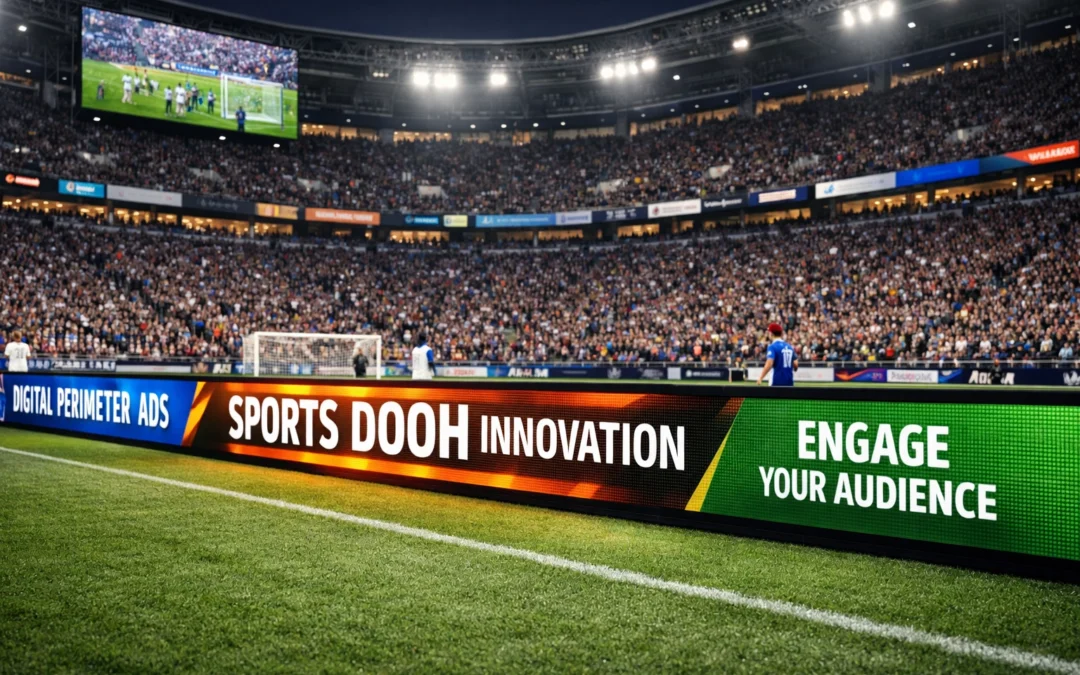
Stadium perimeter advertising has evolved from static banners into a sophisticated, data-driven channel that delivers measurable results for brands. Media buyers seeking maximum reach and emotional engagement are increasingly turning to this medium, which offers simultaneous exposure to both in-stadium audiences and millions of television viewers.
This guide outlines the essential considerations for planning, buying, and optimizing stadium Digital Out-of-Home (DOOH) campaigns.
Understanding Stadium Perimeter DOOH Formats
Modern stadium inventory extends beyond traditional perimeter boards. Media buyers should evaluate multiple placement options based on campaign objectives and budget allocation.
Core Format Options:
- Perimeter LED boards: Digital ribbons positioned around the playing field that capture attention during live action, typically operating on 30-second rotation cycles
- Video walls and large-format screens: Full-screen placements in stadium corners that deliver impact during pre-game and halftime periods
- Concourse and VIP area displays: Screens positioned in high-traffic promenades targeting premium demographics
- Virtual replacement technology: Advanced systems that display different advertisements to television audiences in various regions while stadium attendees view alternative content
Each format serves distinct strategic purposes. Perimeter LED boards maximize broadcast visibility, while concourse displays capture audiences during purchasing moments when concession and merchandise decisions occur.

Technology Infrastructure and AI Integration
Stadium perimeter advertising now incorporates artificial intelligence and real-time optimization capabilities that enhance campaign performance.
Current technological capabilities include:
- AI-driven ad rotation: Systems that adjust creative sequencing based on game situation and audience engagement patterns
- Motion-tracking technology: Adaptive brightness and color adjustment that optimizes visual presentation for different camera angles
- Real-time performance analytics: Immediate feedback on impression delivery and audience attention metrics
- Dynamic content deployment: Capability to alter messaging between game periods or in response to live events
These advancements enable media buyers to optimize campaigns during active matches, adjusting creative strategy based on performance data rather than waiting for post-campaign analysis.
Strategic Media Buying Considerations
Effective stadium advertising campaigns require careful evaluation of multiple variables that impact both cost efficiency and campaign effectiveness.
Critical Evaluation Factors:
Placement Quality Over Duration: Premium locations near the pitch and within primary camera sight lines deliver higher value than extended placement in low-visibility zones. Media buyers should prioritize quality of insertion over total time purchased.
Category Exclusivity: Verification of category exclusivity prevents competitor saturation and maintains premium brand perception. Contracts should explicitly define protected categories.
Broadcast Visibility Analysis: Camera angle studies and broadcast time analysis ensure brand presence during high-action moments and close-up shots. Cost per thousand impressions (CPM) should be calculated across television reach per minute of play.
Content Specifications: High-resolution creative formatted specifically for LED board dimensions ensures optimal visual impact. Standard digital formats often require adaptation for stadium display systems.
Event Type Valuation: League matches, playoff games, and championship events command different pricing based on anticipated viewership and emotional intensity. Budget allocation should reflect the amplified engagement during premium events.

Television Reach and Broadcast Multiplication
Television visibility represents the primary multiplier for stadium perimeter advertising value. A single LED perimeter placement generates brand impressions at a frequency that few other media channels can match.
Media buyers should analyze:
- Total broadcast reach: Aggregate television audience across all networks carrying the event
- Camera coverage patterns: Frequency and duration of brand visibility during broadcast
- Geographic distribution: Markets reached through national versus regional broadcasts
- Demographic composition: Audience profiles for specific sports and leagues
When comparing stadium DOOH against digital alternatives such as Google Ads or YouTube advertising, the broadcast multiplication effect often delivers superior cost efficiency for reaching mass audiences during moments of concentrated attention.
Omnichannel Integration and the Priming Effect
Sophisticated media strategies extend stadium perimeter advertising into comprehensive omnichannel campaigns that amplify overall effectiveness.
The priming effect occurs when audiences encounter consistent brand messaging across multiple touchpoints. A 30-second television spot followed by a 6-second version on a digital urban panel during the commute home strengthens memory structures and increases message retention.
Integration Strategies:
- Geographic targeting: Geo-fencing technology enables complementary digital advertising on platforms such as TikTok and Instagram for users in stadium vicinity
- Sequential messaging: Coordinated creative across stadium, broadcast, and mobile channels that builds narrative progression
- Social amplification: Influencer partnerships that position content creators in premium locations where perimeter advertising remains visible in background social media posts
This layered approach transforms single-channel exposure into reinforced brand presence across the consumer journey.

Audience Psychology and Emotional Anchoring
Stadium environments create unique psychological conditions that differentiate perimeter advertising from traditional media channels.
Fans identify intensely with teams and associate positive emotions with brands visible during moments of victory or dramatic action. This emotional anchoring occurs at a subconscious level, creating lasting brand associations that extend beyond the immediate viewing experience.
The concentrated attention during live sports contrasts sharply with fragmented attention across digital platforms. While social media users scroll past content in seconds, sports audiences maintain sustained focus for hours, creating repeated brand exposure during moments of peak engagement.
Research indicates that brand messages encountered during emotionally charged moments embed more deeply in memory than exposure during neutral contexts. Media buyers leveraging this psychological advantage gain access to audience attention quality that premium pricing reflects.
Performance Metrics and Campaign Optimization
Effective measurement requires tracking metrics specific to stadium perimeter advertising's dual-audience nature.
Essential Performance Indicators:
- Television reach per minute of play: Actual broadcast exposure measured against purchased inventory
- Rotation frequency: Number of brand impressions delivered per match based on cycle timing
- Cross-media reinforcement rate: Frequency of message consistency across stadium, television, and digital channels
- Attention metrics: Real-time analytics measuring viewer focus during brand exposure moments
Media buyers should establish baseline performance expectations during campaign planning and monitor delivery against these benchmarks throughout execution. Modern systems provide impression-level data that enables mid-campaign optimization rather than relying solely on post-campaign reporting.
For detailed analysis of ROI comparisons between programmatic DOOH and traditional stadium sponsorships, media buyers can reference specialized research on budget allocation strategies.

Budget Allocation and Cost Efficiency
Stadium perimeter advertising pricing reflects multiple variables including venue popularity, sport type, event significance, and seasonal timing.
Media buyers should structure negotiations around:
- Package deals: Multi-match commitments often secure reduced per-game rates
- Seasonal planning: Off-peak matches provide inventory access at lower cost points
- Rotation positioning: Prime rotation slots (immediately following goals or key moments) command premium pricing
- Duration flexibility: Shorter, high-quality placements during crucial moments may deliver better value than extended low-visibility exposure
Comparing CPM rates across stadium DOOH and alternative channels provides objective cost efficiency analysis. When television multiplication factors are included, stadium perimeter advertising frequently demonstrates competitive or superior cost performance against digital video advertising.
Future Considerations for Media Buyers
Stadium perimeter technology continues advancing, with emerging capabilities that will reshape buying strategies. Programmatic buying systems, enhanced data integration, and improved attribution modeling are expanding the sophistication available to media buyers.
Brands that establish expertise in stadium DOOH positioning now gain competitive advantages as inventory becomes increasingly valuable and category exclusivity more difficult to secure. Media buyers should evaluate long-term partnership opportunities with leagues and venues to secure access to premium inventory before market saturation occurs.
The convergence of physical presence, broadcast reach, and digital integration positions stadium perimeter advertising as a cornerstone of comprehensive sports marketing strategies. For media buyers seeking measurable impact during moments of concentrated audience attention, this channel delivers unique advantages that justify strategic investment consideration.
Understanding the technical infrastructure, audience psychology, and measurement frameworks outlined in this guide enables informed decision-making that maximizes campaign effectiveness and demonstrates clear return on advertising spend.