
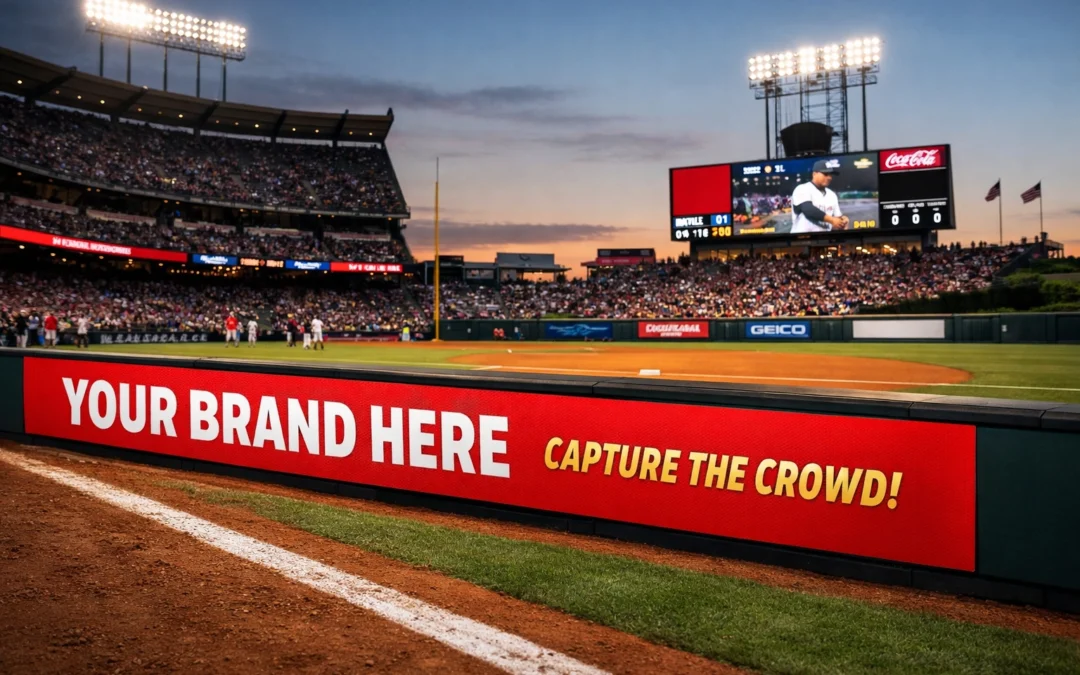
Stadium perimeter advertising represents one of the most valuable opportunities in sports marketing. These promotional displays positioned around the edge of playing fields and courts deliver unmatched visibility during live broadcasts, replays, and social media highlights. For creative directors and CMOs seeking to maximize brand exposure, understanding perimeter advertising fundamentals is essential.
The following guide examines how perimeter advertising works, where it performs best, and why it continues to outpace traditional advertising channels in delivering measurable brand impact.
Understanding Perimeter Advertising's Core Value
Perimeter advertising refers to promotional displays positioned along sidelines, behind goals, and around court edges. These placements occupy prime real estate during broadcasts because cameras naturally focus on action near the touchline.
The primary advantage lies in television exposure multiplication. A single perimeter advertisement can be viewed millions of times across broadcasts, highlight reels, and social media clips. Unlike traditional advertising that requires viewers to actively engage, perimeter boards appear organically during gameplay, creating strong brand recall through repeated passive exposure.

The psychology behind placement strategy is deliberate. Boards positioned behind goals capture emotionally charged celebration scenes that replay constantly on social media platforms. Corner flag areas benefit from set-piece situations. Centre-pitch boards appear in wide tactical shots used by broadcasters to showcase team formations.
Strategic Placement Locations Within Stadium Environments
Perimeter advertising spans multiple locations, each offering distinct visibility advantages:
- Field Perimeter: The primary placement along sidelines and goal lines, capturing continuous action throughout gameplay
- Behind Goals: Premium positioning for celebration moments and penalty situations that generate extensive replay coverage
- Corner Flag Areas: High-visibility zones during corner kicks and throw-ins
- Scoreboards and Digital Screens: Supplementary positioning that appears during gameplay pauses and crowd shots
- Exterior Walls: Additional brand presence for fans entering and exiting venues
Location selection depends on campaign objectives. Brands prioritizing broadcast reach typically invest in sideline positioning. Those seeking social media virality often prioritize goal-line placements where celebration footage generates organic sharing.
Technology Formats and Rotation Capabilities
Modern perimeter advertising employs two primary formats, each offering distinct capabilities.
Static Banners
Traditional static banners feature large-format logos and company names printed on weather-resistant materials. These displays offer consistent brand presence throughout events and require minimal technical infrastructure. Static formats work effectively for brands establishing foundational awareness or operating within budget constraints.

LED Perimeter Systems
LED displays dominate modern stadium environments, offering dynamic capabilities that static banners cannot match. These systems enable rotating messages, animations, and targeted content tailored to different broadcast regions.
LED rotation follows structured patterns. A standard 2:2 rotation divides the board into four sections, with two sponsors each occupying two sections per rotation cycle, typically lasting 30 seconds. Multisession displays can feature up to 14 sponsors simultaneously, with each sponsor visible in every sequence, guaranteeing high contact frequency.
Advanced LED systems incorporate regional targeting, displaying different messages to viewers in different markets watching the same match. This capability allows brands to customize messaging based on audience demographics, local market conditions, or cultural preferences.
Design Principles for Maximum Visual Impact
Effective perimeter advertising adheres to clarity-focused design principles. The viewing environment, distance from cameras, and broadcast compression require specific design considerations.
Key design elements include:
- Maximum Size Logos: Company names and logos displayed at the largest possible scale for clear recognition across broadcast quality levels
- Minimal Text: Few words with direct messaging that viewers can process in seconds
- High Contrast Colors: Strong color contrasts and bright hues that stand out against field surfaces and crowd backgrounds
- Durable Materials: Weather-resistant construction with solid mounting systems that maintain visibility in all conditions
The guiding principle remains simple: less is more. Cluttered designs fail to register with viewers during fast-paced action. Brands that prioritize bold, simple visuals achieve superior recall compared to those attempting detailed messaging.

Modern LED boards enable dynamic adjustments based on game timing and viewer engagement data. Brands can emphasize different messages during high-stakes moments, halftime breaks, or post-game celebrations, matching content to audience attention levels.
Building Brand Connection Through Cross-Platform Integration
Contemporary perimeter advertising extends beyond the stadium through strategic cross-platform integration. This approach transforms static visibility into active engagement opportunities.
Successful integration strategies include:
- Social Media Hashtag Campaigns: Displaying branded hashtags on perimeter screens, encouraging fans to create and share content that amplifies brand presence beyond the venue
- Real-Time Offers: Promoting time-sensitive deals or exclusive content accessible through mobile devices, converting passive viewers into active participants
- Fan-Generated Content: Showcasing spectator-created social media posts on perimeter displays, turning attendees into content creators and brand advocates
- Product Demonstrations: Coordinating in-stadium activations with perimeter messaging to create cohesive brand experiences
This integration creates bridges between physical stadium presence and digital engagement. Fans who see perimeter advertising during gameplay can immediately interact with brands through mobile platforms, social channels, or in-venue activations.
The data-driven dimension adds significant value. Modern LED systems track viewer engagement metrics, measure advertisement effectiveness, and provide detailed analytics on exposure frequency. This measurement capability enables brands to refine strategy continuously and demonstrate return on investment through quantifiable metrics.
Measuring Performance and Optimizing Investment
Perimeter advertising success depends on systematic measurement and strategic optimization. Modern systems provide comprehensive analytics that inform ongoing campaign refinement.
Key performance indicators include:
- Broadcast Exposure Duration: Total screen time across all broadcasts and highlight packages
- Reach Metrics: Unique viewer counts across television, streaming, and social media platforms
- Brand Recall Studies: Pre-campaign and post-campaign awareness measurements demonstrating recognition improvement
- Engagement Rates: Social media interaction, website traffic increases, and mobile app downloads correlated with campaign timing
- Regional Performance: Comparative analysis across different markets for targeted LED campaigns

Brands partnering with specialized sports advertising platforms gain access to sophisticated tracking capabilities. Device ID exposure data, retargeting audience building, and attribution modeling provide detailed insight into how perimeter advertising drives measurable business outcomes.
The methodology mirrors programmatic digital advertising approaches. Brands can segment audiences based on exposure frequency, retarget viewers who saw perimeter advertisements with complementary digital messages, and build comprehensive omnichannel campaigns that maximize every impression.
Strategic Considerations for Campaign Planning
Creative directors and CMOs evaluating perimeter advertising opportunities should consider several strategic factors during planning phases.
Budget Allocation: LED displays command premium pricing compared to static banners but deliver superior flexibility and measurement capabilities. Budget-conscious brands can start with static placements in high-value positions, graduating to LED systems as performance data justifies increased investment.
Campaign Duration: Longer campaigns benefit from cumulative exposure effects. Brand recall studies consistently demonstrate that sustained presence across multiple games outperforms single-event sponsorships in building lasting awareness.
Creative Rotation: LED capabilities enable message variation without physical replacement costs. Brands should develop multiple creative executions that can rotate based on game situations, audience demographics, or campaign phases.
Integration Planning: Maximum value emerges when perimeter advertising anchors broader campaigns. Coordinating stadium presence with social media initiatives, digital advertising, and in-venue activations creates synergistic effects that amplify individual channel performance.
Conclusion
Stadium perimeter advertising delivers unmatched visibility through strategic placement, advanced technology, and systematic measurement. For brands seeking to capture attention during high-engagement moments, perimeter placements offer proven performance that translates to measurable business impact.
The combination of broadcast exposure multiplication, emotional context association, and cross-platform integration capabilities positions perimeter advertising as a cornerstone of effective sports marketing strategies. Creative directors and CMOs who understand placement psychology, leverage modern LED capabilities, and integrate perimeter campaigns within broader marketing initiatives maximize return on investment while building lasting brand connections with passionate fan audiences.