
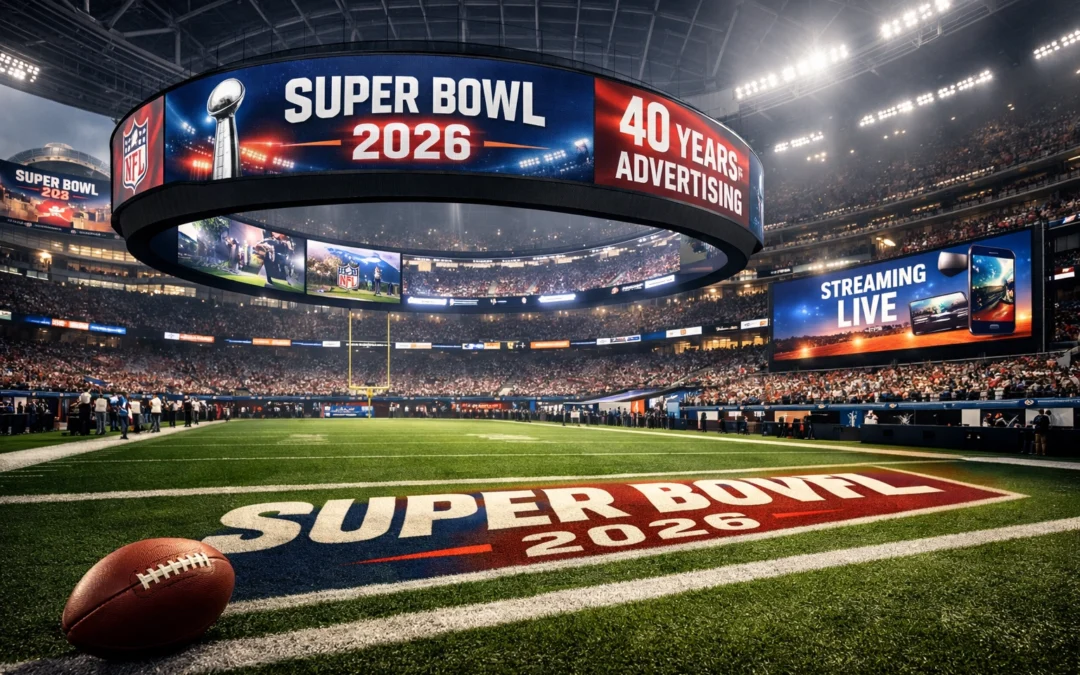
Super Bowl LX is coming to Levi's Stadium on February 8, 2026, and if you think advertising at the big game is just about those $8 million TV spots, think again. For four decades, OOH Sports has been transforming how brands show up at the world's biggest sporting event, covering everything from the stadium floor to the digital billboards fans see on their way to the game.
40 Years of Changing the Game
Since 1986, the landscape of Super Bowl advertising has evolved dramatically. While most people focus on the commercial breaks, the real advertising revolution has been happening inside and around the venue itself. OOH Sports has been at the forefront of this transformation, pioneering venue-wide coverage that puts brands in front of fans at every touchpoint.
The journey started simple: static signage and basic perimeter boards. Fast forward to 2026, and brands now have access to high-definition digital displays, interactive floor graphics, augmented reality experiences, and programmatic digital out-of-home (DOOH) that can change messaging in real time based on game situations.

From Floors to Ceilings: Every Surface Tells a Story
Modern Super Bowl venue advertising covers literally every surface fans interact with. Here's what brands can leverage in 2026:
Stadium Floor Graphics: Custom vinyl wraps in concourses, entryways, and even restroom areas create massive brand impressions. These aren't just stickers, they're high-traffic canvases that fans walk across thousands of times during game day.
Digital Perimeter Boards: The LED ribbons circling the field have become prime real estate. With programmatic capabilities, these boards can rotate brand messages, react to game events, and even personalize content for different viewing angles.
Concourse Digital Displays: High-definition screens throughout the stadium create micro-moments for brand storytelling. Fans waiting in line for concessions or walking to their seats are a captive audience.
Exterior Building Wraps: The stadium itself becomes a billboard, visible from miles away and featured in countless social media posts and news coverage.
Parking and Transit Advertising: The fan experience starts before they enter the stadium. Digital billboards along major routes and in parking structures extend brand reach.
https://www.youtube.com/watch?v=l6J-0zileKE
The Numbers That Matter
Super Bowl advertising isn't cheap, but the ROI tells a compelling story. A 30-second TV ad might cost $8 million and reach 100 million viewers for exactly 30 seconds. Venue-wide advertising, however, creates repeated exposures throughout the entire game day experience.
Consider this: the average fan spends 5-6 hours at the stadium on Super Bowl Sunday. That's hundreds of potential brand impressions across multiple touchpoints. When fans share photos on social media, they're not just capturing the game, they're documenting every branded surface they encounter.
Recent brand lift studies have shown that programmatic DOOH campaigns can drive purchase consideration lifts of 74% or higher. Unlike TV commercials that compete for attention during commercial breaks, venue advertising integrates seamlessly into the fan experience.

Technology Meets Tradition
The 2026 Super Bowl represents the peak of advertising technology. OOH Sports has invested heavily in programmatic capabilities that allow brands to adjust messaging on the fly. If a particular play happens or weather conditions change, digital displays can update instantly to reflect real-time relevance.
Geofencing technology enables brands to retarget fans who attended the game with follow-up messaging on their mobile devices. This creates an omnichannel experience that extends well beyond game day.
Integration with social media platforms means that every Instagram story and TikTok video featuring venue advertising creates additional earned media value. Brands aren't just buying ad space, they're creating shareable moments.
Beyond the Game: Extended Coverage
Super Bowl advertising doesn't start and end with kickoff. The week leading up to the game features dozens of events, parties, and activations across the host city. OOH Sports coordinates venue-wide coverage across multiple locations:
- Media day events and press conferences
- Fan experience zones and interactive exhibits
- Official NFL parties and sponsor activations
- Airport terminals and major transportation hubs
- Hotel districts and downtown entertainment areas
This comprehensive approach ensures brands maintain visibility throughout the entire Super Bowl week, not just during the 3-hour game window.

Measuring Success in the Modern Era
Gone are the days when venue advertising success was measured by gut feeling. Today's campaigns leverage sophisticated attribution technology. Device IDs captured at the stadium can be matched with purchase data, website visits, and app downloads to create a complete picture of campaign effectiveness.
Studies from recent campaigns show impressive results. Mike's Hard Iced Tea achieved a 119% lift in positive brand image through programmatic DOOH, while Sea-Doo saw purchase consideration increase by 144% in their first digital OOH campaign.
These metrics matter because they tie advertising spend directly to business outcomes. Brands can justify their investment with concrete data rather than anecdotal evidence.
Why Venue-Wide Coverage Wins
The case for comprehensive venue advertising comes down to basic human behavior. Fans at the Super Bowl are highly engaged, emotionally invested, and in a positive state of mind. They're not reaching for the remote during commercial breaks. They're experiencing every moment, and that includes the advertising environment around them.
Fan engagement research demonstrates that stadium perimeter ads capture attention and drive action better than social media advertising. The physical presence creates a psychological impact that digital-only campaigns struggle to match.
Additionally, venue advertising avoids the crowding effect of TV commercial breaks. When 20+ brands compete for attention in a single commercial pod, individual recall suffers. A well-placed floor graphic or digital display has the space to breathe and make an impression.
Looking Ahead: The Next 40 Years
As OOH Sports enters its fifth decade of Super Bowl advertising excellence, the future looks even more exciting. Emerging technologies like holographic displays, AI-driven personalization, and mixed reality experiences will transform venue advertising once again.
The fundamentals remain the same: put your brand where fans are, create memorable experiences, and measure everything. But the execution continues to evolve with each technological advancement.
Super Bowl LX in 2026 represents the culmination of 40 years of innovation, experimentation, and proven results. From humble beginnings with static signage to today's sophisticated programmatic DOOH ecosystem, venue-wide coverage has become the smart play for brands serious about making an impact.
For brands considering their Super Bowl 2026 strategy, the message is clear: don't just show up during commercial breaks. Own the entire venue experience from the moment fans leave their homes until they head back celebrating (or commiserating). That's where real advertising leadership happens.
Learn more about venue-wide advertising solutions and how to make Super Bowl LX your brand's breakout moment.