
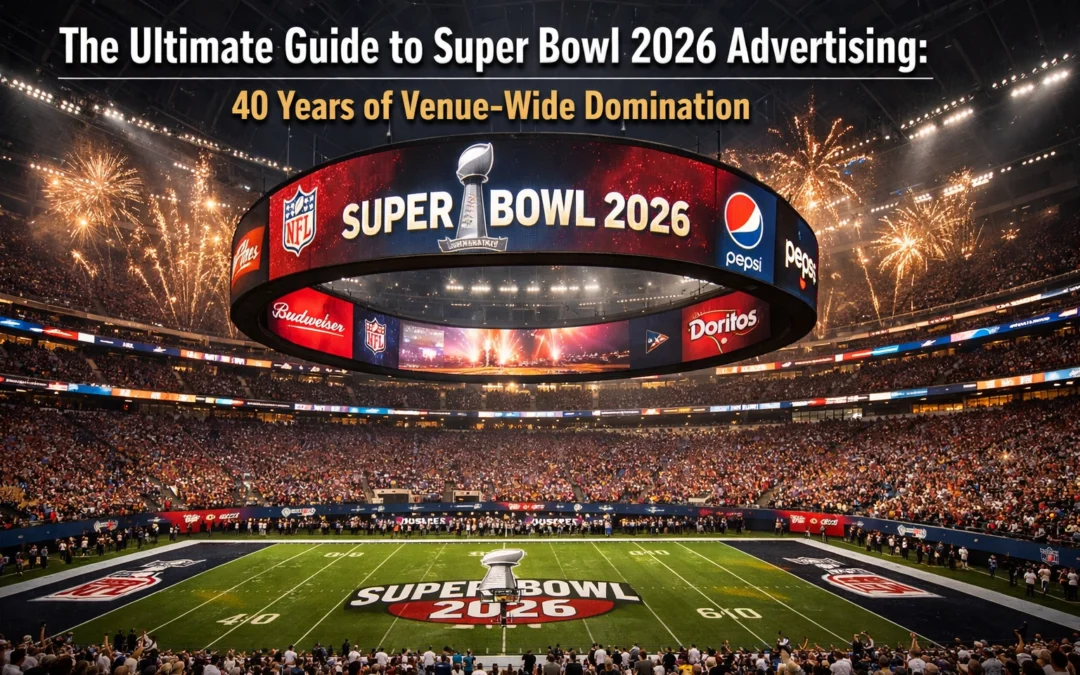

The Super Bowl advertising game has changed. While brands shell out millions for 30-second TV spots, the smartest marketers have discovered something better: venue-wide domination that reaches fans where they actually are.
For 40 years, OOH Sports has pioneered the strategy that puts brands everywhere inside and around the stadium. From floor graphics fans walk across to massive LED billboards they can't miss, this approach delivers something TV commercials never will: total environmental immersion.
Four Decades of Stadium Advertising Leadership
The journey began in 1986 when OOH Sports recognized a gap in sports advertising. Television commercials reached viewers at home, but what about the 70,000+ fans inside the venue? What about the millions more in surrounding areas during Super Bowl week?
The strategy was straightforward: create advertising opportunities at every touchpoint of the fan experience. That meant floor decals at stadium entrances, banners along concourses, digital displays at concession stands, and massive billboards on approach routes to the venue.
Over four decades, this approach evolved from static signage to sophisticated programmatic digital displays. The core principle remained constant: own the environment, own the attention.

Venue-Wide Coverage: Every Surface Is Prime Real Estate
Modern Super Bowl venue advertising spans multiple dimensions. The coverage includes:
Ground-Level Domination
Floor graphics at main entrances create immediate brand impressions as fans enter the stadium. These high-traffic areas generate thousands of exposures per hour during peak entry times. Vinyl wraps on stairs and escalators extend the messaging throughout vertical movement paths.
Concourse Integration
Premium positions along concourses capture fans during the 60-90 minutes they spend navigating the stadium before kickoff. Digital screens at food and beverage locations reach audiences during extended dwell times. Column wraps and hanging banners create consistent brand presence throughout navigation routes.
Perimeter Presence
Stadium perimeter advertising reaches both in-venue and broadcast audiences simultaneously. LED displays rotate multiple brand messages during commercial breaks and between plays. Static billboards provide continuous exposure throughout the four-hour event window.
Surrounding Territory
Billboard networks on highways and major approach routes begin building brand awareness days before the event. Digital displays in nearby entertainment districts capture fans during the week-long Super Bowl festivities. Transit advertising reaches attendees using public transportation systems.
This comprehensive coverage creates multiple exposures per fan, building brand recall far beyond what a single TV commercial achieves.
The Numbers Behind Venue Domination
Recent brand lift studies demonstrate the effectiveness of venue-wide advertising strategies. Brands utilizing comprehensive stadium coverage during major sporting events consistently achieve:
- 74% lift in purchase consideration for new product launches
- 119% improvement in positive brand image metrics
- 144% increase in purchase intent among exposed audiences
These results stem from the immersive nature of venue advertising. Unlike television commercials that compete with bathroom breaks and snack runs, environmental advertising captures attention during active engagement periods.
The dwell time factor amplifies impact significantly. Fans spend an average of four hours inside Super Bowl venues, creating extended exposure opportunities. Compare this to 30 seconds of television time, and the value proposition becomes clear.

Technology Evolution: From Static to Programmatic
The technological transformation over 40 years revolutionized venue advertising capabilities. Early implementations relied on printed vinyl and painted signage. Installation required weeks of advance preparation. Changes were impossible once materials were mounted.
Digital displays introduced flexibility. Brands could rotate multiple messages throughout the event. Real-time adjustments became possible based on game flow and audience response.
Programmatic technology elevated capabilities further. Advertisers now trigger specific creative based on game situations. A beer brand displays celebration messaging after touchdowns. An automotive company highlights safety features during injury timeouts.
Integration with mobile device IDs enables retargeting strategies. Fans exposed to venue advertising receive follow-up digital ads in subsequent days. This omnichannel approach extends campaign reach beyond the physical event.
Strategic Advantages Over Television Advertising
Television commercials face significant challenges during Super Bowl broadcasts. Production costs exceed $5 million for premium creative. Media costs reach $7 million per 30-second spot for Super Bowl LX. The total investment approaches $12-15 million for a single exposure.
Venue-wide advertising delivers superior value through multiple factors:
Guaranteed Attention
Fans cannot skip, mute, or fast-forward through environmental advertising. The coverage creates unavoidable exposures throughout the event experience.
Extended Exposure Windows
Television spots run for 30 seconds. Venue advertising generates continuous impressions for 4+ hours. The cumulative impact far exceeds brief broadcast moments.
Dual Audience Reach
Stadium perimeter positions reach both in-venue attendees and television viewers simultaneously. A single placement delivers exposure to 180 million+ combined audience members.
Week-Long Activation
Super Bowl week activities extend advertising opportunities beyond game day. Surrounding billboards and entertainment district displays reach fans throughout the entire celebration period.
Measurable Attribution
Device ID tracking enables precise measurement of venue exposure impact. Brands track store visits, website traffic, and purchase behavior among exposed audiences. This data-driven approach provides clear ROI documentation.
Super Bowl 2026: Peak Performance in Los Angeles
Super Bowl LX in Los Angeles represents the culmination of four decades of venue advertising evolution. The SoFi Stadium complex offers unprecedented advertising opportunities across 298 acres of development.
The venue features over 2.5 million square feet of digital display surfaces. The iconic Oculus videoboard alone spans 70,000 square feet of premium advertising inventory. Surrounding development includes retail, entertainment, and hospitality venues with additional advertising placements.
Los Angeles market characteristics amplify campaign effectiveness. The metropolitan area includes 18.7 million residents. Super Bowl week attracts 150,000+ visitors to the region. Combined reach potential exceeds 20 million exposures across the campaign period.
Highway billboard networks surrounding the venue deliver consistent messaging to commuters and visitors. LAX airport displays capture incoming attendees upon arrival. Santa Monica and Hollywood entertainment districts extend brand presence throughout tourist destinations.

Planning Your Super Bowl Venue Campaign
Successful venue-wide advertising requires strategic planning across multiple dimensions. Timeline considerations begin 12-18 months before the event. Premium positions book early as major brands secure inventory.
Creative development must account for various formats and viewing distances. Floor graphics require different design approaches than 40-foot LED displays. Messaging should remain consistent while adapting to each placement type.
Integration with broader marketing campaigns maximizes impact. Venue advertising works most effectively when aligned with television, digital, and social media efforts. The combined approach creates reinforcing exposures across multiple touchpoints.
Measurement planning should begin during campaign design. Establishing device ID exposure zones, implementing tracking pixels, and coordinating with retail partners enables comprehensive attribution analysis. Post-campaign reporting quantifies specific business outcomes tied to venue exposures.
The Future of Stadium Domination
Four decades of innovation point toward continued evolution in venue advertising capabilities. Artificial intelligence will enable dynamic creative optimization based on real-time audience composition. Augmented reality integrations will create interactive brand experiences within physical environments.
The fundamental advantage remains constant: venue-wide advertising captures attention during peak engagement moments. As television viewership fragments and digital advertising faces increasing skepticism, environmental domination delivers guaranteed exposures to highly engaged audiences.
Super Bowl 2026 represents not just another championship game, but the latest milestone in 40 years of venue advertising leadership. Brands that embrace comprehensive stadium coverage will dominate the conversation, drive measurable business results, and establish market leadership in the world's most-watched sporting event.
The question is not whether venue-wide advertising works. Four decades of proven results answer that definitively. The question is whether brands will invest in domination or settle for distraction during commercial breaks.