
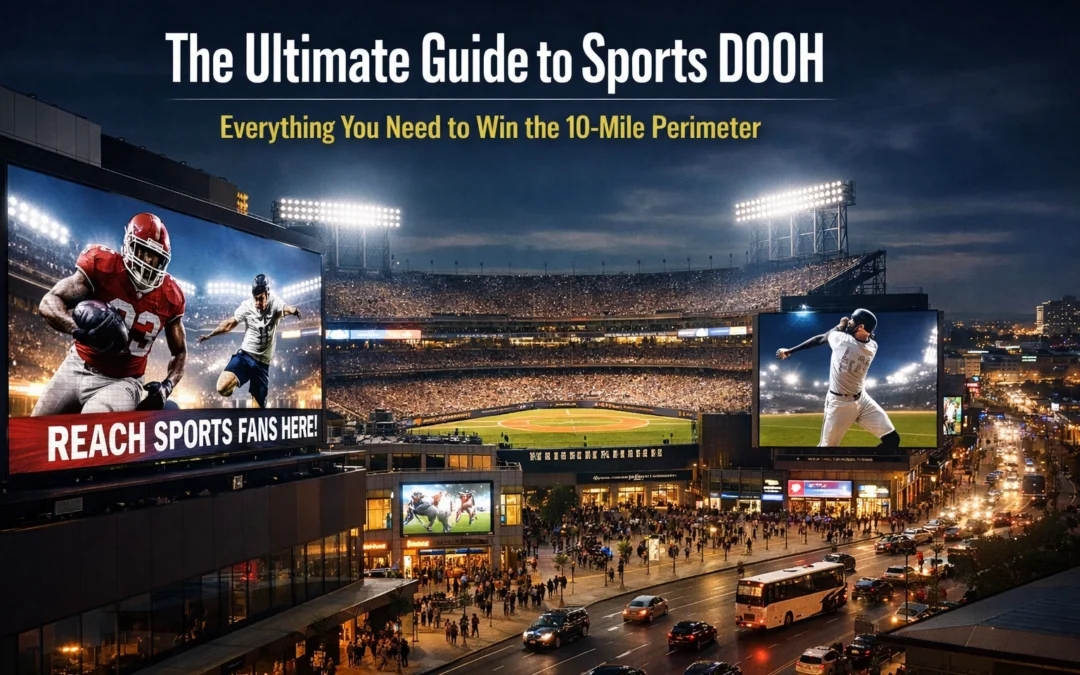
Digital out-of-home (DOOH) advertising has evolved from simple digital billboards into a sophisticated, data-driven ecosystem. For media buyers and brand managers, the goal is no longer just to be seen. The goal is to be seen by the right person at the right time in the right context. In the world of sports marketing, this context is defined by the 10-mile perimeter surrounding major stadiums and arenas.
Sports fans are a unique audience. They are emotionally invested, highly engaged, and move through predictable geographic patterns on game days. By leveraging sports DOOH, brands can capture this high-intent audience throughout their entire journey, from the moment they leave their homes to the moment they enter the stadium gates.
Defining the 10-Mile Perimeter Strategy
The 10-mile perimeter refers to the geographic radius where the highest concentration of fan activity occurs before, during, and after a sporting event. This zone includes transit hubs, highways leading to the venue, sports bars, restaurants, and fan festivals.
Instead of focusing solely on the expensive and limited inventory inside the stadium, the 10-mile perimeter strategy utilizes a network of digital screens to create a surround-sound effect. This approach ensures that a brand message is the first thing a fan sees when they arrive in the city and the last thing they see as they celebrate a victory.

The Fan Journey: Multi-Touchpoint Activation
A successful sports DOOH campaign recognizes that fandom does not start at kick-off. It begins hours, or even days, before the event. Strategic placement across various touchpoints allows brands to remain top-of-mind.
The Transit Phase
Fans traveling to a game often use public transportation or major highways. Digital screens in train stations, bus shelters, and large-format roadside billboards are essential during this phase. These placements establish initial brand awareness and set the tone for the day.
The Social Phase
Before heading to the gates, many fans congregate at local establishments. Screens in sports bars and restaurants provide a prime opportunity for engagement. At this stage, fans are often in a relaxed, social mindset, making them more receptive to lifestyle and beverage branding.
The Arrival Phase
As fans approach the stadium, the density of the crowd increases. High-impact digital displays near the stadium entrance and in surrounding fan zones provide a final nudge. This is where brands can capitalize on the peak excitement of the crowd.

Programmatic DOOH: Real-Time Precision
The rise of programmatic digital out-of-home (pDOOH) has changed the game for sports advertisers. Programmatic technology allows for the automated buying and selling of ad space, but more importantly, it enables dynamic content triggered by real-time data.
Dynamic Content Triggers
With pDOOH, creative content can change based on live game scores, weather conditions, or even the time of day. For example, a sports betting brand can update odds on digital screens in real-time, or a beverage brand can display a congratulatory message immediately after a home team win. This level of relevance significantly increases engagement and recall.
Operational Efficiency
Using platforms like the StackAdapt DSP, media buyers can manage complex campaigns across thousands of screens from a single interface. This efficiency allows for rapid pivots and optimizations that were impossible with traditional static outdoor advertising.
The Power of Omnichannel Integration
DOOH does not exist in a vacuum. It is most effective when integrated into a broader omnichannel strategy. When a fan sees a high-impact digital billboard and is later retargeted with a mobile ad or a social media post, the memory structure of the brand is strengthened.
This "priming effect" is a well-documented phenomenon in advertising. Research suggests that audiences are more likely to engage with digital ads on their mobile devices after being exposed to the same brand via a DOOH screen. For instance, Nike effectively used urban presence during major athletic events to dominate the conversation without being an official sponsor, showcasing the power of strategic geographic placement.

Measurable Results and Case Studies
The move toward digital inventory has brought a level of measurement to outdoor advertising that was previously reserved for online channels. Brands can now track purchase consideration, brand lift, and even foot traffic attribution.
Beverage Industry Success
The beverage industry has seen significant success with sports-centric DOOH. In one instance, a campaign for White Claw saw a 74% lift in purchase consideration during a vodka launch by targeting key geographic zones. Similarly, AB InBev recorded a 119% lift in positive brand image using programmatic DOOH to reach fans in real-time.
Driving High-Value Consideration
For brands with higher price points, DOOH serves as a powerful tool for building trust and consideration. A campaign for Sea-Doo resulted in a 144% increase in purchase consideration. These results demonstrate that the visual impact of large-scale digital screens, combined with strategic targeting, can move the needle on complex consumer journeys.
Why the 10-Mile Perimeter Beats the Stadium Wall
Traditional stadium sponsorships are prestigious, but they come with limitations. They are often prohibitively expensive and restricted by exclusive category rights. Sports DOOH offers a flexible alternative that levels the playing field.
- Cost-Effectiveness: Brands can reach the same audience as stadium sponsors at a fraction of the cost by targeting the surrounding 10-mile radius.
- Category Flexibility: Unlike official sponsorships, which may grant exclusivity to a single brand, the 10-mile perimeter is open to all advertisers, allowing smaller or newer brands to compete for attention.
- Extended Reach: Stadium ads only reach the people inside the venue. DOOH reaches the tens of thousands of fans in the city who may be watching at bars or fan zones but do not have a ticket to the game.

Strategic Planning for Media Buyers
Winning the 10-mile perimeter requires more than just buying screens. It requires a deep understanding of the local landscape and fan behavior.
Inventory Selection
Not all screens are created equal. Media buyers should prioritize high-dwell-time locations, such as transit platforms or busy intersections near popular sports bars. The OOH Sports network provides access to thousands of screens specifically chosen for their proximity to sports-related traffic.
Timing and Seasonality
In the sports world, timing is everything. Campaigns should be planned around major events, but the flexibility of pDOOH allows for "always-on" strategies that can scale up during playoff runs or championship weekends. Because premium inventory near stadiums often sells out months in advance, early planning is essential to secure the best locations.
Creative Execution
The best DOOH creative is simple, bold, and contextual. Since viewers are often in motion, the message must be digestible in a few seconds. Using local sports terminology or referencing specific team rivalries can create an immediate connection with the local audience.
Conclusion
The 10-mile perimeter is the new frontier of sports marketing. By moving beyond the stadium walls and embracing the full fan journey through digital out-of-home advertising, brands can achieve unprecedented levels of engagement and ROI. Whether it is through real-time score updates, programmatic efficiency, or high-impact visual storytelling, sports DOOH provides the tools necessary to win the game-day crowd.
For those looking to explore the full potential of these strategies, the OOH Sports website offers comprehensive resources and access to a vast network of digital inventory designed to dominate the 10-mile perimeter.