
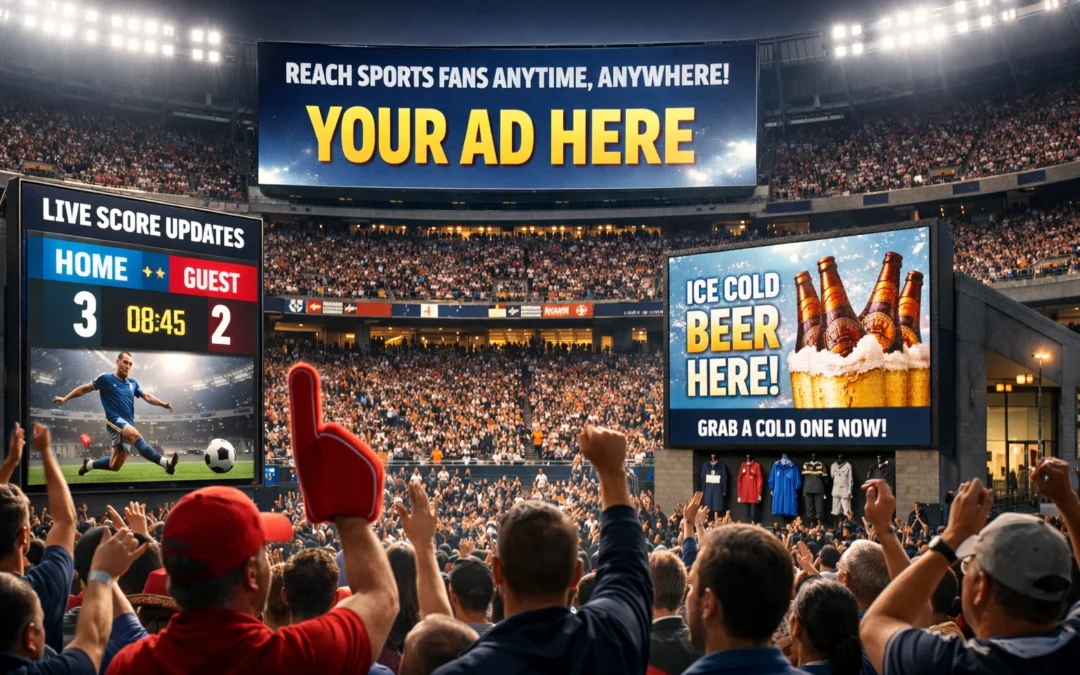
The landscape of sports marketing is undergoing a significant transformation. As traditional television viewership becomes more fragmented and digital ad fatigue sets in, brands are looking for more reliable ways to connect with audiences. Digital Out-of-Home (DOOH) advertising, particularly within the sports vertical, has emerged as a powerhouse for reaching fans when they are most engaged.
Through the use of high impact screens in stadiums, transit hubs, and retail environments, sports DOOH bridges the gap between the physical world and digital precision. This approach allows media buyers and brand managers to execute campaigns that are not only visually stunning but also backed by robust data and real time relevance.

The Power of Real-Time Dynamic Content
One of the most significant advantages of sports DOOH is the ability to leverage dynamic content. Traditional billboards are static, but digital screens allow for creative that changes based on live triggers. For a brand, this means the messaging can stay perfectly in sync with the energy of the game.
Dynamic creative can be triggered by various factors:
- Live Scores: Ads can update instantly to reflect the current score of a game, keeping the content relevant to the fans walking by.
- Game Milestones: When a player hits a home run or scores a touchdown, screens can immediately display celebratory branded content.
- Weather Conditions: Messaging can change based on the local climate, such as promoting cold drinks on a hot game day or team hoodies when the temperature drops.
- Countdowns: Creating urgency by showing how many minutes are left until kickoff or the end of a championship series.
This level of relevancy ensures that the advertisement does not feel like an interruption. Instead, it becomes a part of the fan experience, enhancing the overall atmosphere of the event.
Exceptional Engagement Rates Among Sports Fans
Sports fans represent a unique demographic. They are passionate, loyal, and highly attentive to the environment surrounding their favorite teams. Research indicates that 81% of fans feel more positive toward brands that sponsor sports. This positive association creates a fertile ground for DOOH campaigns to thrive.
The action rates associated with DOOH are equally impressive. Studies show that approximately 76% of people who view a DOOH advertisement take some form of action afterward. This might include visiting a website, searching for the brand on a mobile device, or making a physical purchase. Because sports fans are often already in a "consumption" mindset, whether they are buying food at the stadium or gear at a nearby shop, the path to conversion is much shorter.

Precision Targeting at Scale
The transition to programmatic DOOH has revolutionized how media buyers approach the market. It is no longer about simply buying a "sign." It is about buying an audience. With the OOH Sports network, advertisers can access over 25,000 digital screens across America, allowing for massive scale without sacrificing precision.
Programmatic technology allows for:
- Location-Based Targeting: Reaching fans in specific zip codes, near stadiums, or within high traffic sports bars.
- Time-Based Targeting: Scheduling ads to run only during pre-game festivities or immediately following a victory.
- Demographic Precision: Using mobile location data to understand the types of audiences frequenting specific venues and tailoring the message to match their interests.
By using these tools, brands can ensure that their budget is spent on the eyes that matter most, reducing waste and increasing the overall efficiency of the media buy.
Immunity to Ad Avoidance
In the digital world, ad blockers and "skip" buttons are a constant challenge for marketers. Digital ads on smartphones and computers are easily ignored or hidden. Sports DOOH does not suffer from this problem. It exists in the physical world, where it cannot be blocked, skipped, or scrolled past.
When a fan is navigating a stadium concourse or waiting for a train after the game, the digital screen is a natural focal point. These screens provide high visibility in high dwell-time areas. This guaranteed exposure is a major reason why brand managers are shifting more of their budgets toward out-of-home assets. The physical presence of a large, bright digital screen creates a level of brand authority that a small banner ad on a mobile site simply cannot replicate.
Measurable ROI and Data-Driven Insights
In the past, out-of-home advertising was often criticized for a lack of clear measurement. Those days are over. Modern sports DOOH provides detailed performance metrics that allow for a clear understanding of Return on Investment (ROI).
Through partnerships and advanced tracking technology, brands can now measure:
- Impressions: The total number of people who had a high probability of seeing the ad.
- Footfall Attribution: Tracking how many people who saw a DOOH ad later visited a specific retail location or stadium.
- Brand Lift: Using surveys and data analysis to see how brand perception changed following a campaign.
- Purchase Consideration: Measuring the intent of consumers to buy a product after exposure.
Recent examples in the industry highlight the effectiveness of this data-driven approach. For instance, White Claw’s programmatic campaign saw a 74% lift in purchase consideration. Similarly, AB InBev’s Mike’s Hard Iced Tea realized a 119% lift in positive brand image through a targeted DOOH strategy. These figures prove that when data and creativity meet in the sports arena, the results are quantifiable.

Omnichannel Integration
Sports DOOH does not exist in a vacuum. It is most effective when used as part of an omnichannel strategy. The creative assets used for a stadium screen can be easily adapted for social media, mobile display ads, or Connected TV (CTV).
By maintaining a consistent visual identity across multiple touchpoints, brands can reinforce their message. A fan might see a brand on a digital screen at the stadium, then see a related ad on their social feed the next morning, and finally encounter a retail display while shopping. This "surround sound" marketing strategy builds trust and keeps the brand top-of-mind.
The Future of Sports Infrastructure
As sports venues continue to modernize, the opportunities for DOOH will only grow. New stadiums are being built with digital integration as a core component of the architecture. From the perimeter of the field to the digital menus at the concession stands, the entire environment is becoming a canvas for digital communication.
This evolution is not limited to the stadiums themselves. The transit systems, fan zones, and surrounding entertainment districts are also seeing a massive influx of digital signage. This creates a "fan journey" where a brand can interact with a consumer from the moment they leave their house until they return home after the game.

Strategic Implementation for Media Buyers
For media buyers looking to enter the sports DOOH space, the process has become increasingly streamlined. Platforms like OOH Sports offer a simplified way to plan and execute campaigns across a vast network of screens.
To maximize the impact of a sports DOOH campaign, consider the following steps:
- Define the Objective: Whether it is brand awareness, footfall to a nearby store, or promoting a new product launch.
- Identify Key Venues: Choose locations that align with the target audience’s habits, such as specific arenas or sports focused retail hubs.
- Utilize Dynamic Creative: Don’t just use a static image. Use the technology to speak to the moment.
- Monitor and Optimize: Use real time data to see which screens or times are performing best and adjust the budget accordingly.
Why Sports DOOH is a Must-Have
The combination of a captive audience, high emotional engagement, and sophisticated targeting makes sports DOOH a mandatory component of a modern media mix. It offers a level of brand safety and viewability that is increasingly rare in the digital world.
By leveraging the excitement of live sports and the precision of digital technology, brands can create memorable experiences that resonate with fans long after the final whistle has blown. For more information on how to integrate these strategies into your next campaign, you can explore the OOH Sports blog or view specific case studies to see the impact of this medium in action.
Sports DOOH is not just a trend. It is a fundamental shift in how brands and fans interact. As the technology continues to advance and the network of screens expands, the potential for creative and impactful storytelling is limitless. Now is the time for brand managers to embrace the power of the stadium and beyond.