
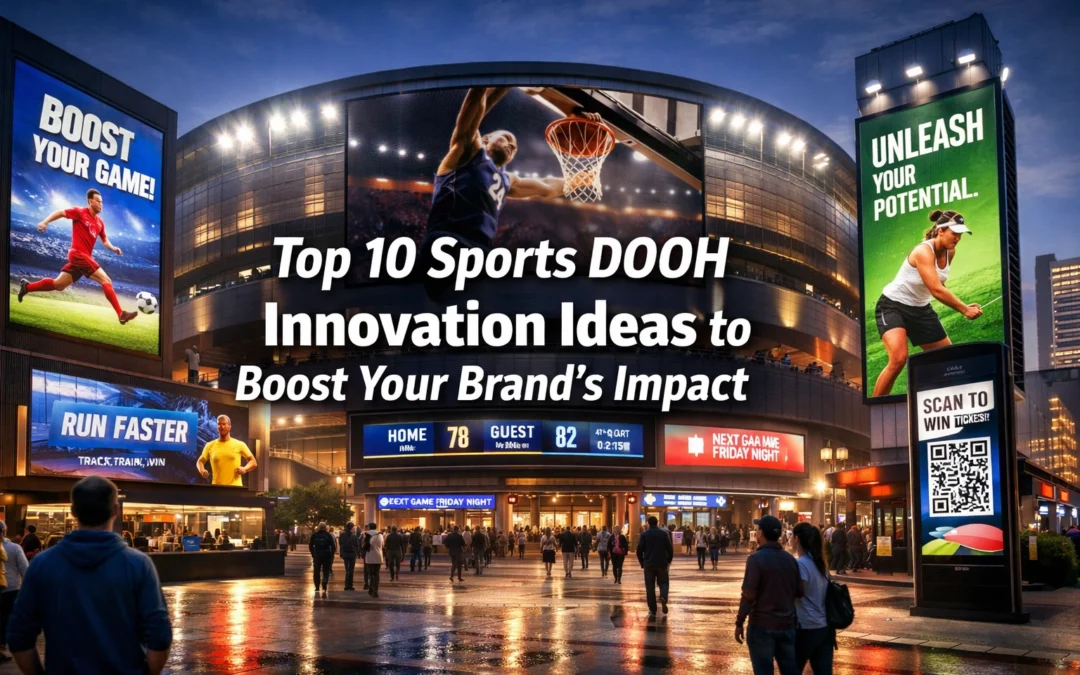
The landscape of sports advertising is shifting away from static billboards toward a more fluid and data-driven ecosystem. Digital Out-of-Home (DOOH) technology now allows brand managers and media buyers to reach fans with surgical precision. Whether it is a championship game or a local rivalry, the ability to capture attention in high-traffic environments like stadiums, transit hubs, and sports bars is a major advantage for any modern marketing strategy.
By leveraging the latest innovations in OOH Sports technology, brands can move past simple impressions and toward meaningful engagement. Here are the top 10 sports DOOH innovation ideas designed to maximize brand impact.
1. Dynamic Creative Optimization (DCO)
Dynamic Creative Optimization, or DCO, is the process of using data to change the content of an advertisement in real time. In the context of sports, this means the creative can react to what is happening on the field.
If a home team scores a goal, the digital screen can instantly update to show a celebratory message alongside the brand logo. If a game is delayed due to weather, the ad can pivot to a relevant message or a different product. This level of relevance ensures that the creative feels like a part of the fan experience rather than an interruption. DCO keeps messaging fresh and highly aligned with the emotions of the audience at that exact moment.
2. Geofencing and Behavior-Based Targeting
Location is everything in out-of-home advertising, but modern DOOH takes it a step further. Geofencing allows advertisers to create virtual boundaries around specific areas like airports, transit lines, and fan zones.
Instead of just placing an ad on a random street corner, brands can target high-intent zones where sports fans gather before and after an event. By analyzing movement patterns, advertisers can identify where fans are most likely to spend time and deploy messaging that matches their journey. This targeted approach ensures that the budget is spent on the audiences most likely to convert.

3. Interactive Elements and Mobile Integration
Interactive DOOH transforms a passive viewing experience into an active exchange. By incorporating QR codes, live polls, or mobile prompts, brands can bridge the gap between a physical screen and a digital device.
For example, a digital screen near a stadium might invite fans to vote on their predicted game winner via a QR code. This interaction provides immediate engagement and allows for first-party data collection. Fans who engage with the screen can be funneled into a brand’s mobile ecosystem for app installs or exclusive discounts. This method is particularly effective for driving measurable actions during high-energy sporting events.
4. Real-Time Content Updates During Events
Sports are unpredictable, and marketing should be too. Modern networks now allow for content refreshes at specific intervals, such as halftime or during a crucial play.
As the OOH Sports network expands to 25,000 digital screens, the ability to sync messaging across a national footprint becomes even more powerful. Advertisers can maintain momentum throughout the entire event lifecycle, from the pre-game build-up to the post-game analysis. This constant relevance helps a brand stay top-of-mind as the narrative of the game unfolds.
5. Smart Venue Technology and Sportrons
Stadiums and arenas are becoming massive hubs for digital connectivity. Integrating brands into the internal digital infrastructure, such as Jumbotrons and perimeter displays, is a proven way to capture attention.
The use of Sportrons allows brands to become part of the stadium architecture. These screens are strategically placed to ensure maximum visibility during key moments of play. Studies have shown that stadium perimeter ads capture hearts and wallets better than social media because they reach fans when their emotional engagement is at its peak.

6. Multi-Channel Coordinated Messaging
A successful DOOH strategy does not exist in a vacuum. The most impactful campaigns synchronize digital screens with other marketing channels like social media, live broadcasts, and email marketing.
When a fan sees a consistent message on a digital billboard on their way to the game, then sees it again on the stadium screens, and finally encounters a sponsored post on social media during halftime, the brand recall increases significantly. Coordination across touchpoints ensures a unified brand story that follows the fan wherever they go.
7. Addressable Geo-Location Advertising
Precision targeting is no longer reserved for online ads. Addressable geo-location advertising allows brand managers to align DOOH messaging with specific real-world signals, including household-level data and neighborhood demographics.
This technology enables brands to deliver hyper-local content that resonates with the specific culture of a city or a fan base. By tailoring the creative to the location, the advertisement feels more personal and less like a generic mass-market message. This strategy is particularly useful for regional product launches or local sports sponsorships.
8. Location-Based Performance Tracking
One of the biggest historical challenges of OOH was measurement. However, modern DOOH provides robust performance tracking. By using mobile location data, advertisers can track how many people who were exposed to a digital screen eventually visited a retail location or downloaded an app.
For instance, a White Claw programmatic campaign demonstrated a 74 percent lift in purchase consideration. This data-driven approach allows media buyers to justify their spend and optimize future campaigns based on real-world foot traffic and behavior.

9. Context-Driven Creative Adaptation
Environmental factors play a large role in how consumers perceive advertising. Innovation in DOOH allows brands to adjust their creative based on external conditions like weather, temperature, or local sentiment.
If the weather at a golf tournament is sunny, a brand might show an ad for sunscreen or cold beverages. If the weather turns rainy, the creative can automatically switch to umbrellas or indoor activities. This level of contextual awareness makes the advertising feel helpful and relevant, which builds a positive brand image. This was seen in a campaign where Mike’s Hard Iced Tea saw a 119 percent lift in positive brand image using similar programmatic strategies.
10. Closed-Loop Attribution Measurement
The ultimate goal of any marketing campaign is to prove ROI. Closed-loop attribution connects the exposure of a DOOH ad directly to a conversion. This involves using advanced analytics to bridge the gap between the physical screen and the digital or physical sale.
By analyzing device IDs exposed to an ad and comparing them against purchase data, brands can see exactly how their DOOH spend is driving revenue. This shifts the conversation from impressions to outcomes, making DOOH an essential part of a performance-driven marketing mix.

Implementing Innovation with OOH Sports
The transition from traditional advertising to innovative DOOH requires the right technology and the right network. Brand managers who embrace these ten strategies can create more immersive, memorable, and effective campaigns. Whether it is through real-time updates or advanced attribution, the goal remains the same: reaching the right fan at the right time with the right message.
The sports world moves fast, and advertising must keep pace. By using these innovations, brands can ensure they are not just watching from the sidelines but are an active part of the game. For more details on how to implement these strategies, visiting the OOH Sports blog or exploring the case study section provides deeper insights into successful executions across the industry.