
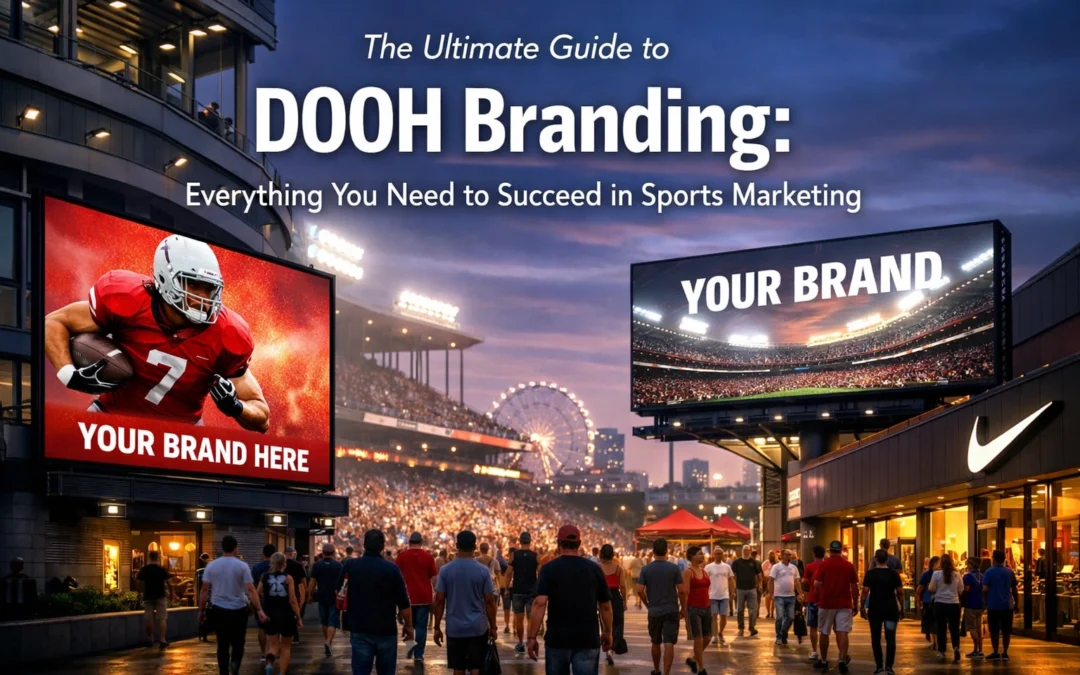
Sports marketing has undergone a massive transformation. The days of relying solely on a thirty second television spot or a static billboard outside a stadium are over. Today, the focus is on the fan journey, a continuous experience that starts long before kickoff and extends well after the final whistle. Digital Out-of-Home (DOOH) advertising has emerged as the most effective tool to navigate this journey. By placing dynamic, data-driven content in the physical world where fans live, work, and play, brands can build a level of resonance that traditional channels often struggle to achieve.
This guide provides a comprehensive look at how to succeed in sports marketing through DOOH. It covers strategic foundations, targeting techniques, creative excellence, and the measurement of real-world results.
The Strategic Shift: From Location to Routine
The fundamental shift in modern sports marketing is moving from location-based buying to routine-based strategy. While the stadium remains the heart of the action, research indicates that 99 percent of fan attention exists outside of the arena. Fans are watching highlights at sports bars, commuting to work, shopping for game day supplies, and traveling through airports.
DOOH allows advertisers to intercept these fans during their daily routines. Instead of hoping a fan sees a logo on a jersey during a broadcast, brands can place high-impact visuals on digital urban panels, transit hubs, and retail screens. This creates a priming effect. When a consumer sees a digital billboard during their morning commute and later encounters a social media ad, the memory structure for the brand is significantly reinforced.

Targeting Across the Fan Journey
A successful campaign meets fans at multiple touchpoints. Effective DOOH strategies break the fan experience into three distinct phases:
1. The Pre-Game Build Up
Building excitement is essential for engagement. In the days leading up to a major event, digital screens along commuter routes and in city centers can display countdowns, highlight reels, or ticket information. This phase is about awareness and creating a sense of anticipation.
2. Game Day Saturation
On the day of the event, the strategy shifts to high-traffic, high-intent zones. This includes inventory near stadiums, fan zones, and entertainment districts. For brands in the beverage or food industry, targeting screens in and around sports bars is a highly effective way to reach a concentrated audience at the point of consumption. Real-time updates and betting odds can be integrated to keep the content relevant to the immediate environment. For more on how to execute these rapid campaigns, see how to launch real-time sports betting DOOH campaigns.
3. Post-Game Momentum
The conversation does not end when the game finishes. Post-game messaging across transit hubs and nightlife districts allows brands to celebrate wins or offer consolation with the fan base. Refreshed messaging that acknowledges the game's outcome makes the brand feel like a fellow fan rather than a detached advertiser.

The Power of Programmatic DOOH
One of the biggest advantages of digital over traditional OOH is the ability to use programmatic technology. Programmatic DOOH allows for automated buying and placement of ads based on specific triggers and data sets.
Rather than committing to a single screen for a month, advertisers can buy impressions across a vast network of screens only when certain conditions are met. These conditions can include:
- Time of Day: Increasing visibility during peak commute hours or right before a match begins.
- Weather: Adjusting creative based on whether it is sunny or raining.
- Live Scores: Triggering specific ads when a home team scores a goal or wins a game.
- Foot Traffic: Using mobile location data to identify when fan density is highest in a specific area.
This level of flexibility ensures that marketing budgets are spent where they will have the most impact. With the industry projected to grow significantly, staying ahead of these programmatic trends is vital. More details on these projections can be found at DOOH sports advertising strategies to capture your share.
Creative and Messaging Excellence
In a world of constant digital distraction, DOOH creative must be unavoidable and memorable. The most successful campaigns utilize Dynamic Creative Optimization (DCO). DCO allows the creative content to change automatically in response to external data.
Localization and Relevance
Generic messaging often fails to resonate. A campaign that acknowledges the local team, uses hometown terminology, or features regional heroes will always perform better. This is especially true for college or minor league sports where community pride is high.
Interactive Elements
Modern DOOH is not just a passive medium. The inclusion of QR codes or prompts for mobile interaction can bridge the gap between physical awareness and digital conversion. This supports first-party data collection, allowing brands to continue the relationship with the fan through email or SMS long after they have walked past the screen.
High-Impact Visuals
DOOH combines the scale of traditional billboards with the movement and color of digital screens. Utilizing full-motion video or 3D effects on large-format screens in high-traffic areas creates "unmissable" moments that dominate the physical environment.

Omnichannel Integration
DOOH performs best when it is integrated into a broader omnichannel strategy. It acts as the physical anchor for digital campaigns. A typical workflow involves using upper-funnel channels like Connected TV (CTV) to build broad recognition, followed by DOOH placements in fan-heavy areas to drive local impact.
After a fan is exposed to a DOOH ad, brands can use geofencing and device IDs to retarget that same audience on their mobile devices or through digital audio. This multi-layered approach keeps the brand top-of-mind across different environments. To understand how this compares to other methods, explore the analysis of programmatic DOOH vs. traditional stadium ads.
Measuring ROI and Impact
The ability to prove the impact of a campaign is what separates DOOH from its traditional predecessors. Marketers no longer have to rely on estimated "daily effective circulation" numbers. Today, success is measured through concrete data points.
Key Metrics for Success
- Brand Lift: Studies can measure the increase in brand awareness, favorability, and purchase intent among consumers who were exposed to the DOOH screens versus a control group.
- Footfall Attribution: By tracking anonymized mobile location data, advertisers can see if people who saw a digital ad subsequently visited a retail location or a stadium.
- Sales Lift: Linking exposure to purchase data allows brands to see the direct correlation between a DOOH campaign and a spike in product sales.
- Digital Engagement: Measuring the increase in website traffic, app downloads, or social media mentions during the campaign period.
Case studies have shown significant results in these areas. For instance, beverages like White Claw have seen a 74 percent lift in purchase consideration through programmatic DOOH campaigns. Similar success was seen with Mike's Hard Iced Tea, which achieved a 119 percent lift in positive brand image. Detailed breakdowns of these results are available in the report on White Claw's programmatic DOOH campaign results.

The Competitive Edge
The reason DOOH is becoming the preferred choice for sports marketers is its combination of scale and precision. It offers the large-format, unavoidable nature of traditional advertising while providing the agility of digital platforms.
Traditional stadium sponsorships can be incredibly expensive and limited in reach. By using a network of digital screens, brands can achieve massive visibility across entire cities or regions for a fraction of the cost of a primary stadium naming rights deal. Furthermore, the ability to change creative instantly means that a campaign can stay relevant to every game, every play, and every fan reaction.
As the sports landscape continues to evolve, the brands that succeed will be the ones that master the art of being present in the fan's daily life. DOOH is the bridge that makes this connection possible, turning every street corner and transit hub into a potential front row seat for brand engagement.

For those looking to deepen their understanding of how these technologies are reshaping the industry, reviewing the comparison between AI-powered DOOH and traditional ads provides further technical insight into the future of sports marketing. Over 90 percent of fans take action after seeing an OOH ad around a major event. The potential for growth is clear for those ready to utilize the full power of digital out-of-home branding.