
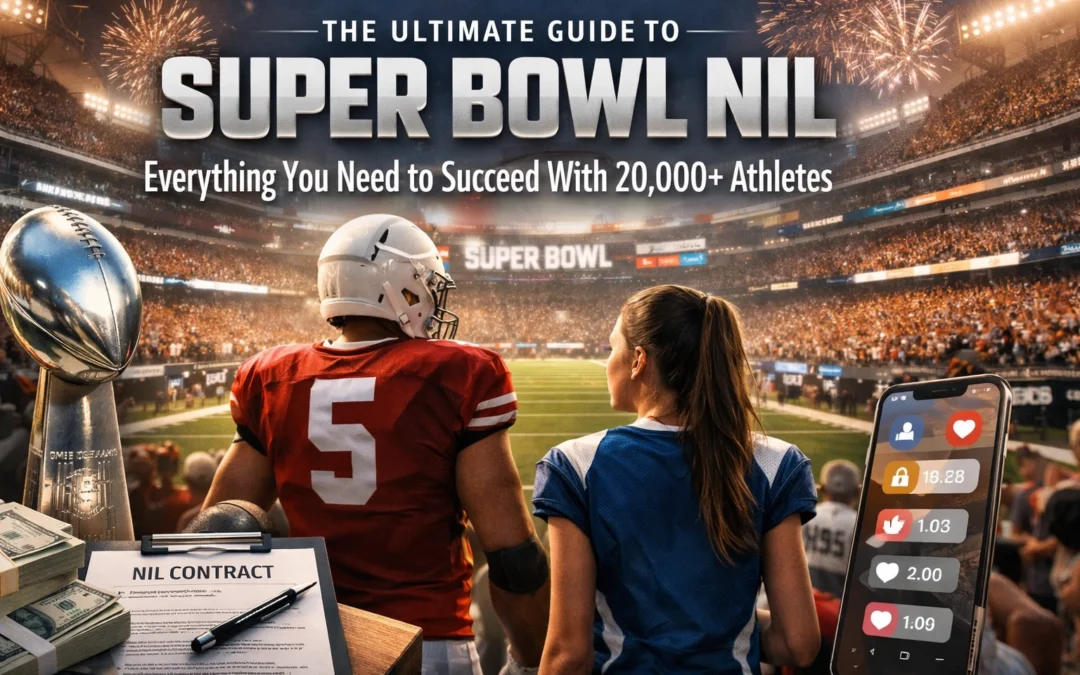
The landscape of Super Bowl advertising has undergone a massive transformation. Gone are the days when a single 30 second television spot was the only way to reach a massive audience. In 2026, the real action happens in the palms of consumers' hands and on digital screens across the country. Name, Image, and Likeness (NIL) partnerships have become the heartbeat of sports marketing, allowing brands to tap into the authentic voices of student-athletes.
With access to a platform connecting over 20,000 student-athlete voices, media buyers now have the power to create a surrounding effect that traditional media simply cannot match. This guide explores how to leverage this massive network to win big during the biggest sporting event of the year.
https://www.youtube.com/watch?v=l6J-0zileKE
The New Era of Super Bowl Marketing
Super Bowl 2026 saw a record breaking $15 million in brand partnership opportunities facilitated through NIL platforms. Brands are no longer just looking for the biggest stars; they are looking for the most authentic connections. By moving away from a one size fits all approach, advertisers are seeing higher engagement rates and better conversion.
Traditional stadium sponsorships are being challenged by these new digital frontiers. As explored in recent industry shifts, the question of whether traditional stadium sponsorships are dead has become a central topic for media buyers looking for higher ROI. NIL partnerships offer a level of flexibility and direct-to-consumer engagement that a static billboard or a brief TV shout-out cannot provide.
The Power of 20,000+ Voices
Scale is the primary advantage of the modern NIL platform. When a brand can activate thousands of athletes simultaneously, it creates a "flood the zone" effect. This isn't just about reach; it is about trust. A student-athlete at a local university has a more direct and influential relationship with their followers than a distant professional celebrity might.
Why Massive Scale Matters:
- Ubiquity: Your brand appears everywhere at once across multiple social feeds.
- Diversity: Reach different demographics by partnering with athletes across various sports, genders, and regions.
- Authenticity: Peer-to-peer recommendations drive higher purchase consideration than standard corporate ads.
Using a platform that manages 20,000+ voices simplifies the logistics of what would otherwise be a nightmare of contract negotiations and content approvals.

The Three-Phase Timeline for Success
A successful Super Bowl campaign does not start and end on game day. To truly succeed with NIL, media buyers must view the event as a multi-week activation.
Phase 1: Pre-Game Hype (January 15 – February 7)
The weeks leading up to the Super Bowl are for building anticipation. Athletes use this time to tease brand involvements, share their "road to the game" stories, and create retargeting pools. This phase allows brands to test different messaging styles and see which athletes are driving the most interest before the main event begins.
Phase 2: Game Day Execution (February 8)
Real-time content is king on Super Bowl Sunday. This is when athletes post reactions, behind-the-scenes glimpses of parties or events, and high-energy brand shout-outs. Because the platform allows for real-time monitoring, brands can double down on content that is going viral and pivot away from what isn't working.
Phase 3: Post-Game Engagement (February 9-11)
Most brands stop advertising the moment the trophy is raised. This is a mistake. The 72 hours following the game are when engagement is still at a fever pitch. Athletes sharing highlights, "day after" recovery content, and wrap-up videos provide a soft landing for the campaign and sustain the brand conversation long after the TV commercials have been forgotten.
The Tiered Athlete Model
To maximize ROI, the most effective campaigns use a tiered structure. This balances broad reach with deep, local engagement.
- Top-Tier Athletes (100,000+ followers): These are the household names. They anchor the campaign and provide the "wow" factor.
- Mid-Tier Athletes (10,000-100,000 followers): These athletes provide the bulk of the volume and sustained reach. They are often the most active in terms of engagement.
- Micro-Athletes (Under 10,000 followers): These voices offer hyper-local activation. They are the friends and classmates of your target audience, providing the most authentic peer-to-peer recommendations.

Integrating NIL with Digital Out-of-Home (DOOH)
While social media is a powerhouse, the most successful campaigns are omnichannel. Connecting NIL voices with physical digital screens creates a powerful reinforcement loop. When a consumer sees a student-athlete on their phone and then sees that same athlete on a digital screen at a local sports bar or gym, the brand message sticks.
The OOH Sports network has expanded to 25,000 digital screens across America. This allows media buyers to sync their NIL social content with real-world displays in high-traffic sports environments. This strategy has proven results, similar to how White Claw's programmatic DOOH campaign drove a 74% lift in purchase consideration.
Compliance and Regulatory Ease
Working with student-athletes requires strict adherence to NCAA and state regulations. In 2026, compliance is more streamlined but still critical. Division I athletes must report any deal valued at $600 or more to "NIL Go" within five business days.
Using a professional NIL platform ensures that:
- Contracts are pre-vetted and legally sound.
- Payments are processed securely.
- Tax documentation is handled automatically.
- Performance data is tracked in real-time to prove ROI.
Failure to follow these rules can lead to athlete ineligibility, which is a PR nightmare no brand wants. A centralized platform mitigates this risk entirely.

Strategic Planning: Start Early
Media buyers should ideally begin their Super Bowl planning 90 to 120 days before kickoff. This timeline allows for the selection of the best talent and the creation of high-quality, pre-approved content.
- 120 Days Out: Define goals and budget.
- 90 Days Out: Start recruitment and secure contracts.
- 60 Days Out: Begin content production and approval.
- 30 Days Out: Coordinate the publishing schedule to build momentum.
By following this structured approach, brands can move away from reactive marketing and toward a data-driven strategy that delivers measurable results.
Why This Works for Media Buyers
The shift toward NIL is driven by data. For example, brands like Mike's Hard Iced Tea have seen a 119% lift in positive brand image through targeted digital campaigns. When you combine that kind of lift with the 20,000+ authentic voices available through the OOH Sports NIL platform, the potential for brand growth is unprecedented.
The Super Bowl is no longer just a game; it is a multi-platform cultural event. By utilizing a tiered network of athletes, staying compliant, and integrating social content with a massive network of digital screens, media buyers can ensure their brand is the most talked-about part of the season.
Whether the goal is driving purchase consideration, increasing brand favorability, or simply "flooding the zone" with a new product launch, the combination of NIL and DOOH provides the ultimate toolkit for success in 2026 and beyond. Success in the modern era requires moving beyond the sidelines and into the authentic conversations where sports fans live every day.