
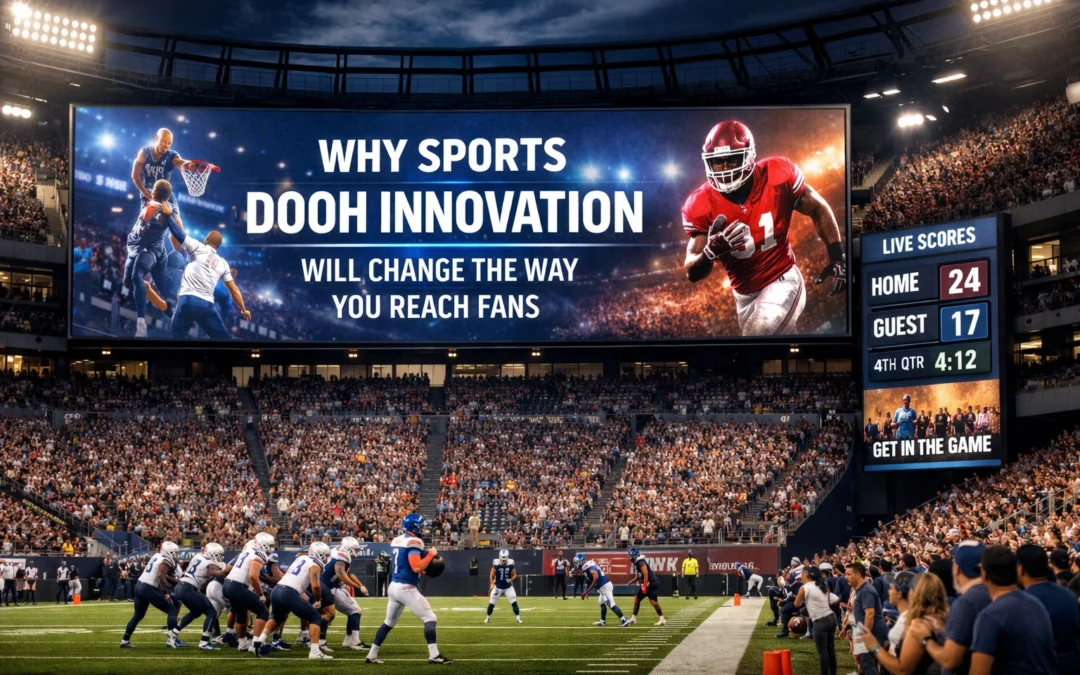
Sports marketing is undergoing a fundamental shift. For decades, reaching a sports fan meant buying a stadium billboard or a 30-second television spot during the big game. While those methods still hold value, the emergence of Digital Out-of-Home (DOOH) advertising is creating a more dynamic and measurable way to connect with audiences. Innovation in this space is not just about putting a digital version of a poster on a screen. It is about using real-time data, programmatic buying, and strategic placement to follow the fan journey from the driveway to the arena and back again.
As media buyers and brand managers seek higher returns on investment, the ability to pivot campaigns in real time is becoming a necessity rather than a luxury. This transition toward technology-driven outdoor advertising is redefining how brands interact with the high-energy environment of sports.
The Evolution of the Fan Journey
The modern fan experience does not start at kickoff. It begins hours earlier when fans check scores on their phones, commute to the stadium, or gather at local bars and restaurants. Traditional stadium advertising often misses these critical touchpoints. Innovation in sports DOOH allows brands to occupy the spaces where fans live, work, and play.
By placing messaging on a network of thousands of digital screens across urban centers, transit hubs, and retail locations, brands can create a continuous narrative. This approach ensures that the brand remains top of mind throughout the entire day, not just during the four quarters of play.

Strategy: Real-Time Dynamic Creative
One of the most significant innovations in sports DOOH is the ability to use dynamic creative. Unlike static vinyl billboards that stay the same for weeks, digital screens can update content in seconds based on live data feeds.
Objective and Strategy
The primary objective of dynamic creative is to capitalize on the emotional intensity of a live sporting event. When a team scores a last-second goal or wins a championship, the level of fan engagement spikes. Brands that can acknowledge these moments instantly create a deeper connection with the audience.
Execution Tactics
- Live Score Integration: Screens display real-time updates, keeping fans informed while keeping the brand relevant.
- Countdown Clocks: Building anticipation for upcoming games or tournaments to drive viewership or ticket sales.
- Trigger-Based Messaging: Ads that change based on game outcomes, weather conditions, or even the time of day.
This level of agility allows a brand to act more like a news outlet or a fellow fan than a traditional advertiser. When a campaign reacts to a win with a congratulatory message within minutes, the brand's perceived authenticity increases.

Technology Partners and Programmatic Efficiency
The backbone of this innovation is the shift toward programmatic DOOH. This technology allows media buyers to purchase screen time with the same precision and ease as digital display or social media ads. Using platforms like the StackAdapt DSP, brands can automate the buying process, targeting specific demographics and locations with surgical precision.
Precision Targeting
Programmatic DOOH eliminates the guesswork of traditional outdoor media. Instead of buying a single location for a month, brands can buy specific "impressions" at times when sports fans are most likely to be present. This includes:
- Geofencing Stadium Perimeters: Delivering ads specifically to screens located within a few blocks of an arena on game day.
- Point-of-Interest Targeting: Focusing on sports bars, gymnasiums, and athletic retailers.
- Audience Data Matching: Using anonymized mobile location data to identify areas with high concentrations of specific fan bases.
By focusing on high-intent locations, brands reduce wasted spend and ensure their message reaches the most relevant eyes.
Results: Quantifying the Impact of Innovation
The shift toward DOOH is backed by significant data. Results from recent campaigns show that the combination of sports and digital outdoor media drives measurable action. Studies indicate that nearly six in ten fans recall seeing OOH advertising at major sporting events. Even more impressive is that over 90 percent of those who notice these ads take some form of follow-up action, such as searching for the brand or making a purchase.
Case Study Highlights
- White Claw: By utilizing a programmatic DOOH campaign for a vodka launch, the brand saw a 74 percent lift in purchase consideration. More details on this campaign can be found here.
- AB InBev’s Mike’s Hard Iced Tea: This campaign leveraged the high-energy sports environment to achieve a 119 percent lift in positive brand image.
- Sea-Doo: In its first digital OOH campaign, the brand focused on reaching outdoor enthusiasts and saw a 144 percent increase in purchase consideration. You can read about the Sea-Doo strategy here.
These numbers prove that when technology and sports marketing align, the results are far more impactful than traditional methods alone.

Strategy: The Omnichannel Priming Effect
Innovation in DOOH does not mean abandoning other channels. In fact, DOOH acts as a powerful primer for mobile and television advertising. When a fan sees a large-scale digital billboard during their commute, it reinforces the message they later see in a 30-second TV spot or a social media ad.
Integrated Execution
This "priming effect" strengthens memory structures. A fan who has been exposed to a DOOH ad is significantly more likely to engage with a mobile ad from the same brand later in the day. This creates a cohesive brand experience that surrounds the consumer without being intrusive.
- Step 1: The fan sees a high-impact DOOH screen near a stadium.
- Step 2: Retargeting technology identifies device IDs exposed to the screen.
- Step 3: The brand delivers a follow-up offer or video ad to that fan's mobile device or Connected TV (CTV) at home.
This logical progression turns a single outdoor impression into a full-funnel marketing strategy.
Democratizing Sports Advertising
Historically, only the largest brands with multi-million dollar sponsorship deals could have a presence at major sporting events. Innovation in DOOH has democratized this access. Programmatic buying allows challenger brands and mid-sized companies to reach fans without the need for official, exclusive sponsorships.
A brand can now run a highly effective campaign around a major event by targeting the city's transit systems, downtown hubs, and fan zones. This creates an "ambush marketing" effect that allows smaller players to establish a meaningful presence alongside category leaders. For more on how this is changing the landscape, explore the shift in media planning budgets.

Overcoming Traditional Limitations
The primary reason DOOH innovation is changing the game is that it solves the traditional problems of outdoor advertising: lack of measurement and lack of flexibility.
With AI-powered analytics, brands no longer have to guess how many people saw an ad. They can now track:
- Foot Traffic Attribution: Measuring how many people visited a retail location after being exposed to an ad.
- Brand Lift Studies: Assessing changes in brand awareness and favorability in real time.
- Conversion Tracking: Connecting screen exposure to online or in-store purchases using privacy-compliant data matching.
These tools allow for constant optimization. If a particular creative or location is not performing, the campaign can be adjusted instantly. This ensures that the budget is always working toward the highest possible return. For a deeper look at these analytics, see how AI-powered tools are proving campaign success.
The Future of Fan Engagement
The integration of DOOH into sports marketing is not a temporary trend. It is a fundamental evolution driven by consumer behavior and technological capability. As cities become smarter and screens become more prevalent, the opportunity to reach fans in a meaningful way will only grow.
The industry is moving toward a future where every screen is a gateway to a personalized fan experience. Whether it is a real-time betting odd displayed seconds before a game or a celebratory brand message seconds after a victory, the innovation in DOOH ensures that brands are part of the conversation when it matters most.
By focusing on the fan journey, leveraging programmatic efficiency, and utilizing dynamic creative, media buyers and brand managers can unlock a level of engagement that was once impossible. The era of static, unmeasurable sports advertising is ending. The era of innovative, data-driven fan connection is here. For those ready to capture their share of this growing market, the strategies for success are already within reach.