
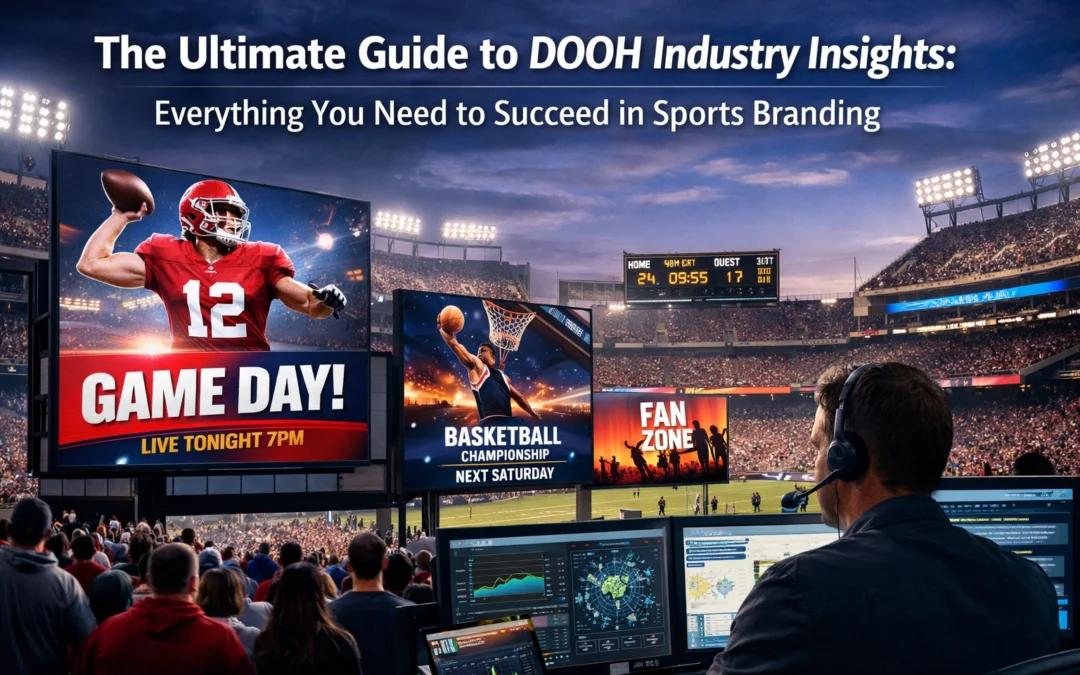
The landscape of sports marketing is undergoing a significant transformation. As traditional advertising methods face increasing fragmentation, Digital Out-of-Home (DOOH) has emerged as a critical component for brands seeking to maintain a constant presence in the lives of sports fans. The primary challenge for modern advertisers is capturing fan attention beyond the stadium walls. Research indicates that a vast majority of fan engagement occurs outside the arena, making it essential to transition from location based buys to routine based strategies that follow consumers throughout their daily lives.
This guide provides an analytical overview of the latest trends and strategic insights within the DOOH sports advertising industry. By focusing on data driven results and technological advancements, brands can navigate the complexities of modern sports branding with precision.
The Modern Sports Marketing Landscape
The current sports marketing environment is defined by several critical shifts in consumer behavior and technology. Direct to fan streaming now serves as a primary method for content consumption, while artificial intelligence enables hyper personalization in messaging. Community engagement has moved toward a year round model, replacing the traditional seasonal campaign cycles of the past.
To succeed in this environment, marketers have expanded the traditional four Ps (Product, Price, Place, Promotion) to include four additional pillars: Planning, Packaging, Positioning, and Perception. This comprehensive approach ensures that brand messaging is not only seen but is perceived as relevant and timely.

Strategic Advantages of DOOH for Sports Brands
DOOH advertising offers a unique opportunity to participate in shared cultural moments at a scale that other digital channels often struggle to match. High traffic locations surrounding stadiums and urban centers represent some of the most valuable real estate for marketers.
Key benefits of integrating DOOH into a sports branding strategy include:
- Comprehensive Journey Coverage: Reaching fans at every stage of their game day journey, from city centers and transit hubs to stadium gates.
- High Engagement Moments: Capitalizing on the peak emotional states of fans before, during, and after sporting events.
- Premium Inventory Access: Securing placements in geo-specific locations such as sports bars, fan festivals, and public viewing areas.
- Contextual Relevance: Aligning brand messages with the physical environment of the fan, creating a sense of shared experience.
By utilizing these advantages, brands ensure that their investments in stadium sponsorships and television spots are reinforced when fans step into the physical world.
Omnichannel Reinforcement and the Priming Effect
The most effective DOOH applications are those that function as part of a broader omnichannel strategy. When a consumer is exposed to a television advertisement and subsequently views a shorter version of that ad on a digital urban panel during their commute, the memory structure is significantly strengthened. This is known as the "priming effect."
Data from the OAAA suggests that OOH advertising can amplify the reach of other media channels by more than 90 percent. An effective omnichannel framework typically follows a specific sequence:
- Awareness Building: Utilizing upper funnel channels like connected TV (CTV) and social media to establish initial brand recognition.
- Message Reinforcement: Deploying high impact DOOH placements in fan heavy areas during peak traffic periods.
- Conversion Driving: Retargeting exposed audiences across digital audio, mobile display, or CTV platforms after the event has concluded.
For more information on how these strategies are executed, visit the OOH Sports marketing page.
Dynamic Creative Optimization (DCO) and Real-Time Utility
One of the most significant advancements in DOOH technology is the ability to deploy Dynamic Creative Optimization (DCO). This technology allows brands to change messaging in real time based on external triggers and environmental context. This transforms an advertisement from a static message into a utility for the consumer.
Examples of DCO in sports branding include:
- Real Time Odds: Betting partners can stream live odds directly to screens in sports bars, providing immediate value to bettors.
- Weather Triggers: Apparel brands can trigger advertisements for rain gear or cold weather merchandise based on live local weather conditions at the stadium.
- Score Integration: Creative content can be updated instantly based on game developments, such as promoting a celebratory discount if the home team wins.
- Event Countdowns: Utilizing countdown clocks across grocery and retail networks to build anticipation for upcoming championship games.
These technical capabilities ensure that the content remains fresh and highly relevant to the viewer's immediate situation. Detailed technical specifications on these displays can be found on the Sportrons page.

Programmatic DOOH (pDOOH) and Audience Targeting
The rise of programmatic DOOH (pDOOH) has revolutionized how inventory is purchased and managed. Through programmatic platforms, advertisers can buy screens based on specific audience demographics and behaviors rather than just location. This allows for a more surgical approach to sports branding.
Programmatic capabilities enable brands to sync their out of home content with live game updates and streaming schedules. This is particularly effective for reaching younger demographics, such as Gen Z, who may be less susceptible to traditional television advertising but remain highly active in urban environments.
Case Studies: Measurable Impact in DOOH
Data driven evidence is the most reliable indicator of DOOH success. Several recent campaigns demonstrate the effectiveness of these strategies in driving brand lift and purchase consideration.
White Claw: Purchase Consideration Lift
A programmatic DOOH campaign for the launch of White Claw Vodka resulted in a 74% lift in purchase consideration. By targeting specific consumer segments in real time, the brand successfully translated awareness into intent. Further details are available in the White Claw case study.
Mike's Hard Iced Tea: Brand Image Improvement
Using pDOOH, Mike's Hard Iced Tea achieved a 119% lift in positive brand image. The campaign focused on high traffic areas where the target audience was most likely to engage with the product during social occasions. The full analysis is hosted on the OOH Sports blog.
Sea-Doo: Consideration Growth
Sea-Doo's first digital out of home campaign saw a 144% increase in purchase consideration. This success was attributed to the strategic placement of ads in locations where consumers were already in a recreational mindset. The methodology behind this campaign is detailed at oohsports.com/case-study.

Creative Best Practices for Sports DOOH
Creative execution in DOOH requires a different approach than online or print media. Because viewers are often in motion, the message must be clear, concise, and visually striking.
- Location Specificity: Creative that acknowledges the unique aspects of a local team or city feels more authentic. Generic ads often fail to resonate as deeply as those that celebrate local sports culture.
- Bridge Physical and Digital: Incorporating interactive elements such as QR codes allows for immediate conversion. A fan can scan a code on a billboard and be taken directly to a retail site or a promotional landing page.
- Simplicity in Design: High contrast colors and bold typography ensure readability from a distance. The use of a single, powerful image is generally more effective than a cluttered layout.
- Timing Accuracy: Aligning creative with the game day cycle ensures maximum relevance. Pregame ads should focus on anticipation, while post game ads should focus on celebration or reflection.
Strategic creative choices are often the difference between a campaign that is seen and a campaign that is remembered.
Measuring Success and ROI
In the past, measuring the impact of out of home advertising was often based on estimations. Today, the industry utilizes sophisticated measurement tools to provide clear ROI.
- Brand Lift Studies: These surveys compare the perceptions of consumers who were exposed to the DOOH ads against a control group that was not.
- Foot Traffic Attribution: By utilizing anonymized mobile device IDs, marketers can track whether a consumer visited a retail location after being exposed to a DOOH placement.
- Website and App Traffic: Tracking spikes in digital activity that correlate with DOOH campaign flight dates.
- Sales Data Integration: Comparing regional sales performance with DOOH spend to determine direct impact on revenue.
These metrics allow for continuous optimization, ensuring that marketing budgets are allocated to the most effective screens and time slots.

Conclusion
The DOOH industry provides a powerful toolkit for sports brands aiming to connect with fans in a meaningful way. By leveraging programmatic technology, dynamic creative, and omnichannel strategies, advertisers can achieve measurable growth in brand awareness and purchase intent. As fan behavior continues to evolve, the ability to reach consumers in the physical world through digital screens remains a cornerstone of successful sports branding.
For companies looking to explore these opportunities, further resources are available on the OOH Sports website and the About page. For specific inquiries regarding campaign execution, the contact page provides a direct line to industry experts.