
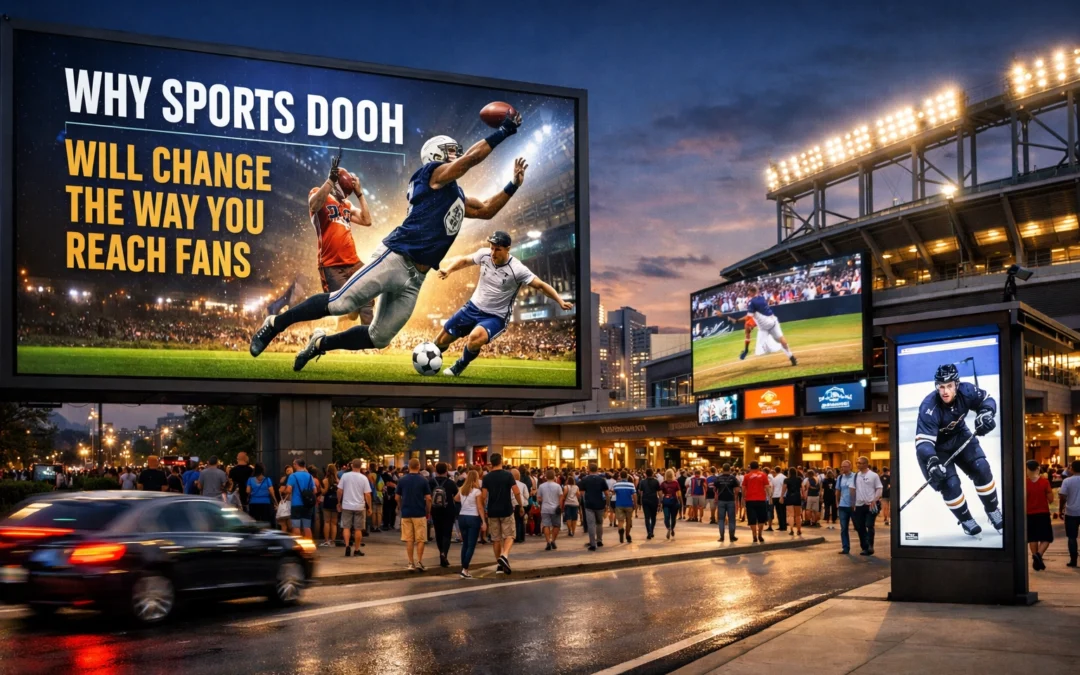

The landscape of sports marketing is undergoing a significant transformation. Traditional television commercials and static stadium signs are no longer the only ways to capture the attention of a passionate audience. Digital Out-of-Home (DOOH) advertising is emerging as a primary tool for brands looking to connect with fans in meaningful, high-impact ways. By combining the physical presence of classic billboards with the data-driven precision of digital marketing, sports DOOH provides a level of engagement that was previously impossible to achieve.
For media buyers and brand managers, the goal is always the same: reach the right person at the right time with the right message. In the context of sports, the "right time" is when a fan is most emotionally invested. Whether it is the anticipation before a kickoff or the celebration after a win, these moments represent peak engagement. OOH Sports specializes in bridging the gap between these emotional high points and the brands that want to be part of the experience.
The Power of Emotional Engagement
Sports fans are a unique demographic. Unlike people scrolling through a social media feed or watching a video at home, fans at a sporting event are physically present and mentally focused. Their attention is not divided between multiple browser tabs or household chores. They are immersed in the environment.
This emotional context makes advertising more memorable. When a fan sees a message on a digital screen while they are surrounded by thousands of other people cheering for their team, the brand becomes part of that shared memory. Research indicates that advertising in these high-energy environments leads to better brand recall and higher purchase intent. Instead of being an interruption, the advertisement becomes a feature of the game-day experience.
The Fan Journey: More Than Just the Game
Reaching a fan is not just about the three hours spent inside a stadium or arena. It is about the entire journey. This journey begins the moment a fan leaves their home and continues long after the final whistle blows. A strategic DOOH campaign targets multiple touchpoints along this path.
- The Pre-Game Build-Up: Fans see digital displays on their commute to the venue. These screens can build excitement with countdowns, player stats, or directions to nearby fan zones.
- Inside the Venue: During the game, screens in concourses and seating areas keep the brand front and center. Use of specialized displays like Sportrons allows for high-visibility messaging that integrates with the live action.
- The Post-Game Celebration: After the game, fans move to restaurants, bars, and transit hubs. This is the perfect time for brands to offer congratulatory messages or post-game deals.
By activating across these different locations, brands create a multi-touch experience that reinforces their message through repetition and relevance. This omnichannel approach ensures that the brand remains a constant companion throughout the fan's entire day.

Programmatic DOOH: Precision and Agility
One of the most significant changes in the industry is the rise of programmatic DOOH. In the past, buying billboard space required long lead times and rigid contracts. Today, the process is much more flexible and data-driven.
Programmatic technology allows media buyers to purchase inventory in real-time. This means campaigns can be adjusted based on specific triggers. For example, an advertiser could choose to only display ads when the home team is winning, or when the temperature outside drops below a certain point. This level of control reduces wasted impressions and ensures that every dollar spent is optimized for impact.
Platforms like the StackAdapt DSP are driving the adoption of these programmatic strategies, allowing brands to integrate their outdoor advertising with their broader digital campaigns. This results in a seamless experience for the consumer and better data for the brand manager. More information on these integrations can be found in our deep dive into programmatic DOOH adoption.
Real-Time Relevance and Dynamic Creative
Static images are becoming a thing of the past. Digital screens allow for dynamic creative, which is content that changes based on live data feeds. In a sports context, this is incredibly powerful.
Imagine a digital screen outside a stadium that updates the score in real-time. A brand sponsoring that screen is providing a valuable service to every passerby. When the home team scores, the creative can instantly change to a celebratory animation. This creates an immediate connection between the brand and the fan's happiness.
Dynamic creative is also useful for sports betting brands. They can display live odds that update as the game progresses, encouraging fans to engage with their platforms in the moment. These real-time campaigns are proven to drive higher conversion rates because they are incredibly timely. Strategies for launching real-time betting campaigns show how speed can be a major competitive advantage.

Measurable Action and Impact
For many years, the biggest criticism of out-of-home advertising was that it was difficult to measure. Modern technology has solved this problem. Today, brands can track the effectiveness of their DOOH campaigns with impressive accuracy.
By using anonymized mobile location data, advertisers can see how many people were exposed to a specific screen and then later visited a physical store or a website. This allows for clear attribution and a better understanding of Return on Investment (ROI).
Case studies consistently show the effectiveness of this medium. For instance, a campaign for White Claw saw a 74% lift in purchase consideration for a new product launch. This was achieved by strategically placing digital ads where their target audience was most active. Similarly, Sea-Doo utilized DOOH to increase purchase consideration by 144% through a targeted programmatic campaign. These results prove that when done correctly, DOOH is not just for brand awareness, it is a powerful driver of actual sales. Details on these successes are available in the White Claw case study and the Sea-Doo case study.
Efficiency and Accessibility for All Brands
Another common misconception is that sports advertising is only for massive global corporations with multi-million dollar budgets. While those brands are certainly present, DOOH has made the space much more accessible for local and regional advertisers.
Because programmatic buying allows for small, targeted spends, a local restaurant or a regional car dealership can buy space on screens near a stadium for just a few hours during a game. This allows smaller brands to benefit from the prestige and high traffic of major sporting events without having to pay for a full-season sponsorship.
When comparing programmatic DOOH vs traditional stadium ads, the flexibility and lower entry cost of digital screens often provide a better ROI for brands looking to maximize their marketing budgets.

Strategy and Objectives
Success in sports DOOH requires a clear strategy. Brand managers should start by defining their primary objective. Is the goal to increase brand awareness, drive traffic to a specific location, or encourage downloads of a mobile app? Once the objective is clear, the targeting and creative can be tailored to match.
Targeting can be based on several factors:
- Geography: Screens located near stadiums, training facilities, or popular sports bars.
- Context: Aligning with specific sporting events or even specific matchups that attract a certain demographic.
- Time: Dayparting to ensure messages are seen when fan traffic is at its peak.
By combining these targeting methods with high-quality creative, brands can create a campaign that feels like a natural part of the sporting landscape rather than an intrusive advertisement.
Conclusion
Sports DOOH is changing the rules of engagement. By meeting fans during their most emotional moments and providing them with relevant, real-time information, brands can build a level of trust and loyalty that traditional advertising cannot match. The combination of programmatic efficiency and measurable results makes it an essential component of any modern marketing strategy.
As technology continues to evolve, the possibilities for innovation in this space will only grow. Brands that embrace these tools now will be the ones that lead the way in the future of fan engagement. To learn more about how to get started, explore our marketing resources or read through our collection of case studies to see what is possible. For a broader look at the industry, the OOH Sports blog offers regular insights into the latest trends and strategies.