
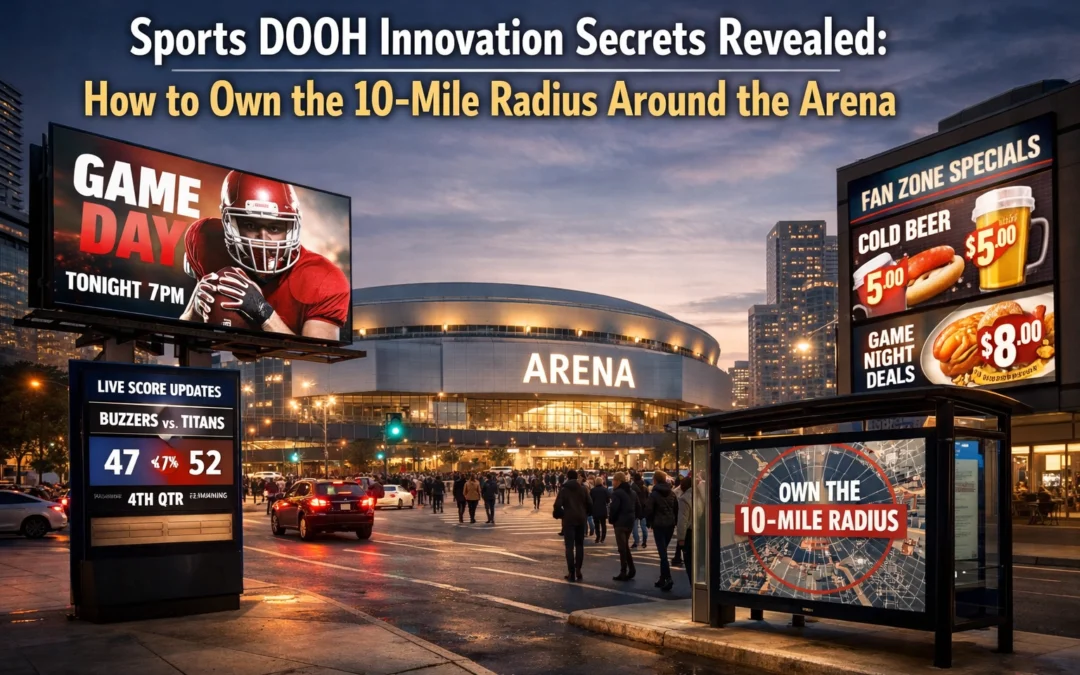
Traditional sports marketing often focuses on the high cost of stadium naming rights or interior scoreboard placements. While these assets offer prestige, they often miss the massive opportunity existing just outside the stadium gates. The evolution of digital out-of-home (DOOH) advertising has shifted the focus toward a more comprehensive strategy: owning the 10-mile radius surrounding the arena.
This geographic area represents a critical zone where fan emotion is at its peak and purchasing intent is highest. By strategically placing digital messaging along the fan journey, brands can achieve higher frequency and better ROI than through traditional, static stadium sponsorships alone.
Strategy: Mapping the Fan Journey
To effectively dominate the 10-mile radius, a campaign must account for every touchpoint a fan encounters before, during, and after a game. This journey is not a straight line, it is a series of interconnected moments where attention is ripe for capture.
The Commute and Arrival
Fans begin their engagement hours before the first whistle. Digital billboards on major highways leading toward the stadium serve as the first point of contact. These screens reach not only the fans attending the game but also the general local population that is subconsciously aware of the event. According to industry data, transit advertising creates captive audiences on buses, trains, and subways, often sparking social conversations that amplify the digital message.
Pre-Game Social Hubs
The areas surrounding an arena are typically filled with bars, restaurants, and hotels. These locations are high-concentration zones for sports enthusiasts. Utilizing digital screens in these venues allows brands to integrate their message into the social fabric of the game day experience. This is where the priming effect is most potent, as fans are in a state of high emotional receptivity.

Retail and Convenience Touchpoints
The final mile of the fan journey often includes stops at convenience stores or retail hubs for snacks, beverages, or team gear. Placing DOOH ads in these locations provides a last-minute nudge toward a purchase. For example, beverage brands often see significant lifts when their messaging appears on screens near the point of purchase during game day windows.
Technology: The Power of Programmatic DOOH
The secret to "owning" a radius is not just about having more screens, it is about having the right screens at the right time. Programmatic DOOH (pDOOH) has revolutionized how media buyers approach sports marketing.
Real-Time Triggers and Agility
Unlike traditional static billboards that require weeks of lead time, pDOOH allows for instantaneous updates. This technology enables brands to respond to real-time events, such as weather changes, traffic patterns, or even the score of the game. For instance, a sports betting brand can launch real-time campaigns that convert in under 24 hours by reacting to shifts in betting odds or major player injuries. More information on these tactics can be found at oohsports.com.
Dynamic Creative Optimization
Innovation in DOOH involves more than just a digital version of a paper poster. Dynamic creative allows the ad content to change based on external data feeds.
- Live Scoreboards: Displaying the current score keeps the ad relevant and ensures fans keep their eyes on the screen.
- Countdowns: Building anticipation with a "Time to Tip-off" clock.
- Outcome-Based Messaging: Congratulating the winning team immediately following the game to capture the celebratory mood of the fans.

Logistics: Stadium Perimeter Targeting
Effective perimeter targeting requires a shift in mindset from broad-based awareness to localized dominance. The goal is to create a "surround sound" effect where the brand becomes synonymous with the event itself, even if the brand is not an official stadium sponsor.
This tactic was notably used in a campaign where a major athletic brand successfully targeted the area around a major marathon. Even though they were not an official sponsor, their presence on over 25,000 digital screens in the surrounding radius made them the most visible brand of the weekend. This strategy is further detailed in this analysis of the Nike NYC Marathon campaign.
Direct Buys vs. Programmatic Guaranteed
While programmatic offers flexibility, direct buys are often used to secure the most premium screens directly adjacent to the arena gates. These "hero" screens are often in high demand and can sell out months in advance. A hybrid approach, combining direct buys for flagship locations and programmatic for the broader 10-mile radius, often yields the best balance of visibility and efficiency.
Measuring Results: Data-Driven Success
The primary advantage of DOOH over traditional OOH is the ability to measure impact with precision. Modern campaigns utilize device IDs and location data to track how many people saw an ad and subsequently took action.
Brand Lift and Purchase Consideration
Data from several major beverage and lifestyle brands demonstrate the effectiveness of this localized approach:
- White Claw: A programmatic DOOH campaign drove a 74% lift in purchase consideration for a new product launch.
- AB InBev: Their Mike’s Hard Iced Tea campaign saw a 119% lift in positive brand image by focusing on programmatic placements.
- Sea-Doo: This brand achieved a 144% increase in purchase consideration by using DOOH to reach consumers in specific high-intent geographic zones.
More details on these results are available at oohsports.com.

Attribution Methodology
To calculate ROI, media planners look at the "exposed" vs. "unexposed" groups. By tracking mobile device IDs that passed within the line of sight of a digital screen, brands can determine if those individuals later visited a website, downloaded an app, or made a physical purchase at a retail location within the 10-mile radius.
Common Pitfalls in Sports DOOH
Even with the best technology, many brands fail to fully own the radius due to common strategic errors.
- Ignoring the "After-Hours": Many brands stop their ads when the game starts. However, the post-game period, when fans are exiting and heading to celebratory dinners or transit hubs, is a prime time for engagement.
- Creative Fatigue: Using the same static image for the entire season leads to visual clutter. Dynamic creative that changes based on the opponent or the game importance keeps the message fresh.
- Fragmented Planning: Failing to align DOOH with other channels like social media or mobile retargeting. An omnichannel approach, where a fan sees a billboard and then a coordinated mobile ad, strengthens memory retention. For a deeper look at these errors, see 7 mistakes to avoid in sports DOOH.

Technology Partners and Platforms
The implementation of a 10-mile radius strategy requires a robust technology stack. Demand-side platforms (DSPs) specialized in DOOH, such as StackAdapt, provide the necessary tools to automate the buying process across multiple screen networks. These platforms allow brand managers to set specific parameters, such as "only bid on screens within 10 miles of the United Center when the temperature is above 70 degrees." This level of granularity ensures that every dollar spent is optimized for the highest possible impact.
Conclusion: The Future of the Arena Experience
As the sports advertising market continues to grow, the competition for fan attention will only intensify. The brands that succeed will be those that look beyond the physical walls of the stadium and embrace the entire ecosystem of the 10-mile radius.
By combining the emotional power of sports with the precision of programmatic DOOH, media buyers can create campaigns that are not just seen, but felt. Owning the radius is not about being the loudest voice in the stadium, it is about being a constant, relevant companion throughout the entire fan journey.
To explore how digital screens are changing the landscape of sports marketing, visit oohsports.com.