
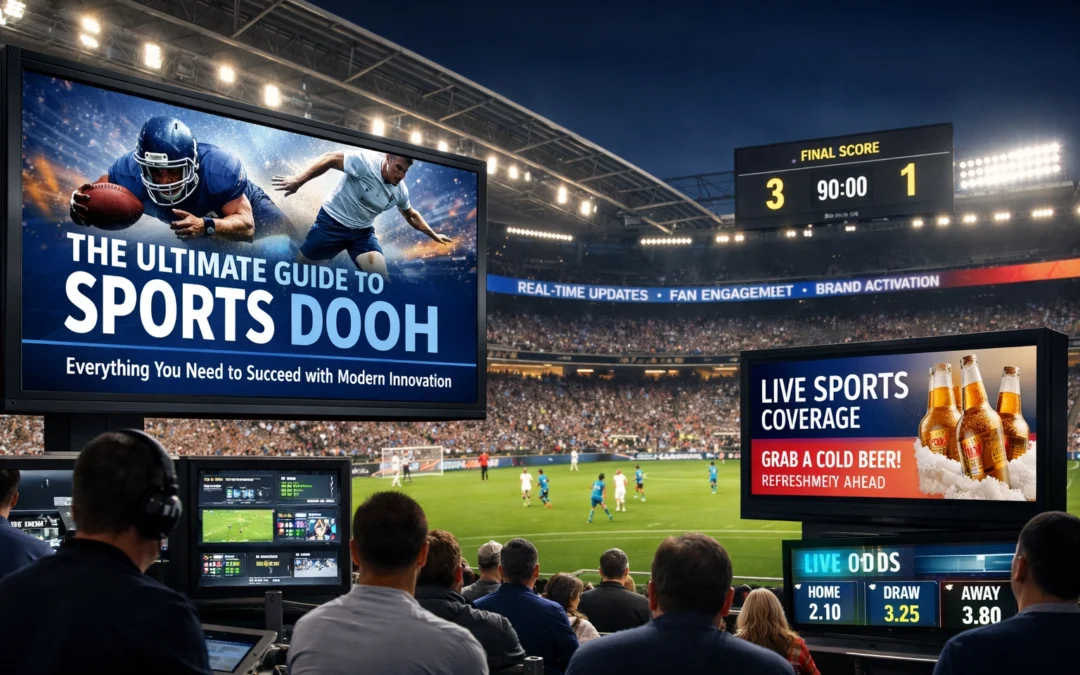
The landscape of sports marketing is undergoing a significant transformation. Traditional billboards and static stadium signage, while historically relevant, are no longer the only or most effective ways to reach a captive audience. Digital Out-of-Home (DOOH) advertising has emerged as a powerhouse for brands looking to connect with sports fans in a dynamic, data driven way. This guide explores the strategies, technology, and measurable impacts of modern sports DOOH, providing media buyers and brand managers with a roadmap for success.
The Shift Toward Digital Innovation in Sports
Sports fans are a unique demographic. They are emotionally invested, highly engaged, and often move in large groups through predictable geographic corridors. Traditional advertising often fails to capture this momentum because it remains static. Digital Out-of-Home advertising changes this by utilizing high resolution screens in various physical environments to deliver real time, relevant messaging.
The innovation in this space is not just about the screens themselves, but how they are used. Modern DOOH platforms allow brands to adjust creative content based on live game data, weather conditions, or even the current score of a match. This level of agility ensures that a brand remains relevant to the fan experience throughout the day, rather than being a background element that is easily ignored.
The Power of the 5-Mile Radius Strategy
One of the most effective strategies in modern sports marketing is the 5-mile radius approach. While many brands focus exclusively on getting their logo inside a stadium, the most significant consumer activity often happens outside the gates. When thousands of fans descend on a venue, they engage in a journey that includes transit, dining, and shopping.
The 5-mile radius strategy focuses on capturing fans at multiple touchpoints during their game day experience. This includes digital displays at gas stations, convenience stores, restaurants, and shopping centers surrounding the venue. By targeting these locations, brands can reach fans when they are making active purchasing decisions, such as buying snacks, beverages, or team apparel.

This approach is particularly effective because it reaches fans during high emotion moments. Whether a fan is celebrating a win or fueling up before the opening whistle, their receptivity to brand messaging is heightened. By spreading a campaign across a network of screens in this radius, a brand creates a surround sound effect that feels much more integrated into the fan’s day than a single stadium sign.
Programmatic DOOH: Efficiency and Precision
The rise of programmatic DOOH (pDOOH) has revolutionized how media buyers approach sports marketing. Programmatic technology allows for the automated buying and selling of ad space, similar to how online display ads work. This means brand managers can launch campaigns with a level of precision that was previously impossible in the outdoor advertising world.
Using platforms like the StackAdapt DSP, advertisers can set specific triggers for their ads. For example, a campaign for a beverage brand might only trigger when the temperature rises above a certain degree, or an ad for a ride share service might increase its frequency during the final minutes of a game when fans are looking for transportation.
This automation also allows for rapid A/B testing. Advertisers can run multiple versions of a creative asset to see which one drives the most engagement or foot traffic. Because the data is delivered in real time, adjustments can be made mid campaign to optimize ROI. More information on how these technical integrations work can be found on the OOH Sports marketing page.
Traditional Stadium Ads vs. Digital Innovation
When comparing traditional stadium sponsorships to modern DOOH, the financial and strategic differences are stark. Traditional naming rights or fixed in-venue signage can cost millions of dollars and require long term commitments. These placements are often restricted by category exclusivity, meaning if a competitor has already claimed the "official" status, other brands are locked out.
In contrast, strategic DOOH placements allow brands to compete at a fraction of the cost. Research indicates that a well executed 5-mile radius DOOH strategy can reach a comparable or even more targeted audience at approximately 10 to 20 percent of the cost of traditional sports marketing budgets. This democratizes the field, allowing mid sized brands and local businesses to achieve significant visibility alongside global corporations.

Furthermore, the ROI on DOOH is often higher because it is measurable. Traditional billboards rely on estimated impressions based on traffic counts, but digital platforms can track device IDs, foot traffic lift, and purchase consideration. Case studies have shown that shifting from traditional venue ads to strategic DOOH can lead to a 34 percent increase in foot traffic on game nights and a 300 percent better ROI compared to traditional spend.
Strategic Placements and High Impact Networks
To succeed in sports DOOH, placement is everything. The goal is to be where the fans are during their most active moments. High impact networks often include:
- Sportrons: These are specialized digital displays tailored for sports environments, providing high visibility in high traffic areas. You can learn more about these at oohsports.com/sportrons.
- Transit Hubs: Digital screens at train stations and bus stops on the way to the stadium catch fans during their commute.
- Retail and Convenience: Fans stopping for supplies at gas stations or convenience stores are prime targets for beverage and snack brands.
- Dining and Sports Bars: Screens in these locations reach fans who are gathering before the game or staying late to celebrate, providing a long window of engagement.
By diversifying placements across these networks, brands ensure they are not relying on a single moment to make an impression. Instead, they become a consistent part of the fan's environment.
Quantifiable Results and Case Studies
The effectiveness of sports DOOH is backed by significant data. For instance, brands in the beverage industry have seen substantial lifts in purchase consideration through programmatic campaigns. One notable example involved a vodka launch that saw a 74 percent lift in purchase consideration by utilizing targeted DOOH placements. Another campaign for a tea brand saw a 119 percent lift in positive brand image.
These results are achieved by using data to bridge the gap between digital and physical worlds. By exposing specific device IDs to DOOH ads and then tracking those IDs to retail locations or online conversions, advertisers can prove the direct impact of their outdoor spend. This level of attribution is a game changer for brand managers who need to justify every dollar of their marketing budget. Detailed results of various campaigns are available in the case study section.

Implementing an Omnichannel Approach
Successful sports DOOH does not exist in a vacuum. It works best as part of an omnichannel strategy that connects the physical screen to the fan’s smartphone. For example, a DOOH ad could encourage fans to scan a QR code for a special game day discount or to enter a contest. Once the fan interacts with their phone, the brand can continue the conversation through retargeted mobile ads or social media.
This connection between OOH and mobile creates a seamless experience. It moves the fan from a passive observer of an ad to an active participant in a brand's ecosystem. This strategy was effectively used in campaigns where purchase consideration increased by over 140 percent simply by reinforcing the DOOH message through other digital channels.
Conclusion: The Future of Sports Marketing
The future of sports marketing is digital, data driven, and decentralized. While the stadium remains the heart of the action, the brand opportunities are everywhere. By leveraging the flexibility of programmatic DOOH and the strategic reach of the 5-mile radius, media buyers can deliver high impact campaigns that resonate with fans on a deeper level.
Innovation in this space is constant. As technology improves, the ability to deliver hyper relevant, real time content will only grow. For brands looking to stay ahead of the curve, adopting a DOOH first approach in sports marketing is no longer just an option, it is a necessity for achieving modern ROI.

To stay updated on the latest trends and strategies in the industry, media professionals are encouraged to explore the OOH Sports blog for ongoing insights and innovation updates. Focusing on strategic execution and measurable outcomes will ensure that your brand doesn't just watch the game from the sidelines but becomes a central part of the fan experience.