
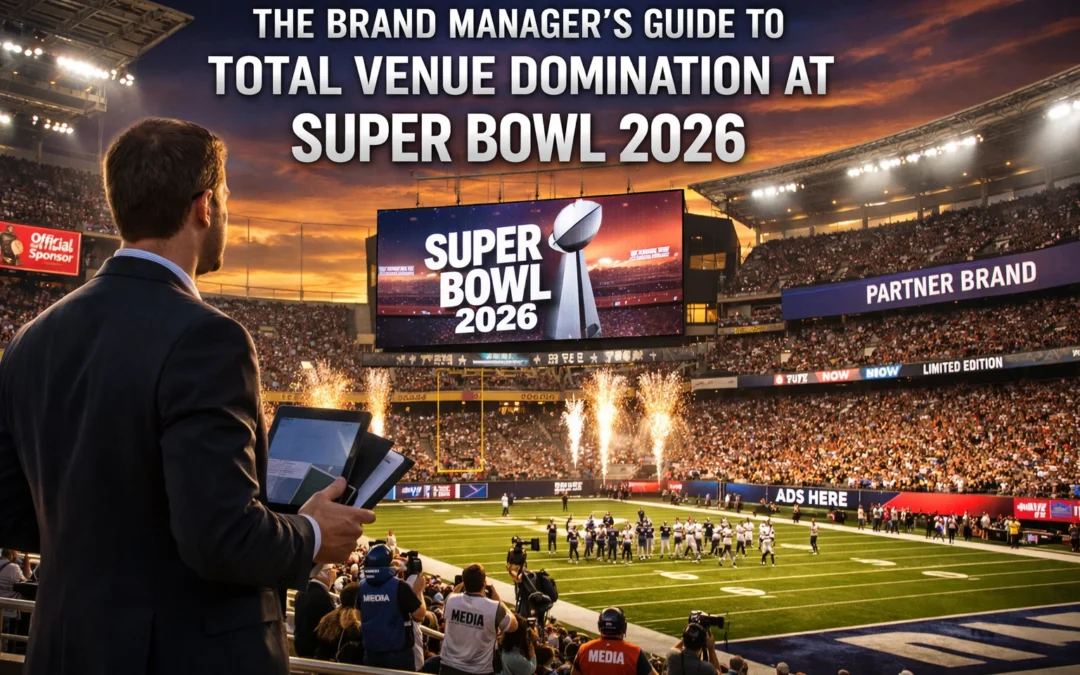
Super Bowl LX in 2026 represents the pinnacle of sports marketing and brand activation. For brand managers, achieving total venue domination during this period requires a sophisticated blend of traditional out-of-home (OOH) advertising, immersive experiential installations, and data-driven digital integration. With San Francisco and Santa Clara serving as the backdrop, the competition for consumer attention is at an all-time high.
Success in this environment is not accidental. It is the result of strategic planning that leverages decades of industry expertise. OOH Sports brings 40 years of advertising leadership to the table, providing the infrastructure and insights necessary to command attention from the moment fans land at the airport until they leave the stadium.
Forty Years of Strategic Evolution
The landscape of venue advertising has shifted significantly over the last four decades. What once relied on static billboards has evolved into a multi-sensory experience that covers every available surface within a high-traffic zone. OOH Sports has been at the forefront of this evolution, transitioning from traditional print media to the highly sophisticated programmatic digital out-of-home (DOOH) systems used today.
This 40 year legacy provides a unique advantage in understanding fan behavior and movement patterns. Total venue domination involves more than just a large screen; it involves a comprehensive "surround sound" approach. This includes floor graphics, elevator wraps, digital kiosks, and massive outdoor spectaculars. By saturating a venue from the floor to the ceiling, a brand ensures that its message is unavoidable and integrated into the fan’s physical journey.

Portfolio-Wide Domination Strategies
Modern brand managers are moving away from single-brand activations in favor of portfolio-wide strategies. This approach allows a parent company to address multiple audience segments simultaneously. During the 2026 season, effective strategies have utilized different brands within a portfolio to target specific demographics through varied touchpoints.
For instance, a beverage portfolio might deploy one brand to focus on premium, high-end experiences at luxury hotels, while another brand targets the high-energy atmosphere of the fan tailgates. This multi-pronged attack ensures that the parent company dominates the visual landscape across all consumer categories. By leveraging different brand identities, a corporation can maintain a constant presence in the minds of diverse fan groups.

Physical Infrastructure and Venue Coverage
Total domination requires a physical presence that spans the entire fan ecosystem. This begins with entry points like San Francisco International Airport (SFO) and extends through the transit corridors to Levi’s Stadium.
Floor-to-Ceiling Visibility
A key tactic for Super Bowl 2026 involves utilizing non-traditional surfaces. Floor graphics are particularly effective in high-dwell areas like security lines or concessions. These graphics guide foot traffic while keeping the brand message within the line of sight. When combined with overhead digital displays and pillar wraps, the result is a fully branded environment.
The Impact of Large-Scale Billboards
While floor graphics provide intimacy, large-scale billboards provide the "wow" factor. Positioning these assets at major intersections and near stadium entrances creates landmarks. These placements are essential for establishing brand authority and providing a backdrop for social media content generated by fans.
https://www.youtube.com/watch?v=l6J-0zileKE
The Mechanics of Experiential Engagement
In 2026, simply being seen is not enough. Brands must offer utility or entertainment to foster a deeper connection. Experiential installations serve as the physical manifestation of a brand’s story.
Successful activations at Super Bowl LX have included:
- Interactive Pop-Ups: Temporary structures that offer product samples, interactive games, or photo opportunities.
- Themed Environments: Creating zones that reflect a brand's identity, such as nautical-themed lounges or tech-focused interactive kiosks.
- Functional Branding: Providing necessary services like phone charging stations or water refill stations that are heavily branded.
These experiences drive extended dwell time. The longer a fan interacts with a physical activation, the higher the brand recall. These installations also serve as data collection points, allowing brand managers to build retargeting pools for post-game marketing efforts.

Programmatic DOOH and Real-Time Optimization
The integration of programmatic technology into OOH advertising has revolutionized how brands interact with fans on game day. Digital screens now allow for real-time creative updates based on game momentum, weather conditions, or local events.
For example, a brand can trigger specific creative content the moment a touchdown is scored or a significant play occurs. This relevance increases engagement significantly. Case studies in the industry have shown that programmatic DOOH can drive substantial lift in consumer intent. Brands like White Claw have seen a 74% lift in purchase consideration through targeted DOOH campaigns, as detailed in the White Claw Case Study. Similarly, AB InBev’s Mike’s Hard Iced Tea recorded a 119% lift in positive brand image by utilizing these dynamic tactics AB InBev Case Study.
Strategic Timing for Maximum Impact
A venue domination strategy must be executed in phases to maintain momentum.
- Pre-Game Hype (Building the Audience): This phase focuses on the week leading up to the game. Advertisements are placed in airports and hotels to capture fans as they arrive. The objective is to establish brand presence and begin the storytelling process.
- Game Day (Saturation): On the day of the Super Bowl, the focus shifts to the stadium and immediate surrounding areas. This is where high-impact visuals and experiential installations take center stage. The goal is to be the most visible brand in the fan's immediate environment.
- Post-Game (Conversion and Retention): Following the event, the strategy shifts to capturing the "exit" traffic and utilizing digital retargeting to convert the impressions made during the game into actual sales or long-term brand loyalty.

Measuring Impact and Brand Lift
The success of a venue domination campaign is measured through a combination of physical foot traffic data, digital engagement metrics, and brand lift studies. By using device ID tracking, brand managers can determine how many people were exposed to an OOH asset and whether those individuals later visited a retail location or a brand website.
This data-driven approach removes the guesswork from OOH advertising. It allows for a clear calculation of return on investment (ROI) and provides insights that can be used to refine future campaigns. For a deeper look at how these measurements are applied in real-world scenarios, the OOH Sports Case Study page provides detailed breakdowns of various successful executions.
Strategic Alignment and Collaboration
Dominating a venue like the Super Bowl requires close collaboration between brand managers, creative agencies, and OOH specialists. The logistical complexity of installing massive graphics and managing digital networks across a city necessitates a partner with deep experience and local knowledge.
OOH Sports has spent 40 years building the relationships and the infrastructure required to navigate these complexities. From securing prime billboard locations to managing the technical requirements of Sportrons, the company provides a turn-key solution for brands looking to own the moment. Information regarding these specialized assets can be found at OOH Sports Sportrons.
In conclusion, total venue domination at Super Bowl 2026 is achieved through a combination of physical scale, technological innovation, and strategic timing. By saturating the environment from floor to ceiling and integrating digital and physical touchpoints, brand managers can create an unmissable presence that resonates long after the final whistle. For more information on how to secure your position for future events, visit the OOH Sports About page or Contact us directly.