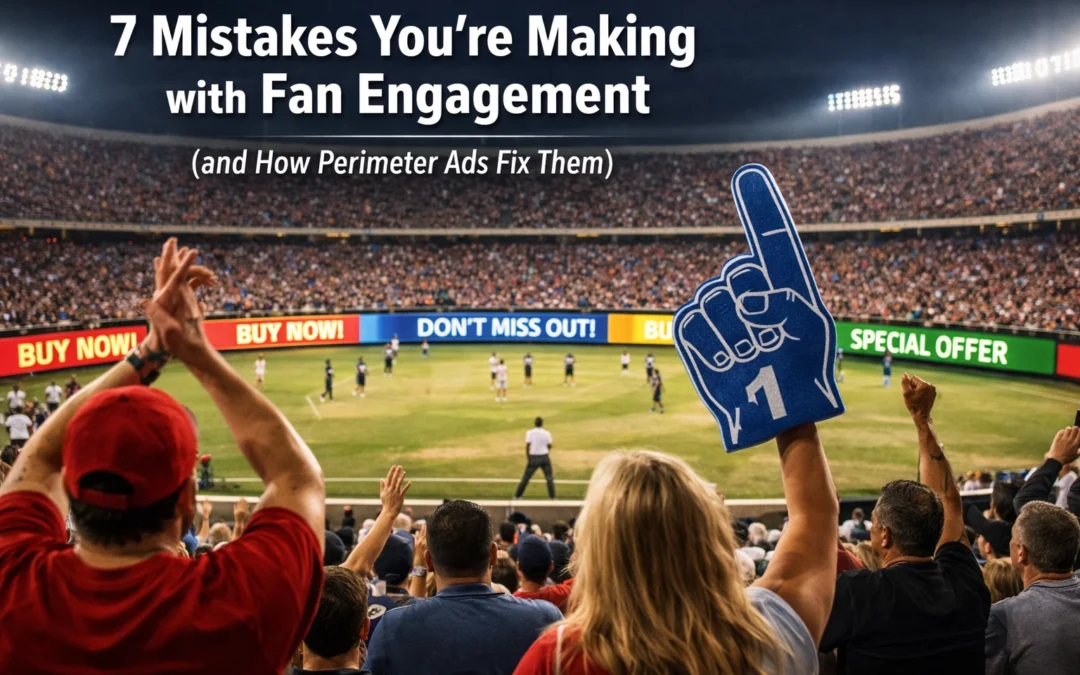
Fan engagement represents the bridge between a casual viewer and a lifelong brand advocate. For Creative Directors and Chief Marketing Officers, the sports arena offers a high stakes environment where attention is the primary currency. However, many campaigns fall short because they rely on outdated methods that fail to resonate with the modern, multi-tasking spectator.
In a world where digital noise is constant, physical presence within the field of play remains one of the most effective ways to capture and hold attention. Perimeter advertising, specifically the high tech displays known as Sportrons, provides a solution to the most common engagement pitfalls. By understanding these mistakes, brands can better leverage the power of OOH Sports to drive measurable impact.
1. The Monologue Mistake: Broadcasting Without Interaction
One of the most frequent errors in sports marketing is treating the audience like a passive recipient of information. Many brands use stadium signage to simply state their name, missing the opportunity to invite the fan into a conversation. Modern fans expect a two-way street. When a brand only broadcasts, it fails to build a relationship.
Perimeter ads fix this by acting as a visual anchor for interactive campaigns. Instead of a static logo, Sportrons can display dynamic calls to action, such as QR codes that lead to exclusive content or live polls. This transforms a standard advertisement into an entry point for an interactive brand experience.
2. Ignoring the Second Screen Reality
Research indicates that over 85 percent of sports fans use a mobile device while watching a game. Many marketers view the smartphone as a distraction or a competitor for attention. This is a strategic error. The second screen is not an enemy. It is a tool for deeper engagement.
By failing to integrate the stadium experience with the mobile experience, brands lose the chance to convert a "moment of interest" into a "moment of purchase." Perimeter advertising sits directly in the line of sight during a broadcast. When a fan looks up from their phone to see a highlight, the perimeter board is there. This placement ensures that the brand remains part of the primary viewing experience while providing the visual cue needed to drive mobile action.

3. Generic Messaging in a Specialized Environment
Creative directors often make the mistake of using the same creative assets for stadium displays that they use for standard billboards or social media. This lack of context leads to a "one size fits all" approach that ignores the unique energy of a live sporting event. Fans at a game are in a specific emotional state. They are excited, focused, and communal.
Perimeter ads allow for high-level customization. Programmatic digital out of home (DOOH) technology enables brands to swap creative based on the score, the weather, or the specific momentum of the game. A brand that reacts to a home team goal in real time on a perimeter board creates a much stronger emotional connection than a brand with a static, unrelated message.
4. Disconnection from Real-Time Moments
In sports, timing is everything. A delay in content delivery can make a brand appear out of touch. Many engagement strategies rely on post-game social media updates or email blasts sent hours after the final whistle. By then, the peak emotional window has closed.
Perimeter advertising operates in the "now." Because these boards are integrated into the field of play, they are visible during the most critical moments of the match. Whether it is a game-winning shot or a dramatic save, the brand is physically present in the background of the action. This real-time association is something that traditional digital ads cannot replicate.
5. Over-Reliance on Siloed Digital Channels
Many CMOs pour their entire budget into social media platforms, hoping to reach fans where they live. While social media is vital, it is also crowded and governed by algorithms that the brand does not control. Relying solely on these platforms creates a "leaky bucket" where engagement is high but brand recall is low.
Physical OOH (Out of Home) assets like Sportrons provide a "real world" anchor that lends credibility and scale to a digital campaign. When a fan sees a brand on the perimeter of a major stadium, it validates the brand's status. This physical presence creates a halo effect that improves the performance of every other digital channel in the marketing mix.
6. Lack of Attribution and Measurement
For years, stadium advertising was viewed as a "brand awareness" play that was difficult to quantify. A major mistake modern marketers make is continuing to treat OOH as an unmeasurable medium. This lead to wasted spend and a lack of accountability for creative performance.
Today, the integration of programmatic DOOH and mobile location data allows for precise measurement. Brands can now track how many fans exposed to a perimeter ad eventually visited a retail location or made an online purchase. By using data-driven strategies, OOH Sports helps brands move away from guesswork and toward a model based on proven results.
7. Underestimating the Power of the "Glow"
The final mistake is failing to account for the secondary audience. A stadium might hold 50,000 fans, but millions more are watching on television or via streaming services. Some brands design their perimeter ads only for the people in the front row, ignoring how the creative looks on a 4K television or a small smartphone screen.
Perimeter ads are designed to "glow" and stand out even in the background of a fast-moving broadcast. The high-contrast, high-resolution nature of modern Sportrons ensures that the brand remains legible and striking, regardless of the camera angle. This provides a massive boost in "earned" impressions that are often overlooked in traditional engagement audits.
Strategy: Integrating Perimeter Ads into a Full-Funnel Plan
To fix these mistakes, a strategic shift is required. Perimeter advertising should not be an afterthought. It should be the center of a coordinated multi-channel effort.
Objective & Strategy
The objective of a modern stadium campaign is to achieve high-frequency brand exposure while driving specific consumer actions. The strategy involves using high-impact perimeter placements to capture initial attention and then using mobile retargeting to move the consumer down the funnel.
- Placement: Securing prime real estate on the perimeter boards that receive the most television "dwell time."
- Creative: Developing high-contrast, simple, and bold visuals that are optimized for both live and broadcast viewing.
- Synchronization: Using programmatic triggers to sync perimeter ads with specific game events (e.g., a "power play" or "half-time" message).
- Retargeting: Using geofencing technology to identify mobile devices present in the stadium and serving them follow-up ads on their personal devices after the game.

Technology Partners and Execution
The execution of these campaigns relies on sophisticated technology partners. By using specialized Demand-Side Platforms (DSPs), brands can buy perimeter space with the same precision they use for online ads. This programmatic approach allows for flexible budgeting and rapid creative swaps.
The logistics involve coordinating with venue operators and broadcast teams to ensure that the digital assets are displayed correctly and are compliant with league regulations. This technical fluency is what separates a standard ad placement from a high-performing marketing engine.
Results: Data-Driven Success
The effectiveness of this approach is backed by significant data. When brands move away from generic broadcasting and toward strategic, physical engagement, the results are measurable.
- Purchase Consideration: In similar programmatic DOOH executions, brands have seen a substantial increase in consumer intent. For instance, a major beverage launch saw a 74% lift in purchase consideration by utilizing targeted OOH placements.
- Brand Image: Consistency in high-visibility environments improves how consumers perceive a brand. Campaigns focused on positive brand association have reported as much as a 119% lift in positive brand image.
- Actionable Intent: Beyond just looking at the ads, fans are taking action. One campaign saw purchase consideration increase by 144% after combining OOH visibility with a clear digital follow-up strategy.
These figures demonstrate that perimeter advertising is not just about "visibility." It is a powerful driver of the bottom line.
Conclusion: The Future of Fan Engagement
The sports arena remains one of the last places where large groups of people gather to give their undivided attention to a single event. For Creative Directors and CMOs, this is an opportunity that cannot be squandered with generic messaging or a lack of technical integration.
By avoiding the common mistakes of passive broadcasting and siloed digital thinking, brands can use perimeter ads to create a truly omnichannel experience. Whether it is through the bold presence of Sportrons or the data-backed precision of programmatic DOOH, OOH Sports provides the tools necessary to turn a spectator into a customer.
For those looking to explore how these strategies can be applied to their own brand, the OOH Sports blog provides ongoing insights into the evolving landscape of sports advertising. The key to successful fan engagement is no longer just being seen. It is about being seen in the right way, at the right time, and with the right data to prove it worked.