
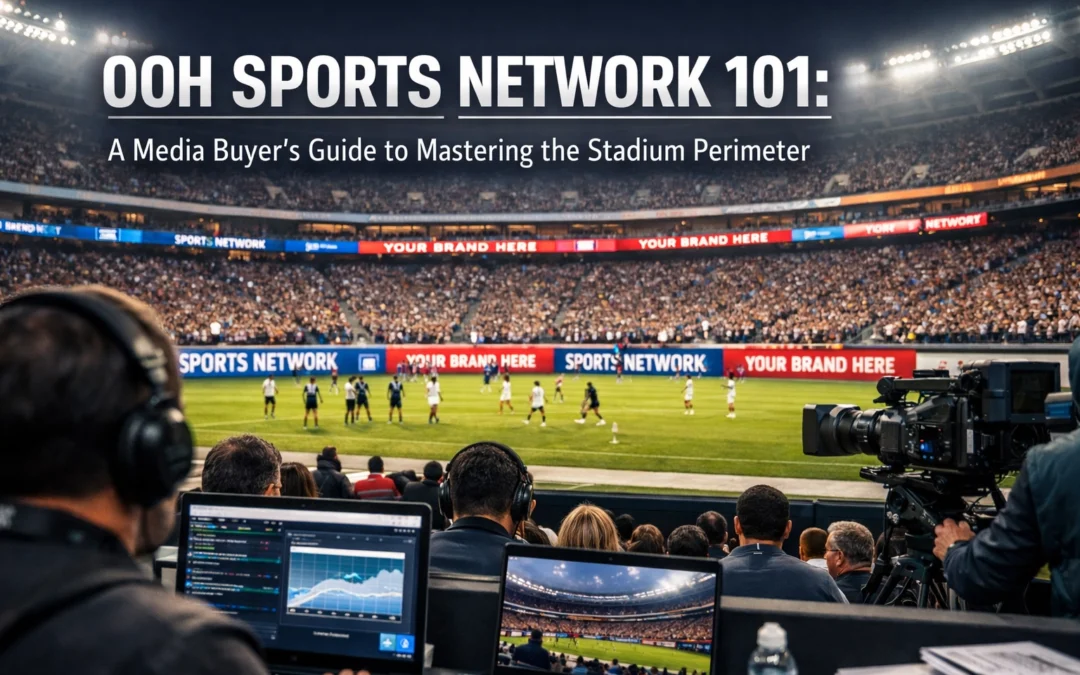
The advertising landscape is experiencing a significant shift as sports venues transition from traditional static signage to dynamic digital environments. OOH Sports announces a major milestone in this evolution, confirming the expansion of its network to include more than 25,000 digital screens. This growth positions the network as a primary channel for media buyers seeking to reach high value audiences in stadiums, transit hubs, and high traffic corridors across the United States.
By integrating programmatic technology with premium sports inventory, the network transforms the stadium perimeter into a data responsive marketing tool. This guide provides an overview of the network architecture, the strategic advantages of digital out of home (DOOH) placements, and the technical pathways for campaign activation.
Network Infrastructure and Strategic Expansion
The expansion of the OOH Sports network focuses on comprehensive coverage throughout the fan journey. Rather than limiting exposure to the duration of a game, the network infrastructure creates touchpoints that begin long before kickoff and continue after the final whistle.
Digital displays are strategically positioned in several key areas:
- Venue Approaches: Screens located near entry gates and security checkpoints capture attention during the peak arrival window.
- Parking Facilities: Large format displays engage fans as they transition from their vehicles to the venue.
- Concourses and Concessions: High dwell time areas allow for detailed messaging while fans wait for food, beverages, or merchandise.
- Departure Routes: Strategically placed screens near exits and transit stations provide a final brand reinforcement as fans leave the event.
This geographic layering ensures that messaging remains consistent and visible across different stages of the event experience. The ability to deploy different content at each touchpoint allows brands to follow fan behavior patterns throughout the day.

Strategic Positioning and Sequential Storytelling
The OOH Sports network offers a temporal advantage over traditional broadcast media. While a standard television spot is concentrated into a 30 second window, the digital perimeter maintains a presence across extended timeframes. This allows media buyers to employ sequential storytelling techniques.
Early exposures during the arrival phase can be used to introduce brand positioning. As the event progresses, mid-game messaging in concourses can provide deeper informational or emotional layers. Finally, post-game messaging can focus on direct calls to action, such as visiting a nearby retail location or downloading an app.
The use of Sportrons and other digital assets within the stadium environment provides a level of flexibility that was previously unattainable with vinyl banners or painted signs. Campaigns can be adjusted in real time based on the score of the game, weather conditions, or specific audience demographics present at a particular event.

Programmatic Capabilities for Media Buyers
The shift toward programmatic DOOH is a central component of the network expansion. Advertisers can now access inventory through major demand-side platforms (DSPs) using the same targeting parameters and bidding strategies used for online display or mobile advertising. This integration simplifies the buying process and allows for real-time optimization.
There are two primary pathways for campaign activation:
- Direct Partnerships: These are ideal for advertisers requiring customized integrations, specific venue exclusivity, or long term brand presence.
- Programmatic Platforms: This self-service model allows digital buyers to incorporate stadium inventory into broader omnichannel campaigns.
The creative management system within the network handles variations automatically. A single campaign can deploy consistent brand messaging across thousands of screens while varying specific offers or store locations based on the geographic proximity of each individual screen. This level of precision ensures that the creative remains relevant to the local audience at every venue.
For a deeper look at how programmatic compares to older methods, media buyers can review the analysis of programmatic DOOH vs. traditional stadium ads.
Engagement and Measurable Impact
One of the most significant advantages of the OOH Sports network is the ability to connect physical exposure to digital action. Digital screens now incorporate direct response mechanisms that bridge the gap between the stadium environment and the consumer’s mobile device.
- QR Code Integration: Creative units can include embedded QR codes that enable instant transitions to branded experiences, such as app downloads, reservation systems, or social media platforms.
- Mobile Retargeting: Certain installations support mobile device detection. This allows fans exposed to messaging within the venue to subsequently receive coordinated ads on their mobile devices or connected TVs, creating a multi-touchpoint experience.
- Real Time Conversions: For industries like sports betting, the network supports real-time campaign launches that can be activated in under 24 hours to capitalize on specific match-ups or odds shifts.

Research indicates that these engagement strategies yield tangible results. For instance, data shows that 99% of fans who attended a game following exposure to out of home advertising spent money locally on hotels, restaurants, or transportation. This underscores the role of the medium in driving significant economic impact for host cities.
Case Studies in Performance
The effectiveness of the network is best illustrated through recent campaign results. Major brands have utilized the OOH Sports infrastructure to drive measurable lifts in brand awareness and purchase intent.
- White Claw: A programmatic campaign for a vodka launch resulted in a 74% lift in purchase consideration. Detailed metrics on this execution can be found in the White Claw case study.
- Mike’s Hard Iced Tea: This campaign achieved a 119% lift in positive brand image by utilizing the network’s programmatic capabilities. Further details are available in the Mike's Hard Iced Tea report.
- Sea-Doo: By executing its first digital OOH campaign, the brand saw a 144% increase in purchase consideration. The methodology for this success is outlined in the Sea-Doo case study.
These examples demonstrate that the network is not just for brand awareness but is a powerful tool for driving bottom-funnel metrics.

Industry Trajectory and the Future of Sports Marketing
The expansion of the OOH Sports network aligns with broader industry trends. Projections suggest that digital out of home investment is on track to reach $50 billion globally. By 2028, digital formats are expected to account for over 45% of total OOH spending.
This growth is driven by the increasing demand for automation, measurement, and precision targeting. The availability of 25,000 digital screens creates opportunities for advertisers of all sizes. Regional brands can now activate targeted campaigns in specific markets without the need for national commitments, while national advertisers can concentrate investment in priority designated market areas based on sales data or competitive dynamics.
Strategies for capturing a share of this growing market are detailed in the report on DOOH sports advertising strategies.
Conclusion
The OOH Sports network represents a fundamental shift in how media buyers approach the stadium perimeter. With the expansion to 25,000 screens and the integration of programmatic technology, the network provides a scalable, measurable, and highly effective channel for reaching sports fans.
For more information on network availability or to begin planning a campaign, interested parties can visit the OOH Sports marketing page or contact the team directly. Additional information regarding company standards can be found on the terms of service and company policies pages.