
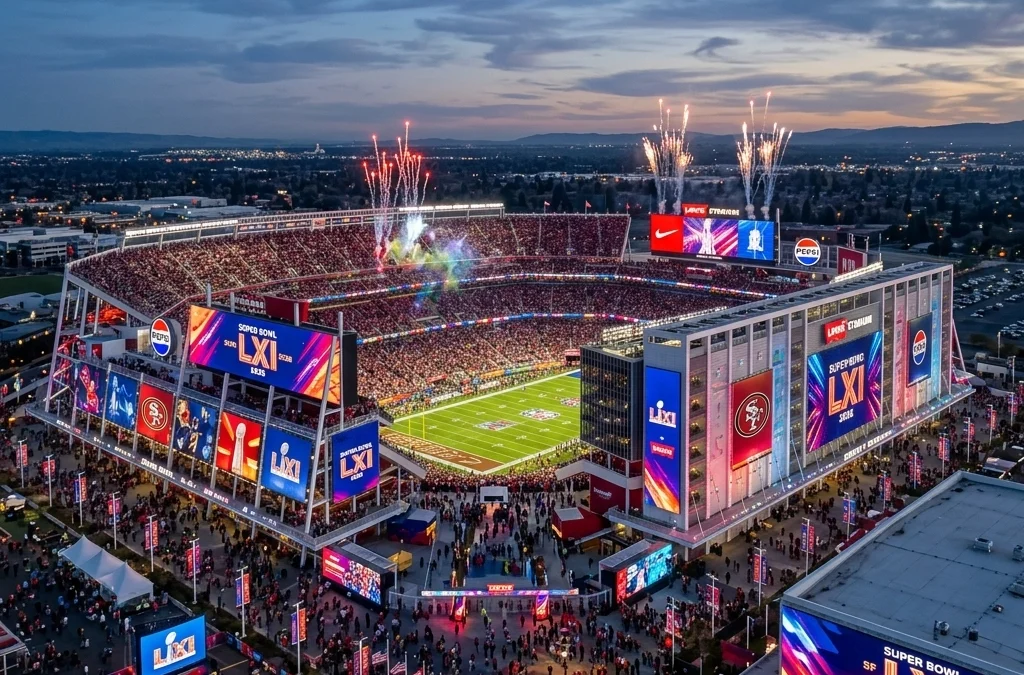
The 2026 sports season reached its peak on February 8 at Levi's Stadium in Santa Clara. Super Bowl LX saw the Seattle Seahawks take home the trophy against the New England Patriots, but the real victory for many brands happened outside the lines of the football field. For those looking to dominate the advertising landscape, the Super Bowl remains the ultimate testing ground for venue-wide branding.
Success in this environment does not happen by accident. It requires a deep understanding of fan movement, digital integration, and the physical architecture of the stadium. With over 40 years of advertising leadership, OOH Sports has refined the process of turning a sports venue into a comprehensive brand ecosystem. This guide examines the strategies and technologies that defined the 2026 Super Bowl branding experience.
The Strategy of Venue-Wide Domination
Effective branding at a major event like the Super Bowl requires more than a single billboard or a 30 second television spot. It involves a strategy known as venue-wide saturation. This approach ensures that a brand message follows a fan from the moment they arrive at the parking lot until they take their seat.
The objective is to create a seamless visual experience. When a fan enters the stadium, they should see consistent messaging on floor graphics, digital kiosks, and large-scale banners. This repetition builds brand recognition without being intrusive. During Super Bowl LX, the most successful campaigns used a mix of static and digital media to maintain a constant presence.

40 Years of Leadership in Out of Home Advertising
The expertise required to manage a stadium-wide takeover comes from decades of experience. Dan Kost, CEO of OOH Sports, has spent 40 years leading the industry in sports-centric advertising. This history provides a unique perspective on how fan behavior has evolved.
In the past, stadium advertising was limited to painted signs and basic posters. Today, the landscape is dominated by high-resolution digital screens and programmatic buying. OOH Sports has remained at the forefront of this shift, expanding its network to include 25,000 digital screens across America. This expansion allows brands to connect with fans not just on game day, but throughout their entire journey. More details on this growth can be found in the official network expansion announcement.

Key Tactics: From Floors to Billboards
To succeed with venue-wide branding, a campaign must utilize every available surface. This multi-layered approach ensures that the message is visible from multiple angles and at different heights.
Floor Graphics and Wayfinding
Floor graphics are often underutilized but highly effective. As fans navigate the concourses of Levi's Stadium, their eyes are naturally directed downward for safety and navigation. Branded floor decals serve a dual purpose: they guide fans to their sections or concessions while reinforcing brand identity. These graphics are durable enough to withstand the foot traffic of over 68,000 attendees.
Digital Billboards and Sportrons
The core of any modern stadium campaign is the digital screen. Sportrons offer dynamic content capabilities that static signs cannot match. During Super Bowl 2026, brands used Sportrons to display real-time stats, social media feeds, and interactive polls. This engagement keeps the audience focused on the screen, increasing the dwell time for the accompanying advertisement.
Large-Scale Exterior Billboards
The branding experience starts outside the stadium. Massive billboards placed along the main transit routes to Santa Clara capture the attention of fans as they arrive. These high-impact placements establish the brand as a primary sponsor of the weekend's festivities.
https://www.youtube.com/watch?v=l6J-0zileKE
The Role of Programmatic DOOH
One of the most significant advancements in the 2026 advertising cycle was the use of programmatic Digital Out of Home (DOOH) technology. This technology allows for data-driven ad placements that are triggered by specific events or times.
For instance, a beverage brand could trigger specific creative content to appear on screens immediately following a touchdown or during the halftime performance by Bad Bunny. This level of relevance ensures that the ad feels like a part of the event rather than a distraction.
Research from previous campaigns shows the power of this technology. A study on White Claw’s programmatic DOOH campaign showed a 74 percent lift in purchase consideration. Similarly, AB InBev saw a 119 percent lift in positive brand image by using targeted digital placements. These results prove that when data and location intersect, the impact on the consumer is measurable and significant.

Measurable Results and Brand Lift
Success at the Super Bowl is measured by more than just attendance. It is measured by the impact on the brand's bottom line and the shift in consumer perception. By utilizing venue-wide branding, companies can achieve significant results.
In the 2026 season, the use of device ID tracking and retargeting allowed brands to follow up with fans who were exposed to stadium ads. This omnichannel approach ensures the conversation continues long after the final whistle. For example, Sea-Doo’s digital OOH campaign resulted in a 144 percent increase in purchase consideration. These metrics are vital for justifying the investment in a high-profile venue like Levi's Stadium.

Execution Logistics at Levi's Stadium
Managing a venue-wide rollout at a stadium with 68,500 seats requires precision logistics. The installation of floor graphics, the calibration of digital screens, and the placement of billboards must be coordinated weeks in advance.
Levi's Stadium is a state-of-the-art facility that opened in 2014, and it offers some of the best technological infrastructure for advertisers in the world. However, the sheer scale of a Super Bowl event adds layers of complexity. From security clearances to strict broadcast windows, every element of the branding must be vetted and approved. OOH Sports utilizes a dedicated team to manage these logistics, ensuring that every asset is in place and functioning perfectly before the gates open.
Objective Analysis of the 2026 Campaign
Looking back at Super Bowl LX, the campaigns that stood out were those that embraced the "always-on" nature of modern sports. Fans no longer just watch the game; they record it, share it, and interact with it on multiple levels.
Brands that succeeded used:
- High-contrast creative optimized for digital screens.
- Strategic placement in high-traffic concourse areas.
- Integration between physical OOH assets and mobile retargeting.
- Clear, simple messaging that could be read at a distance.
The 2026 guide to success emphasizes that while the technology changes, the core principles of advertising remain the same. Visibility, frequency, and relevance are the keys to winning over a sports audience.

Conclusion for Future Planning
The 2026 Super Bowl provided a masterclass in how to leverage 40 years of expertise with cutting-edge technology. As the industry moves forward, the lessons learned at Levi's Stadium will serve as the foundation for future major sporting events.
For brands looking to replicate this success, the focus must be on a venue-wide strategy that leaves no corner of the stadium untouched. Whether it is through the 25,000 screens in the OOH Sports network or custom floor graphics designed for maximum impact, the opportunities for growth in sports advertising are larger than ever.
To learn more about how to secure venue-wide coverage for upcoming seasons, visit the OOH Sports contact page or explore the about section to understand the history of leadership behind these campaigns. The ultimate guide to success is simple: be where the fans are, and make sure your brand is the most visible part of their experience.