
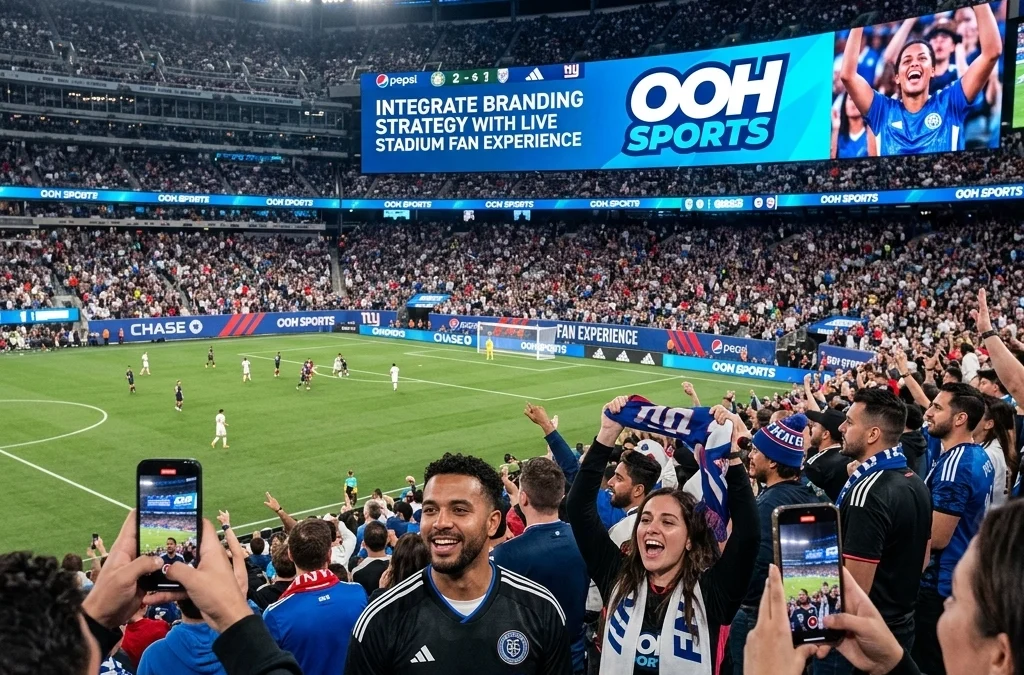
The stadium environment offers a unique marketing opportunity that few other spaces can match. It provides a captive audience of thousands, all unified by a shared passion and high emotional energy. For creative directors and CMOs, the challenge is not just to place a logo on a screen but to weave a brand into the fabric of the fan experience. When done correctly, stadium advertising moves beyond simple visibility and becomes a part of the event memory itself.
Integrating a branding strategy within a live sports venue requires a shift in perspective. The most effective campaigns treat the stadium as a functional ecosystem rather than just a collection of ad slots. By focusing on how fans interact with the space, brands can create "brilliant assists" that enhance the game day without overshadowing the action on the field.
The Strategy of Functional Branding
Successful stadium branding serves a dual purpose. It must be visually striking enough to capture attention but functional enough to add value to the fan's journey. This is often referred to as a functional layer. Instead of seeing an advertisement as an interruption, fans should perceive it as a natural part of the environment.
One way to achieve this is through integrated wayfinding. Brands can use their signature colors and typography to assist with navigation. Color-coded zones, branded meeting points, and clear signage programs help fans find their seats or concessions while reinforcing brand identity. When a brand helps a fan navigate a complex venue, it builds a subconscious level of trust and utility.
Strategic placement is key to this functional approach. High traffic areas such as concourses, entry gates, and bathroom corridors offer high dwell time. In these spaces, branding can be more detailed and informative. Near the field of play, however, the focus shifts to high impact, high speed visuals that work in tandem with the game’s rhythm.

Building Emotional Loyalty Through Visual Storytelling
Sports fans are driven by emotion. They associate stadiums with championships, family traditions, and personal milestones. For a brand to resonate in this space, it must align with these emotions. This is where visual storytelling becomes essential.
Branding strategies should leverage the history and legacy of the team or the venue. Using historical imagery, player legacy walls, and championship timelines allows a brand to participate in the local culture. When a company sponsors a "Moment in History" segment on a large screen or creates a muralized wall celebrating a local legend, it establishes a connection that is far deeper than a standard digital banner.
This emotional attachment is what creates long term loyalty. By mirroring the grit, strength, or speed of the athletes through artistic graphic elements, a brand can position itself as a supporter of the fans' passion. This approach differentiates the brand from competitors who may only use literal logo applications.
Practical Implementation: Moving Beyond the Logo
For creative directors, the stadium is a massive canvas. Moving beyond a simple logo involves using superscale graphics and sculptural elements. This might include pillar wraps, media walls, or floor graphics that transform ordinary concrete into an immersive branded environment.
A common tactic for modern venues is the use of abstracted brand elements. Instead of repeating a name dozens of times, a designer might use a brand’s primary color palette and unique geometric patterns to create a "vibe" throughout the concourse. This subtle repetition builds brand recognition without causing visual fatigue for the fans.
It is also important to maintain consistency across all touchpoints. The visuals seen on the Sportrons during the game should match the graphics on the digital displays in the luxury suites and the physical banners in the parking lot. This seamless narrative ensures that the brand is recognizable from any angle and at any distance.

Technology and the Power of Programmatic DOOH
The rise of Digital Out-of-Home (DOOH) technology has revolutionized stadium advertising. Modern stadiums are now equipped with sophisticated LED systems that allow for real-time updates and dynamic content. This flexibility is a major advantage for brands looking to stay relevant throughout a long season.
Programmatic DOOH allows advertisers to trigger specific creatives based on game events. For example, a beverage brand might trigger a "celebration" creative immediately after a home team goal or home run. This real-time relevance captures fans at their peak emotional state.
Recent data highlights the effectiveness of these digital campaigns. In a study involving a major vodka launch, a programmatic DOOH campaign led to a 74 percent lift in purchase consideration. Similarly, a well executed campaign for a hard iced tea brand saw a 119 percent lift in positive brand image. These results demonstrate that when technology is used to deliver the right message at the right time, the impact on consumer perception is significant.

Maximizing Impact Through Seasonal Consistency
While a single high profile activation can generate buzz, the real value in stadium advertising often comes from season-long partnerships. Stadiums and brands both benefit from long term commitments because they allow for cumulative recognition.
Each game provides a new opportunity to build on the exposure from the previous event. Over the course of a season, a brand becomes a familiar part of the fan's routine. This compounding effect is much more cost-effective than attempting to achieve the same level of awareness through disconnected, one-off events.
Furthermore, multi-use venues require branding systems that are adaptable. A stadium might host a football game on Sunday and a concert on Tuesday. Creative directors should develop dynamic frameworks that can be updated for different audiences while maintaining the core visual equity of the brand. This ensures that the branding remains effective regardless of the specific event taking place.
Amplifying the Reach with Social Media Integration
The physical stadium experience is only the beginning. In the digital age, every fan is a potential broadcaster. Visually distinctive and "Instagrammable" environments encourage fans to take photos and share them on social media.
Brands can actively encourage this by creating specific photo zones or interactive activations. When a fan shares a photo of themselves in front of a beautifully designed branded mural, that brand’s reach extends far beyond the stadium walls to a global digital audience.
User-generated content strategies are also highly effective. Displaying fan photos from social media on the stadium screens during breaks creates a sense of community. It turns the fans into active participants in the branding strategy, which significantly increases engagement levels. For more insights on how these strategies are executed, viewing a case study can provide concrete examples of success.

Measuring Success and Brand Lift
For a CMO, the ultimate goal of any stadium integration is a measurable return on investment. Success in this space is measured through brand lift studies, purchase consideration metrics, and attribution modeling.
By tracking device IDs exposed to stadium advertising and comparing them to consumer behavior, brands can see exactly how the campaign influenced the bottom line. For instance, a campaign for an outdoor powersports brand resulted in a 144 percent increase in purchase consideration through strategic digital out-of-home placements.
These metrics prove that stadium advertising is not just about "vanity" visibility. It is a powerful tool for driving actual business results. Using industry-standard terms like programmatic DOOH and attribution allows marketing teams to communicate the technical success of these campaigns to stakeholders with clarity and precision.
The Future of Stadium Branding
As technology continues to evolve, the integration between branding and the fan experience will only become deeper. The move toward more interactive, data-driven, and emotionally resonant advertising is clear. Brands that treat the stadium as a living, breathing environment rather than a static billboard will be the ones that win the loyalty of the next generation of fans.
For those ready to explore these opportunities, OOH Sports provides the platform and expertise to turn a branding strategy into a reality. Whether through Sportrons or innovative concourse activations, the goal remains the same: to create a lasting connection between the brand and the excitement of the game.
By focusing on functional layers, emotional storytelling, and technological integration, brands can ensure they are not just seen, but remembered. The stadium is more than a venue. It is a place where brands can become a part of the stories fans tell for years to come.