
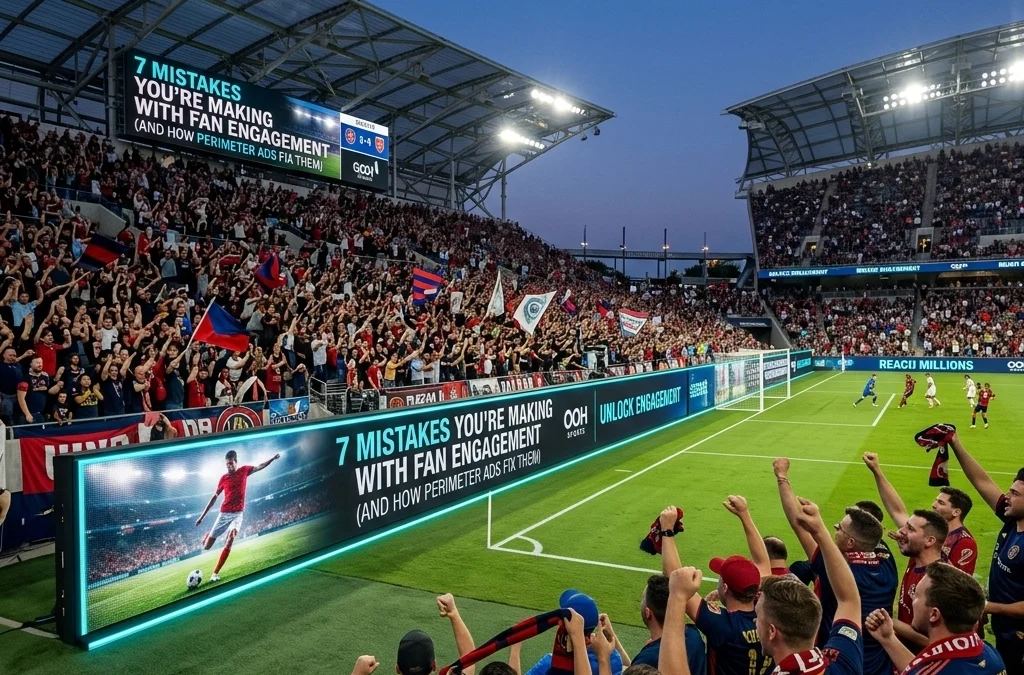
The landscape of sports marketing is undergoing a significant transformation. As traditional television viewership becomes more fragmented, the value of live sporting events remains a cornerstone for brand visibility. However, many brands struggle to translate that visibility into meaningful fan engagement. Simple logo placement is no longer sufficient to capture the attention of a modern audience that is constantly stimulated by secondary devices and real-time data.
Effective fan engagement requires a strategy that moves beyond passive observation. When brands fail to connect with fans in a way that feels relevant and timely, they miss the opportunity to build long term brand loyalty. Digital out-of-home (DOOH) advertising, specifically stadium perimeter ads, provides a sophisticated solution to these common engagement pitfalls. By leveraging programmatic technology and real-time data, brands can turn a stadium into a high performance marketing ecosystem.
Objective and Strategy
The primary objective of any sports centered campaign is to maximize brand recall and drive purchase consideration within a highly captive audience. The strategy involves moving away from static, fixed-contract signage toward a flexible, data-driven approach. Digital perimeter ads allow for agility, enabling creative directors and CMOs to adjust messaging based on the flow of the game, the demographic of the crowd, or even the current score. This section outlines the seven most frequent mistakes in fan engagement and how a perimeter-first DOOH strategy addresses them.
Mistake 1: Static One-Way Communication
Many brands treat stadium advertising as a one-way broadcast. A static billboard or a rotating vinyl sign offers no opportunity for interaction or evolution during the event. This lack of movement leads to "banner blindness" where fans subconsciously filter out the marketing message because it does not change.
The Perimeter Fix:
Digital perimeter screens allow for dynamic creative that moves with the action. Whether it is a subtle animation or a bold, synchronized takeover of all stadium screens, the movement naturally draws the eye. More importantly, these screens can display interactive elements like QR codes or social media prompts that invite the fan to participate in the brand story rather than just viewing it.
Mistake 2: Disconnecting the Physical and Digital Experience
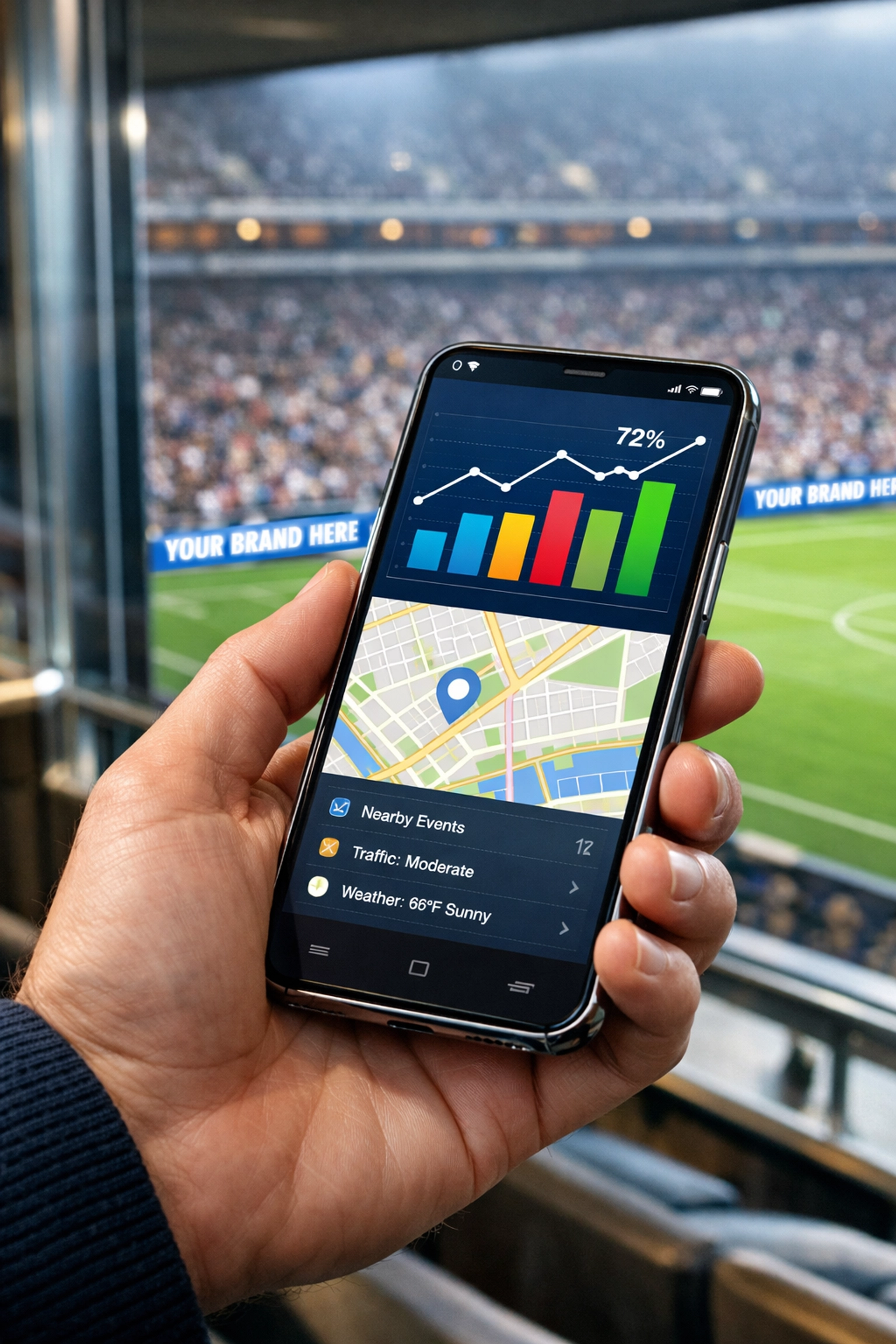
A common error is treating the in-stadium experience and the mobile experience as two separate silos. With over 85 percent of sports fans using a mobile device while watching a game, failing to bridge these two worlds is a lost opportunity.
The Perimeter Fix:
Perimeter ads act as the physical anchor for a digital journey. By using geographically targeted DOOH strategies, brands can sync their stadium creative with mobile retargeting. When a fan sees a brand on the perimeter board, that same brand can appear in their social feed or sports app moments later. This omnichannel approach has been shown to boost engagement significantly. For instance, geographically targeted DOOH strategies have boosted fan engagement by 90 percent in recent years.
Mistake 3: Generic Messaging for a Diverse Crowd
Broadcasting the same message to every fan in the stadium ignores the nuances of the audience. A fan in the luxury suites has different interests and purchasing power than a fan in the general seating area or a fan watching via a regional broadcast.
The Perimeter Fix:
Programmatic DOOH allows for versioning. Brands can deploy different creative assets based on the specific venue, the time of day, or the profile of the fans attending. This level of personalization ensures that the message resonates with the specific demographic present at the moment. This moves the needle from generic brand awareness to specific purchase consideration.
Mistake 4: Over-Reliance on Saturated Social Channels
Social media is often the first place marketers look for engagement, but these platforms are increasingly crowded and expensive. During a game, a fan's social feed is a chaotic mix of highlights, opinions, and competing ads.
The Perimeter Fix:
Perimeter advertising provides a "clean" environment. Within the field of play, the brand is one of the few visual elements competing for the fan's attention. This high-dwell-time environment offers a level of brand safety and visibility that is difficult to replicate on social media. Instead of fighting for space in an algorithm, the brand becomes part of the game's visual fabric.
Mistake 5: Missing the Real-Time Context of Play
Timing is everything in sports. A brand advertising a celebratory product after a home team loss feels out of touch. Most traditional stadium ads are fixed and cannot respond to the emotional highs and lows of a match.
The Perimeter Fix:
Real-time programmatic triggers are a game changer for perimeter ads. Campaigns can be set to activate or change creative based on specific events, such as a goal, a touchdown, or a win. This is particularly effective for categories like sports betting. Launching real-time sports betting DOOH campaigns that convert in under 24 hours is now possible through automated data feeds that update odds and offers instantly on the perimeter boards.

Mistake 6: Fragmented Reach and Scalability Issues
Historically, stadium advertising required individual negotiations with every venue, making it nearly impossible to scale a national or global campaign quickly. This limited reach meant brands missed 99 percent of potential audiences outside the specific venue.
The Perimeter Fix:
Networks like OOH Sports provide access to over 25,000 digital screens across various markets. This scale allows a CMO to execute a synchronized campaign across multiple stadiums and cities simultaneously. By shifting budgets to perimeter DOOH, brands can achieve massive scale for a fraction of the cost of traditional individual stadium sponsorships. In fact, some brands are scaling with perimeter DOOH for 80 percent less than the cost of a traditional 2 million dollar stadium sponsorship.
Mistake 7: Failing to Measure and Retarget
The biggest mistake in fan engagement is the inability to prove that it worked. For decades, stadium advertising was a "spray and pray" tactic with very little data to back up the investment.
The Perimeter Fix:
Modern DOOH measurement uses AI-powered analytics to track campaign success. By utilizing device IDs and location data, brands can determine how many people were exposed to the perimeter ad and, more importantly, how many of those people later visited a website or made a purchase. AI-powered DOOH analytics provide clarity and prove campaign success by removing the guesswork from the ROI equation.
Technology Partners and Execution
Executing a sophisticated perimeter ad campaign requires a robust technological infrastructure. OOH Sports utilizes advanced Demand-Side Platforms (DSPs), such as StackAdapt, to manage programmatic buys. This technology allows for the seamless integration of data triggers and creative delivery.
The execution process typically involves:
- Defining the Audience: Identifying the specific fan demographics and locations.
- Setting the Triggers: Determining what game events or environmental factors will activate the creative.
- Creative Optimization: Developing dynamic assets that adapt to the digital screen format and the stadium environment.
- Measurement Setup: Integrating attribution tools to track brand lift and conversion post-exposure.
The use of StackAdapt DSP is driving programmatic DOOH adoption because it provides the transparency and control that modern marketers demand.
Results and Impact
The transition from traditional sponsorship to digital perimeter advertising yields measurable results. Data from various campaigns highlights the effectiveness of this approach:
- Purchase Consideration: A campaign for White Claw using programmatic DOOH drove a 74 percent lift in purchase consideration for a new product launch.
- Brand Image: Anheuser-Busch InBev saw a 119 percent lift in positive brand image through a targeted programmatic campaign for Mike’s Hard Iced Tea.
- Efficiency: Brands are increasingly moving away from "official" sponsorships in favor of high-impact DOOH. Nike demonstrated this effectively during the NYC Marathon, where they were not an official sponsor but achieved massive brand presence through strategic DOOH.
- Market Growth: The DOOH sports advertising market is projected to reach 50 billion dollars by 2030, reflecting the massive shift in how brands allocate their budgets.
By avoiding the common pitfalls of static, generic, and unmeasured engagement, brands can utilize perimeter advertising to create a lasting impact. The ability to be present at the "point of passion": the moment a fan is most engaged with the game: is the ultimate advantage of stadium DOOH.
In a world where every second of a fan's attention is contested, perimeter ads offer a clear, dynamic, and measurable way to win. As the technology continues to evolve, the brands that embrace programmatic agility will be the ones that dominate the stadium landscape and the consumer's wallet. OOH Sports remains at the forefront of this evolution, providing the tools and the network to ensure that every fan engagement opportunity is fully realized.