
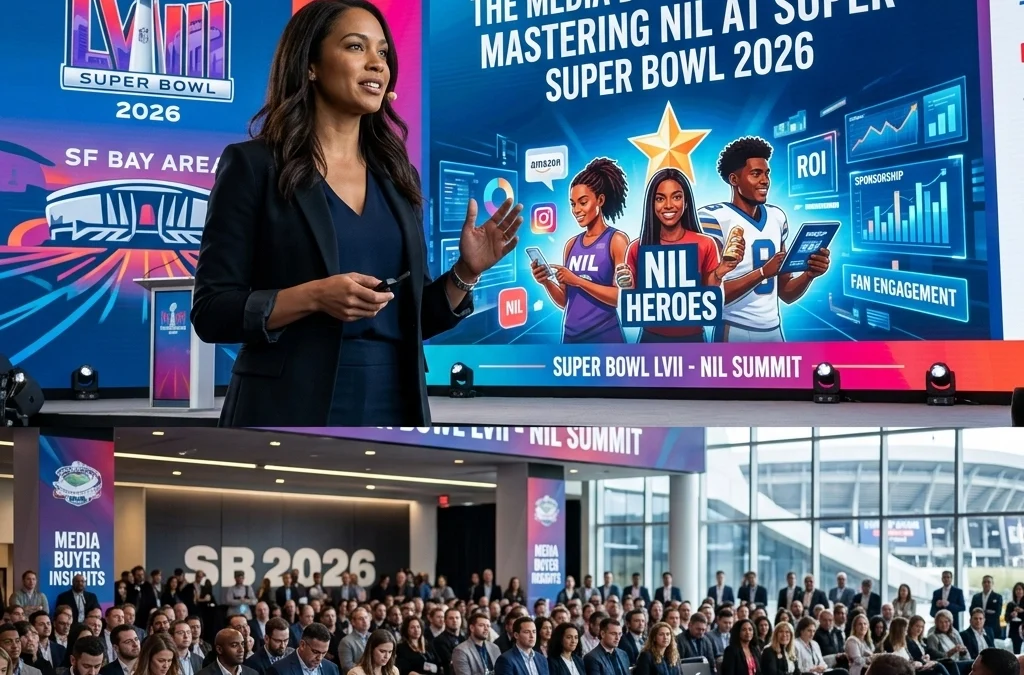
The landscape of sports marketing underwent a massive shift during the 2026 Super Bowl season. For media buyers, the traditional model of putting all resources into a single celebrity spokesperson has been replaced by a decentralized approach. This strategy leverages Name, Image, and Likeness (NIL) partnerships at scale. By connecting with over 20,000 authentic student-athlete voices, brands managed to penetrate local markets and digital feeds with a level of precision that national TV spots cannot match. This guide examines the mechanics of these campaigns and how to master the NIL platform for maximum impact.
The Strategy of Scaled Authenticity
The primary challenge for any brand during the Super Bowl is cutting through the noise. Traditional advertising often feels distant, but NIL campaigns offer a sense of community and peer-to-peer recommendation. Research indicates that NIL multi-athlete campaigns deliver 10 to 50 times greater engagement than traditional single-athlete approaches. This is because a army of 20,000 student-athletes provides a diverse range of niche audiences across various demographics and geographic locations.
The objective of a modern NIL strategy is not just visibility but resonance. When a local college star shares a brand message, it carries more weight with their specific follower base than a generic Hollywood endorsement. For media buyers, the focus has shifted toward the OOH Sports NIL platform to manage these thousands of relationships simultaneously.
Strategic Timing and Three Phase Execution
Success in the Super Bowl window requires more than a single day of activity. Media buyers must structure their NIL activations across three distinct phases to ensure the budget works effectively from mid-January through the end of February.
Phase 1: The Pre-Game Hype
The work begins three to four weeks prior to game day. This phase focuses on audience building and retargeting. By initiating campaigns in mid-January, brands capitalize on lower costs-per-click compared to the week of the game. During this time, the 20,000 student-athlete voices begin creating teaser content and social listening pools. These teaser campaigns establish a baseline of engaged consumers who can be retargeted as the game approaches. The pre-game phase is about establishing the narrative and ensuring the brand is already a part of the sports conversation before the national media frenzy takes over.
Phase 2: Game Day Execution
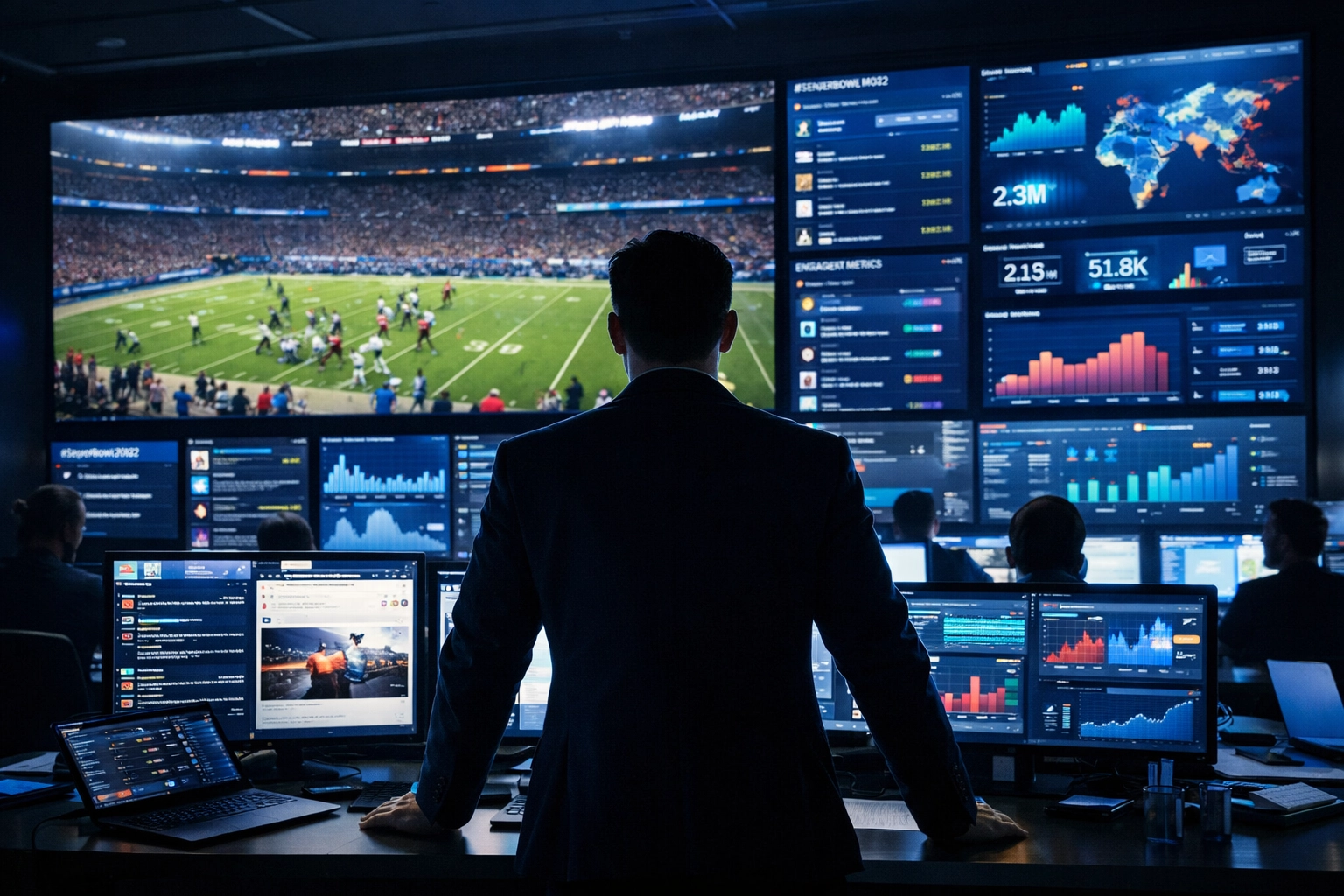
During the event, the strategy shifts to a brand war room mentality. This requires creative assets that are ready for multiple scenarios. While the game is happening, real-time agility is the most valuable asset. Brands that pivot quickly based on game developments capture the most value.
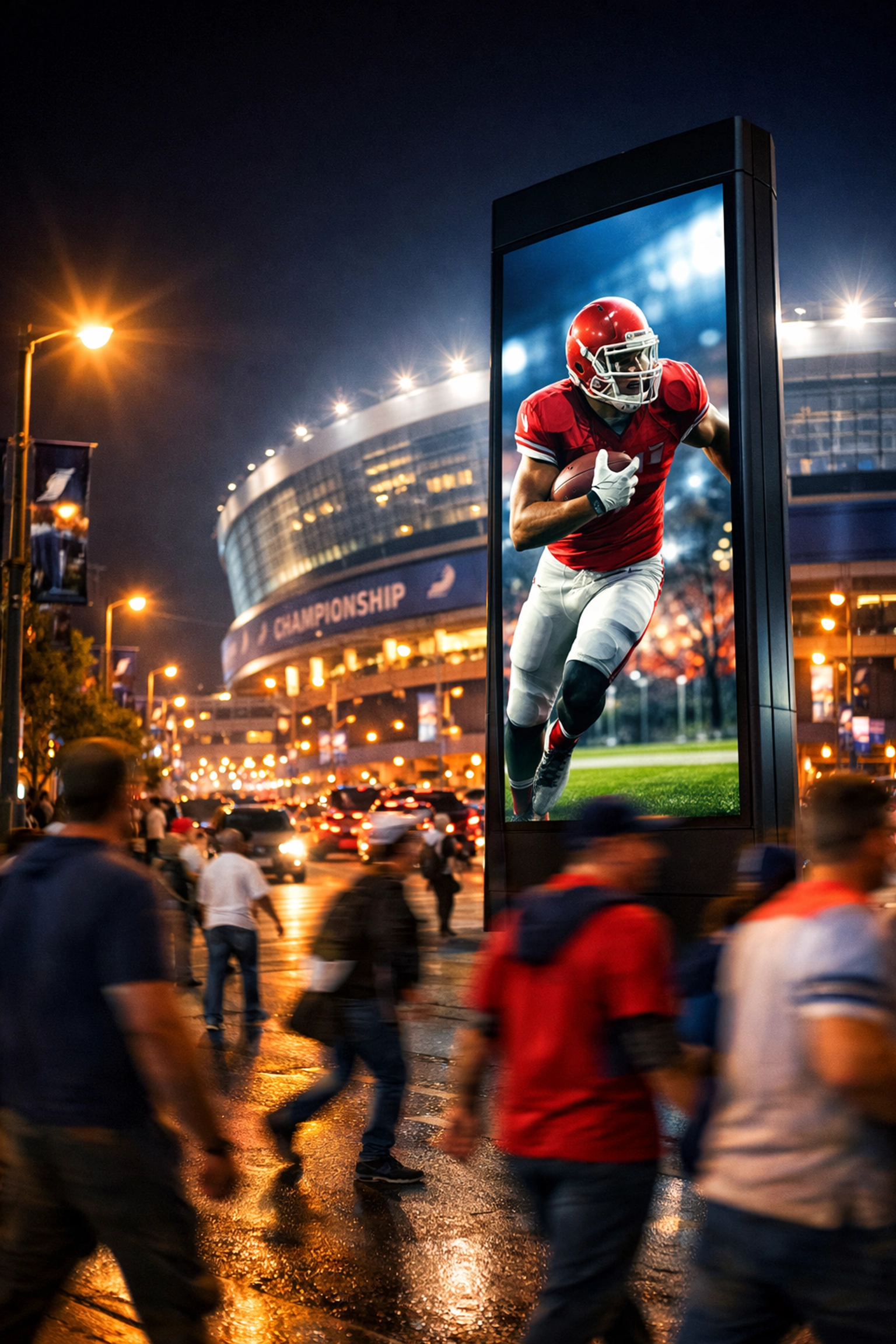
Media buyers prioritize high-impact placements near primary venues and fan gathering points. The goal here is the Digital-Physical Handshake. This involves using physical out of home (OOH) displays, such as those found at OOH Sports, and linking them to mobile experiences. QR codes and location-based triggers allow passive viewers to become active participants in the NIL narrative.
Phase 3: Post-Game Retention
The real return on investment often occurs in the 30 days following the Super Bowl. While the national hype fades, the NIL voices continue to resonate within their specific communities. Media buyers implement post-game recaps and maintain awareness through the first quarter of the year. Utilizing transit corridors at airports and transportation hubs ensures that the brand message stays in front of traveling fans long after the final whistle. Maintaining this momentum helps prevent the post-Super Bowl "awareness drop" that many brands experience.
The Digital-Physical Handshake
A critical component of mastering NIL at the 2026 Super Bowl is the integration of digital and physical channels. Over 70 percent of Super Bowl viewers engage with a second screen during the broadcast. This makes social platforms essential, but they should not exist in a vacuum.
The most successful campaigns use physical OOH assets to drive digital engagement. For example, a Sportron unit located near a stadium can display a call to action that is echoed by a hundred local student-athletes on their Instagram and TikTok feeds. This creates a surround-sound effect where the consumer sees the brand on a physical screen and then again on their personal mobile device via a trusted NIL voice.
https://www.youtube.com/watch?v=l6J-0zileKE
Channel Strategy and Gen Z Engagement
Gen Z fans are a primary target for NIL campaigns. Data shows that 75 percent of Gen Z sports fans engage with snackable sports content more frequently than full game broadcasts. This is where the 20,000 athlete network becomes invaluable. These athletes are experts at creating the short, authentic, and "snackable" content that resonates with their peers.
Media buyers must ensure that the messaging remains simple. If a message requires more than 10 seconds to understand, it is likely too complex for the fast-paced Super Bowl environment. The NIL platform allows for the distribution of these simple messages across a massive web of creators, ensuring that the brand reaches every corner of the sports ecosystem.
Technology and Platform Integration
Managing 20,000 individual athletes is a logistical impossibility without a specialized platform. OOH Sports provides the infrastructure needed to coordinate these voices. The platform allows media buyers to:
- Target athletes based on specific sports, regions, or follower demographics.
- Distribute creative assets and talking points instantly.
- Monitor real-time engagement and performance metrics.
- Automate payments and compliance, ensuring all NIL activities follow current regulations.
By using a centralized platform, the media buyer maintains control over the brand voice while allowing for the individual creativity of each athlete. This balance is the key to maintaining authenticity at scale.
Measuring Success and Brand Lift
The success of NIL campaigns is measured through a combination of traditional metrics and modern attribution. Programmatic digital out of home (DOOH) integration allows brands to track device IDs exposed to an advertisement. When combined with NIL social data, a clear picture of the consumer journey emerges.
Previous campaigns have shown significant results using this omnichannel approach. For instance, brands have seen a 74 percent lift in purchase consideration by combining DOOH with targeted mobile delivery. Similar strategies in the beverage industry led to a 119 percent lift in positive brand image. These results are not accidental; they are the product of reaching consumers through multiple touchpoints with a consistent, authentic message. For more detailed results, the OOH Sports blog provides various case studies on these metrics.
Key Principles for Media Buyers
To master NIL at the Super Bowl, media buyers should adhere to these core principles:
- Prioritize Narrative Depth: Focus on the story the athletes are telling. Personalized preparation footage or behind-the-scenes content often performs better than a polished commercial.
- Ensure Authenticity: Fans can identify forced partnerships immediately. Choose athletes whose personal brands align naturally with the product.
- Use Location-Based Targeting: Connect NIL social posts with physical ad placements in the same geographic area to reinforce the message.
- Embrace Multi-Athlete Volume: Rather than spending the entire budget on one star, distribute it across hundreds or thousands of voices to increase the total number of touchpoints.
- Focus on the Afterglow: Plan the post-game strategy as carefully as the game day execution to maximize the long-term value of the campaign.
Conclusion for the 2026 Cycle
The 2026 Super Bowl proved that the scale of a brand's influence is no longer determined solely by the size of their TV budget. Instead, it is determined by their ability to mobilize a network of authentic voices. By leveraging the OOH Sports NIL platform and the power of 20,000 student-athletes, media buyers can create a campaign that is both massive in reach and intimate in connection.
As we look toward future sporting events, the integration of physical OOH and decentralized NIL influence will remain the gold standard for high-impact advertising. For those ready to begin planning their next activation, the OOH Sports contact page offers a starting point for exploring these capabilities. The transition from traditional buying to platform-based NIL strategy is not just a trend; it is the new requirement for staying relevant in the modern sports landscape.