
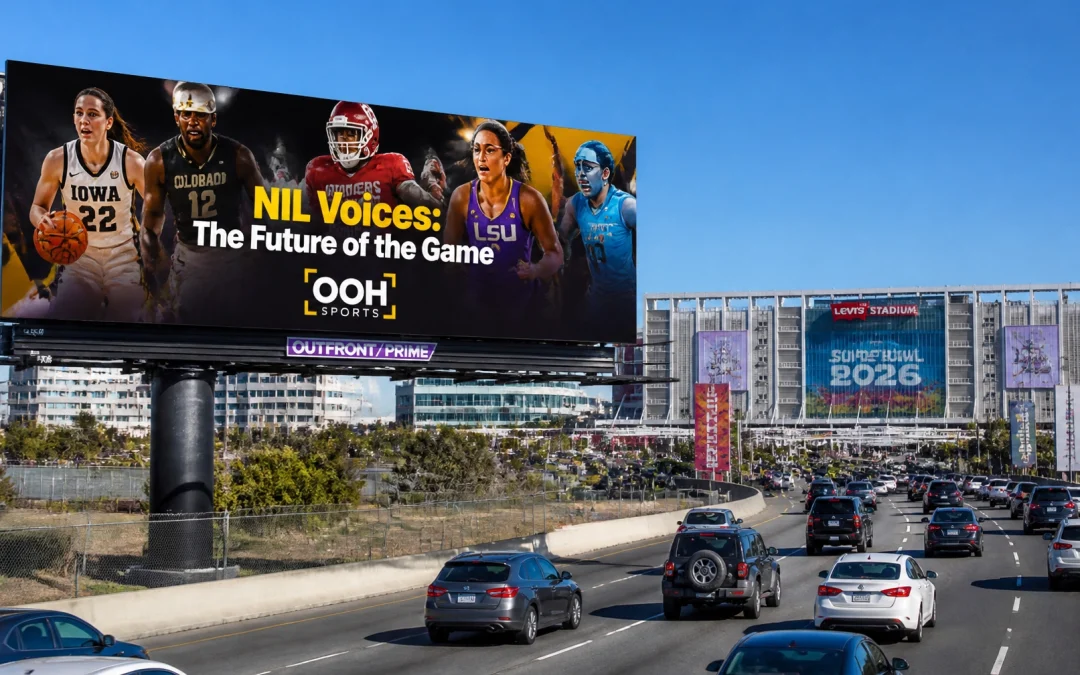
The landscape of sports marketing is shifting as the industry approaches Super Bowl 2026. This event, set to take place at Levi’s Stadium in Santa Clara, California, represents a significant opportunity for brands to engage with a massive, concentrated audience. Traditional high-cost television spots remain a staple, but the rise of Name, Image, and Likeness (NIL) and Programmatic Digital Out-of-Home (pDOOH) advertising has created a more targeted and authentic path to brand dominance.
By leveraging the voices of over 20,000 student-athletes, brands can create a localized, high-impact presence that resonates with fans on a personal level. This strategy moves beyond simple impressions and focuses on the power of authentic storytelling during one of the world's most-watched sporting events.
Strategy: The Power of Authentic Voices
The core of this strategy lies in the integration of digital advertising with the influence of student-athletes. NIL has professionalized the college sports market, allowing athletes to act as creators and brand ambassadors. When 20,000 of these voices are activated simultaneously, the resulting reach is both broad and deeply trusted.
Redefining the Super Bowl Footprint
Super Bowl LX in the San Francisco Bay Area will not just be confined to the stadium. The event footprint extends across San Francisco, San Jose, and Santa Clara. A successful campaign requires a presence where the fans live, travel, and celebrate. Utilizing Digital Out of Home (DOOH) Sports Network capabilities allows brands to place messages on digital video boards within a 10-mile radius of Levi’s Stadium.
The Role of Student-Athletes
Student-athletes possess a unique connection with their followers. Unlike traditional celebrities, these athletes are often viewed as peers by their audience. They bring a level of authenticity that polished corporate ads often lack. When a brand integrates these voices into a digital out-of-home campaign, it bridges the gap between social media engagement and real-world visibility.
Objective & Strategy
The primary objective is to maximize brand share-of-voice during the Super Bowl period by saturating the 10-mile perimeter around key venues with NIL-driven content. This approach focuses on precision and relevance.
Targeted Radius Execution
The strategy focuses on all digital video advertising boards in every category within 10 miles of sports venues. This includes:
- Large-format highway billboards.
- Street furniture and transit displays.
- Retail and entertainment center screens.
- Digital displays in sports bars and restaurants.
Content Synergy
The strategy involves synchronizing the content seen on mobile devices with the content displayed on physical digital boards. A fan might see a student-athlete's NIL post on their social feed and then encounter that same athlete's image on a digital board as they walk through downtown San Jose or drive toward Santa Clara. This multi-touchpoint approach ensures the brand message is reinforced throughout the consumer journey.

Technology Partners and NIL Platforms
Execution at this scale requires a robust technological framework. OOH Sports utilizes programmatic platforms to manage real-time bidding and ad placement. This allows for flexibility and speed, which are essential during a high-stakes event like the Super Bowl.
Programmatic DOOH (pDOOH)
Programmatic technology enables advertisers to buy and display ads based on specific triggers, such as time of day, weather, or crowd density. During Super Bowl week, this means brands can adjust their creative in real-time to respond to game developments or local events. For more on how this technology drives results, the StackAdapt DSP spotlight offers insight into omnichannel integration.
NIL Platform Integration
Accessing 20,000 student-athlete voices is made possible through specialized NIL marketplaces. These platforms act as a bridge between brands and athletes, handling the logistics of contracts, content creation, and compliance. By integrating these platforms with the OOH Sports network, a brand can deploy a massive influencer campaign with the same ease as a traditional digital buy.
Logistics and Execution Processes
Planning for a February 2026 campaign must begin months in advance. The logistics involve securing inventory, vetting athlete partners, and developing a creative suite that works across various digital formats.
The 10-Mile Targeting Method
The 10-mile radius is not just a geographical boundary; it is a strategic zone. Data indicates that fans attending the Super Bowl spend the majority of their time within this perimeter. By focusing resources here, a brand can achieve "saturation" without the waste associated with broad national buys.

Content Creation Steps
- Athlete Selection: Choosing athletes whose personal brands align with the campaign's goals.
- Creative Development: Designing assets that feature the athletes in a way that feels natural to the DOOH medium.
- Deployment: Using programmatic tools to push content to screens throughout the Santa Clara and San Francisco areas.
- Monitoring: Tracking exposure and engagement in real-time to optimize performance.
To see how these elements come together in a live environment, view this overview of sports-centric digital advertising:
https://www.youtube.com/watch?v=l6J-0zileKE
Results: Lessons from Previous Successes
The effectiveness of localized, digital-heavy sports campaigns is well-documented. Past data serves as a benchmark for what brands can expect from a Super Bowl 2026 activation.
Case Study: Purchase Consideration Lift
In a previous programmatic DOOH campaign, White Claw successfully launched a new product by targeting relevant sports and social environments. The results included a 74% lift in purchase consideration. Detailed findings are available in the White Claw case study.
Case Study: Brand Image Improvement
AB InBev utilized a similar strategy for Mike’s Hard Iced Tea, resulting in a 119% lift in positive brand image. This demonstrates that pDOOH is not just for direct sales but is a powerful tool for shifting consumer perception. The AB InBev report highlights the importance of context in sports marketing.
Measuring the Impact of 20,000 Voices
The scale of 20,000 student-athletes provides a data set that allows for granular measurement. By tracking device IDs exposed to the digital boards and correlating them with social media engagement from the athletes' posts, brands can measure "brand lift" with high precision. This methodology provides a clear picture of how the campaign influenced consumer behavior before, during, and after the game.

Strategic Alignment for 2026
The convergence of NIL and digital out-of-home advertising represents the next evolution in sports media. For media buyers and brand managers, the goal is clear: capture attention where it is most concentrated.
Why This Approach Works
- Cost-Efficiency: It avoids the massive entry price of a national Super Bowl TV spot while maintaining high visibility in the host city.
- Trust Factor: Leveraging student-athletes taps into existing fan loyalty and school pride.
- Technological Edge: The use of Sportrons and programmatic buying ensures that ads are seen by the right people at the right time.
The success of a brand during Super Bowl 2026 will not be determined by the size of the budget alone, but by the intelligence of the strategy. Combining the authentic voices of 20,000 student-athletes with a high-impact digital presence around Levi’s Stadium creates a formidable presence that traditional advertising cannot match.
For those planning to own the narrative in Santa Clara, the time to coordinate these two powerful channels is now. The future of sports marketing is not just about the game on the field; it is about the thousands of voices telling the brand story in the streets, on the screens, and in the hands of every fan.