
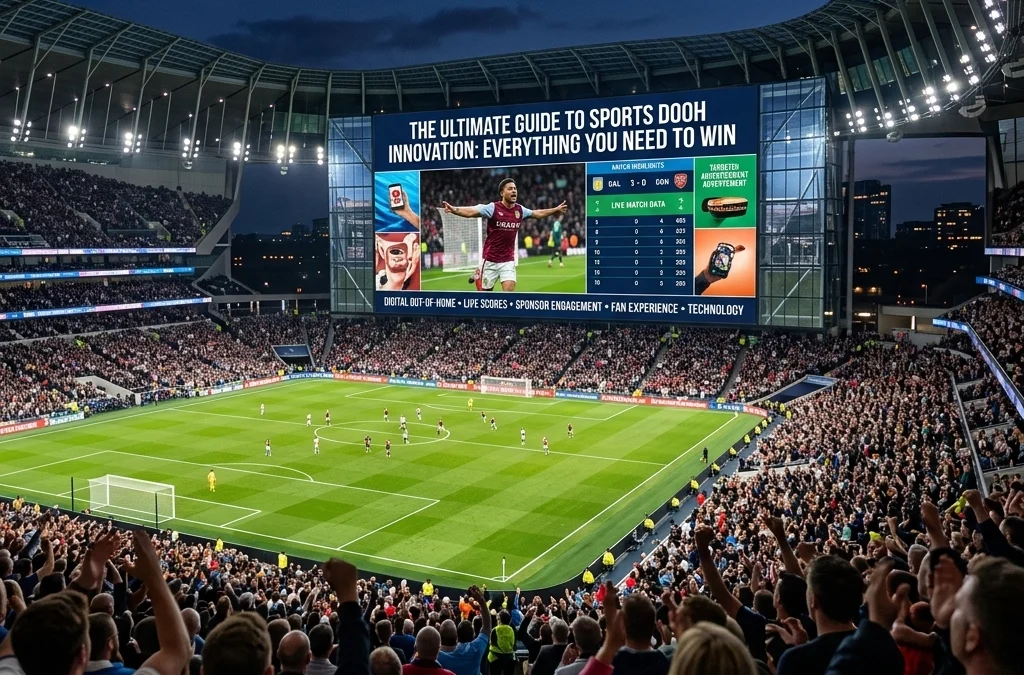
The sports landscape thrives on energy, unpredictability, and deep emotional connections. For media buyers and brand managers, capturing that energy requires more than traditional static signage. Innovation in Digital Out of Home (DOOH) advertising has transformed how brands interact with fans, moving from passive background images to active participants in the game day experience. This guide explores the strategies, technologies, and data-driven insights necessary to master the modern sports marketing arena.
The Evolution of Sports Advertising
Traditional stadium billboards and static posters are no longer sufficient for brands aiming to make a lasting impact. The industry has shifted toward dynamic real-time creativity and multi-moment audience targeting. Modern DOOH allows for synchronized cross-platform campaigns that turn advertisements into responsive storytelling tools.
At the center of this evolution is the ability to tie messaging to live game moments, weather conditions, and shifting audience behavior. When a brand aligns its message with the high-stakes environment of a live match, it moves beyond mere visibility and enters the realm of cultural relevance.
Dynamic Creative Optimization (DCO)
Dynamic Creative Optimization (DCO) is the technology that replaces static creative with flexible, data-responsive assets. This approach allows advertisements to update automatically based on specific triggers. In the context of sports marketing, DCO ensures that the creative is always relevant to the current state of the game or the environment.
Key triggers for DCO include:
- Live game scores and play-by-play updates.
- Weather conditions (e.g., promoting hot beverages during a cold night game).
- Social media sentiment and trending topics.
- Foot traffic patterns around the venue.
- Time of day and local event schedules.
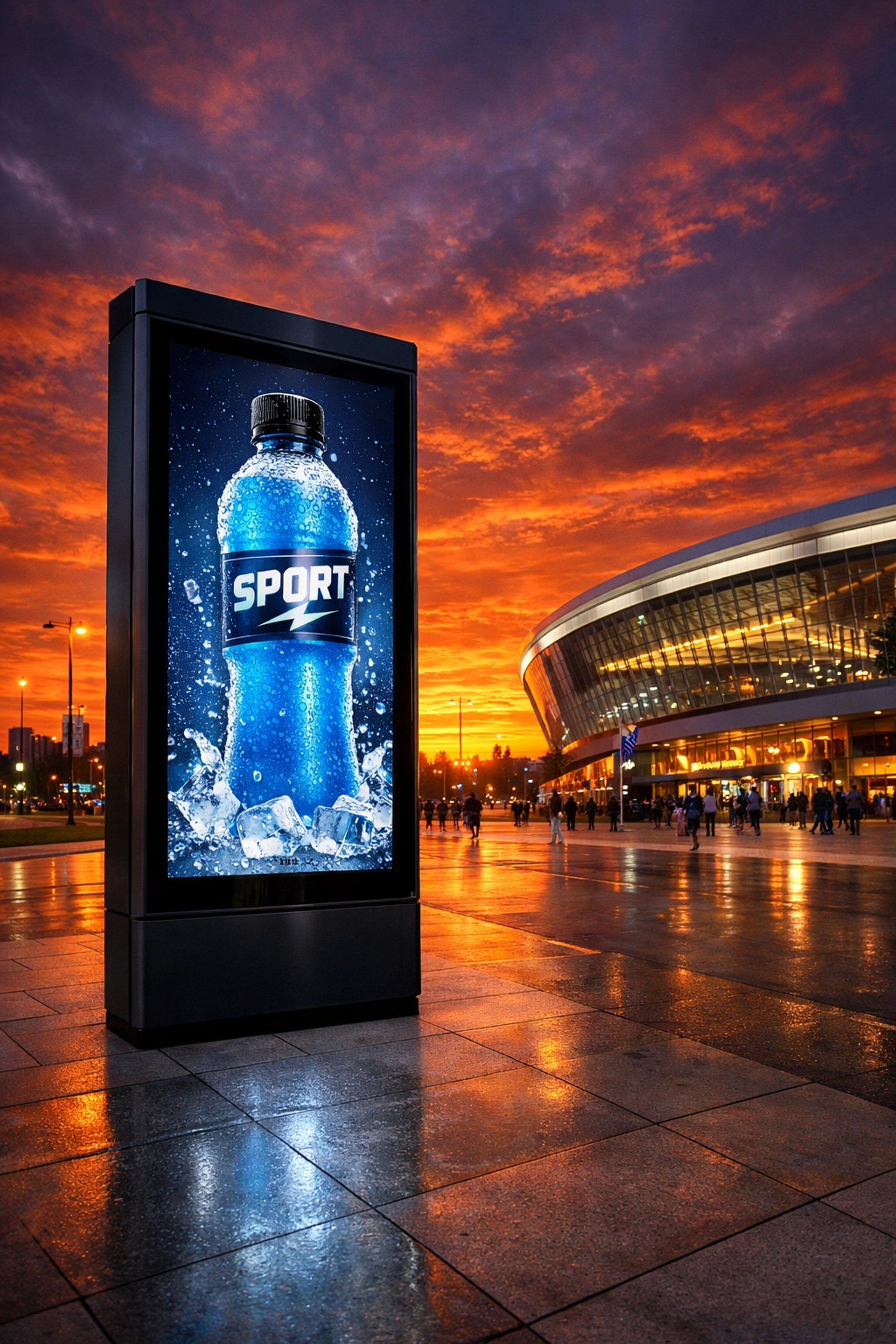
By utilizing Sportrons, brands can implement these dynamic elements to match the speed and energy of live sports. A beverage brand might trigger an ad for a cold drink the moment the temperature rises above a certain threshold, or an apparel brand might promote rain gear if a storm begins during an outdoor event.
Multi-Moment Activation Strategy
Successful sports DOOH campaigns do not focus solely on the duration of the game. Instead, they distribute budget across three distinct phases to maximize reach and frequency throughout the event lifecycle.
The Pre-Game Phase
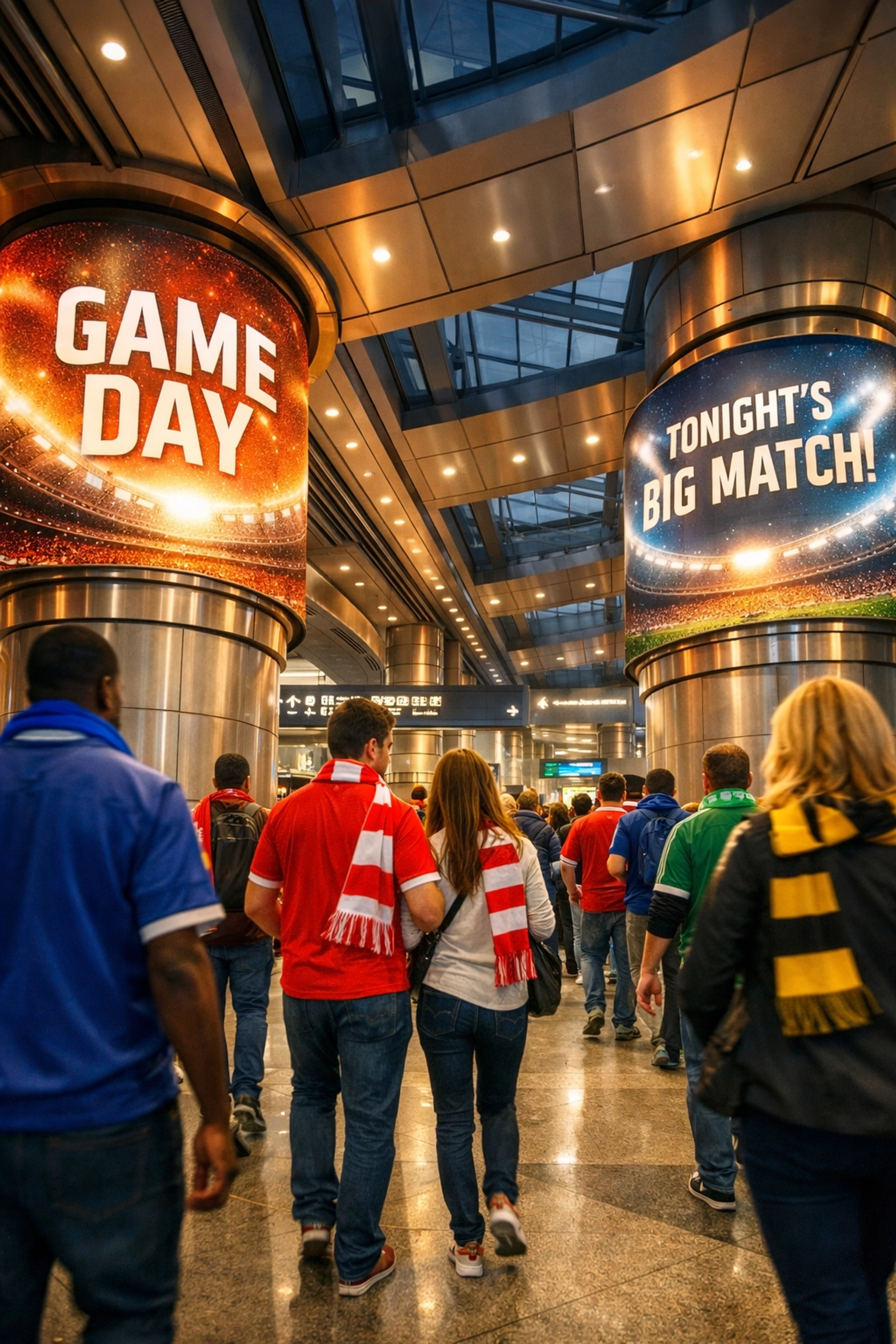
Starting approximately 48 hours before kickoff, the pre-game phase focuses on anticipation and logistics. Fans are planning their commutes and building excitement. Screens in transit hubs, offices, and retail centers provide practical value through:
- Countdown clocks to the start of the game.
- Real-time betting odds and analysis.
- Broadcast schedules and tune-in reminders.
- Wayfinding and transit updates for those attending in person.
The During-Game Phase
This phase captures fans at peak engagement. Peak-context messaging on stadium perimeter screens and nearby digital billboards allows brands to respond to touchdowns, home runs, or major shifts in momentum. The objective is to capitalize on the immediate emotional response of the audience.
The Post-Game Phase
Engagement continues after the final whistle. The post-game phase captures audiences during reflection and social sharing. This is an ideal time for celebratory messaging, highlight reels, or directing fans to retail locations for commemorative merchandise.
Synchronized Multi-Format Campaigns
Treating individual DOOH placements as isolated units is an outdated practice. To create a narrative progression, campaigns must orchestrate messaging across multiple formats. This synchronized approach reinforces brand presence at every touchpoint of the fan journey.
A typical synchronized campaign might follow this path:
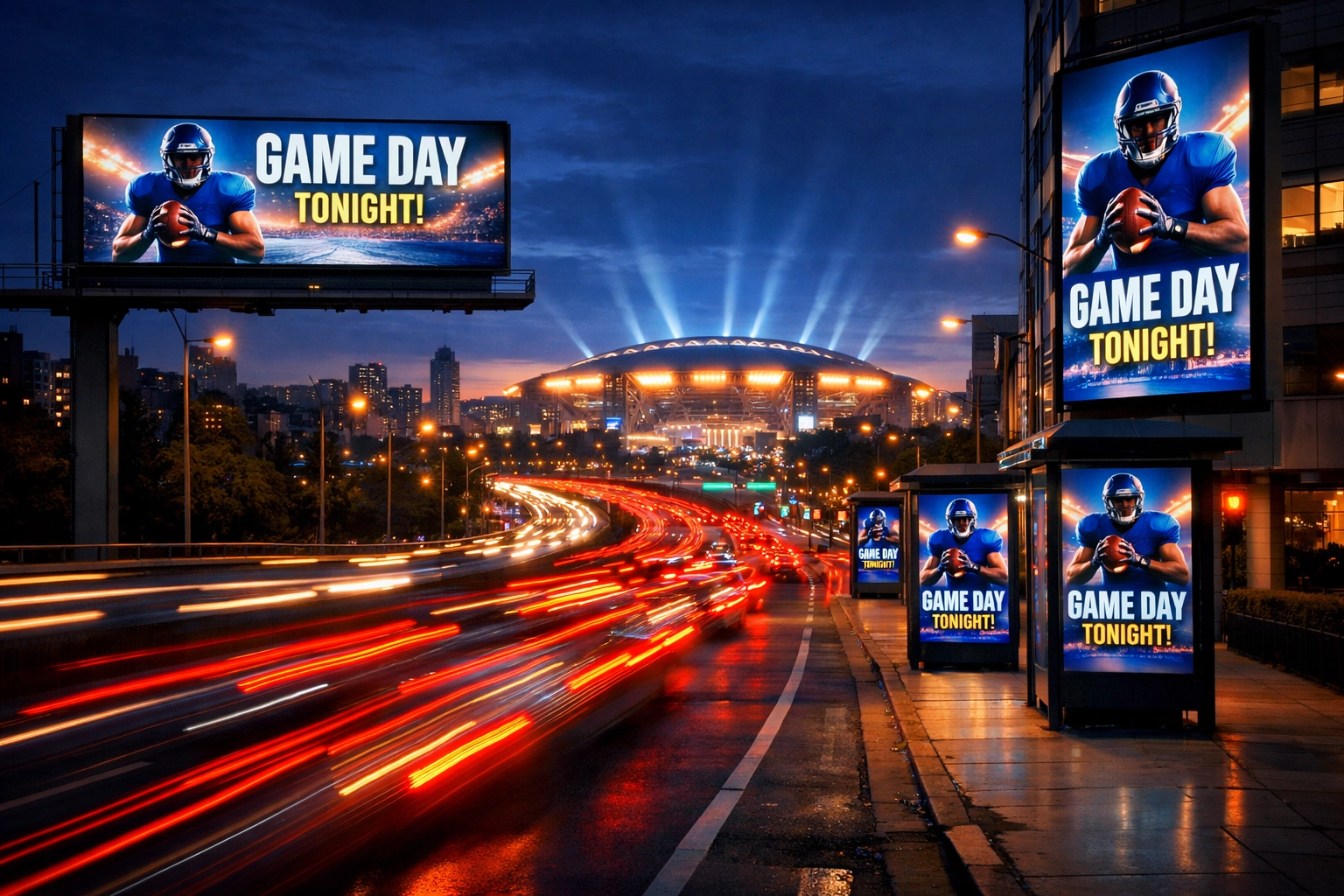
- Digital Billboards: Established along major highways to create initial brand awareness as fans travel toward the city or stadium.
- Transit Advertising: Reinforces messaging on buses, trains, and subway platforms during the final leg of the commute.
- Airport Displays: Captures out-of-town fans traveling specifically for major tournaments.
- Street-Level Installations: Provides final touchpoints near the venue, influencing immediate purchase decisions for food, beverage, or retail.
- Stadium Perimeter Screens: Delivers high-impact messaging during the heat of the game.
By aligning these formats, brands create a unified voice across all screens, which is often referred to as streaming alignment. This coordination extends to mobile devices and connected TV, ensuring the brand stays top of mind regardless of which screen the fan is viewing.
Programmatic DOOH and Data-Driven Targeting
The shift toward programmatic DOOH has revolutionized how media is bought and sold. It is estimated that DOOH sports advertising will reach significant global milestones by 2030. This growth is driven by the precision and flexibility that programmatic platforms provide.
Unlike traditional "spray and pray" methods, programmatic DOOH uses location intelligence and mobility data to identify exactly when and where target audiences are present. This allows for real-time bidding, ensuring that the budget is spent on impressions that offer the highest value.
Platforms such as the StackAdapt DSP enable media buyers to integrate DOOH into broader omnichannel strategies. This integration allows for sophisticated retargeting, where a fan exposed to a digital billboard can be served a follow-up ad on their mobile device later that day.
Measurable Impact and Results
The effectiveness of sports DOOH is backed by measurable data and significant brand lift. Research indicates that 81 percent of sports fans feel more positive toward brands that sponsor sports. Furthermore, brand liking increases by an average of 33 percent after exposure to DOOH sports-related advertising.
Several high-profile campaigns illustrate these results:
- White Claw: A programmatic DOOH campaign for a new vodka launch achieved a 74 percent lift in purchase consideration. Detailed results can be found in the White Claw case study.
- Sea-Doo: This brand’s first foray into digital OOH resulted in a 144 percent increase in purchase consideration, demonstrating the power of visual impact in outdoor environments. More details are available in the Sea-Doo campaign analysis.
- AB InBev: Using programmatic DOOH for Mike’s Hard Iced Tea led to a 119 percent lift in positive brand image, showcasing how the medium can shift consumer perception rapidly.
These outcomes are achieved through careful planning and the use of performance infrastructure that connects exposure to real-world actions, such as foot traffic to retail locations or website visits.
Strategic Planning for Media Buyers
To achieve success in the competitive sports marketing environment, media buyers should follow a structured approach to campaign planning:
- Early Planning and Inventory Securing: Secure premium inventory well in advance of major sporting events, while maintaining enough programmatic flexibility to optimize based on live data.
- Implementation of DCO Technology: Ensure that the creative team is equipped to handle dynamic assets that can respond to real-time triggers.
- Audience-Led Targeting: Use behavioral data to understand the fans' routines. Do not just target the stadium; target the gyms, bars, and retail centers they frequent.
- Omnichannel Coordination: Synchronize DOOH with mobile and social media efforts. If a fan sees a celebratory ad on a street furniture screen, they should see a consistent message on their social feed shortly after.
- Rigorous Measurement: Deploy tracking mechanisms like device ID passing or brand lift studies to quantify the impact of the campaign.
The fragmentation of audience attention across mobile devices and tablets makes this omnichannel coordination essential. Success requires buying moments in a fan’s routine, rather than just buying space on a wall.
The Future of the Fan Experience
As technology continues to advance, the line between the digital and physical worlds will continue to blur. Smart venues are already integrating DOOH screens with fan mobile apps to create interactive experiences, such as live polls, social media walls, and AR-driven activations.
For brands, the opportunity lies in becoming part of the game’s narrative. By leveraging the innovative tools provided by OOH Sports, advertisers can ensure they are not just watching from the sidelines but are actively winning the attention and loyalty of fans everywhere.
To learn more about how to implement these strategies for your next campaign, visit our marketing resources or contact the team directly for a consultation.