
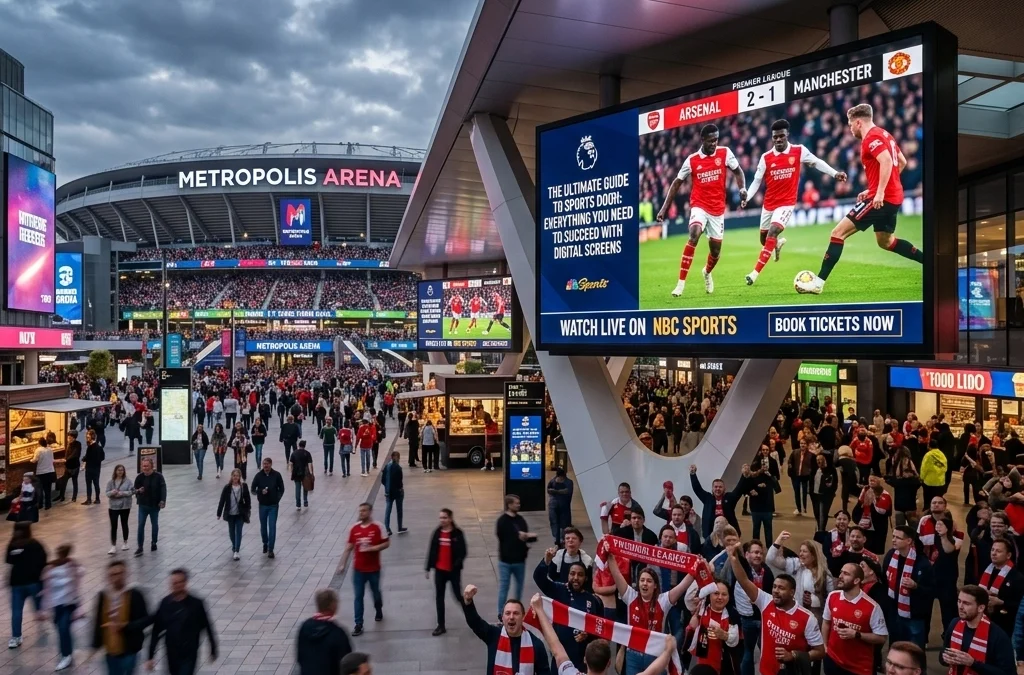
Digital Out-of-Home (DOOH) advertising has transformed from a secondary marketing tactic into a primary powerhouse for sports brands. While traditional stadium sponsorships remain prestigious, the real battle for fan attention happens outside the arena. Modern sports marketing now leverages a massive network of digital screens to reach fans during their daily routines, commutes, and social gatherings.
Statistics show that sports DOOH captures 99% of fan attention outside stadium walls. This guide explores how media buyers and brand managers can harness this technology to drive measurable results and deep brand loyalty.
The Evolution of the Sports Audience
Sports fans represent one of the most valuable segments in advertising. They are mobile, emotionally invested, and highly receptive to messaging that aligns with their passion. Research indicates that 81% of fans feel more positive toward sports-sponsoring brands. Furthermore, over 40% of consumers discuss sporting events with friends or family after seeing an out-of-home advertisement.
The shift toward DOOH sports advertising is driven by scale and efficiency. With the rise of approximately 25,000 digital screens nationwide, brands can expand their presence far beyond the expensive confines of the stadium. This approach transforms sports marketing from a location-based buy into a routine-based strategy. By intercepting fans throughout their day, brands maintain a consistent presence that static billboards cannot match.
Strategy: The Three Critical Campaign Phases
A successful sports DOOH campaign is not a single event. It is a narrative that unfolds across three distinct phases. Strategic budget distribution across these moments ensures the highest possible return on investment.
1. The Pre-Game Build-Up
This phase occurs roughly 48 hours before kickoff. During this window, fans are planning logistics, purchasing supplies, and building anticipation. Digital screens in transit hubs, office districts, and retail centers are most effective here. Advertisers provide value by displaying broadcast schedules, countdown clocks, or real-time betting odds. For instance, real-time sports betting campaigns see significant conversion when launched within 24 hours of an event.
2. The During-Game Moment
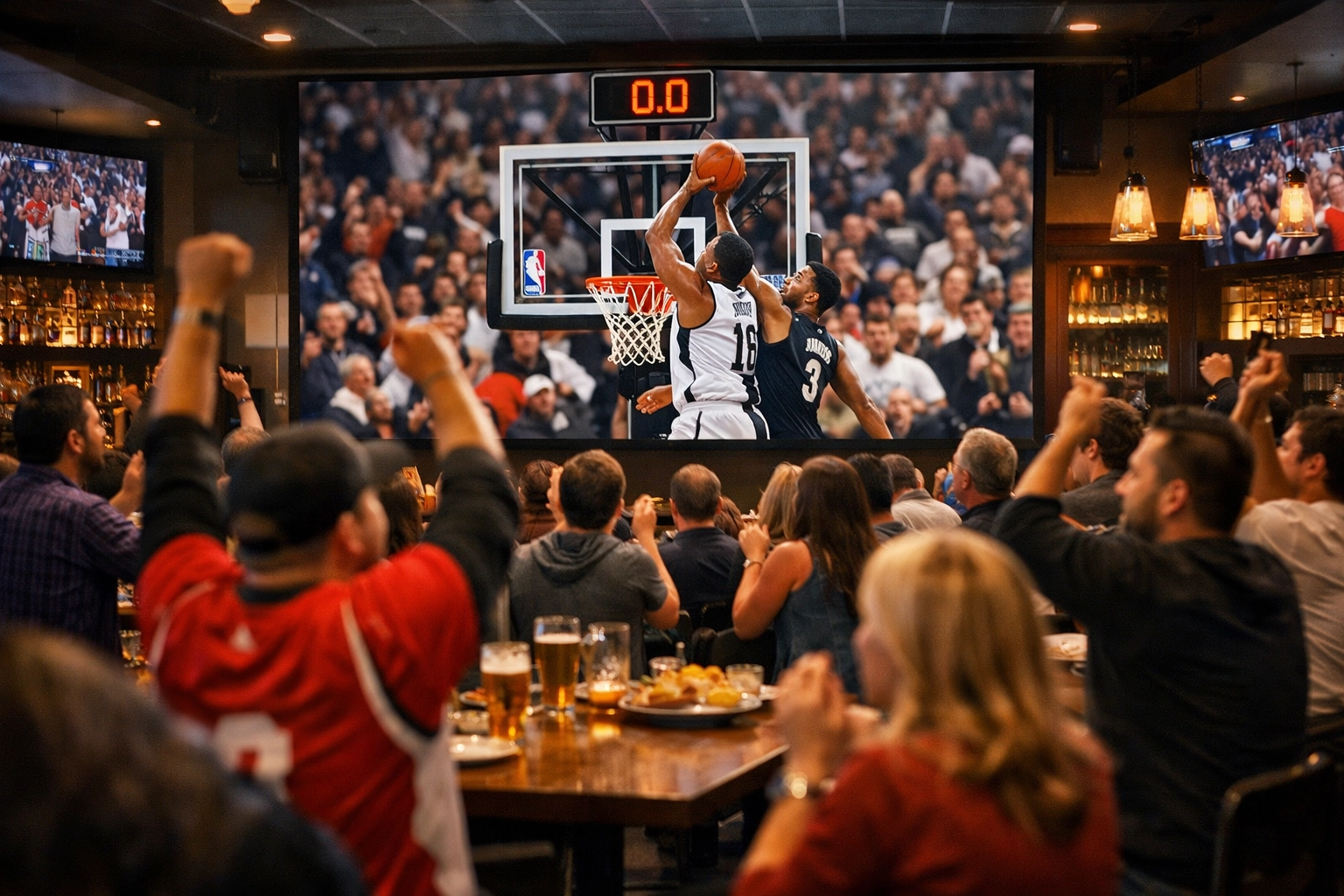
When the whistle blows, the focus shifts to spaces where fans congregate collectively. This includes sports bars, transit platforms, and shared viewing spaces. Messaging during this phase captures communal energy and reaction. It is an ideal time for brands to reinforce their association with the "big game" feeling.
3. The Post-Game Reinforcement
The conversation does not end at the final buzzer. Continued messaging reinforces brand presence as fan sentiment evolves based on match outcomes. Whether celebrating a victory or commiserating a loss, brands that stay present during the journey home build lasting emotional connections.
Technology and Dynamic Creative Optimization (DCO)
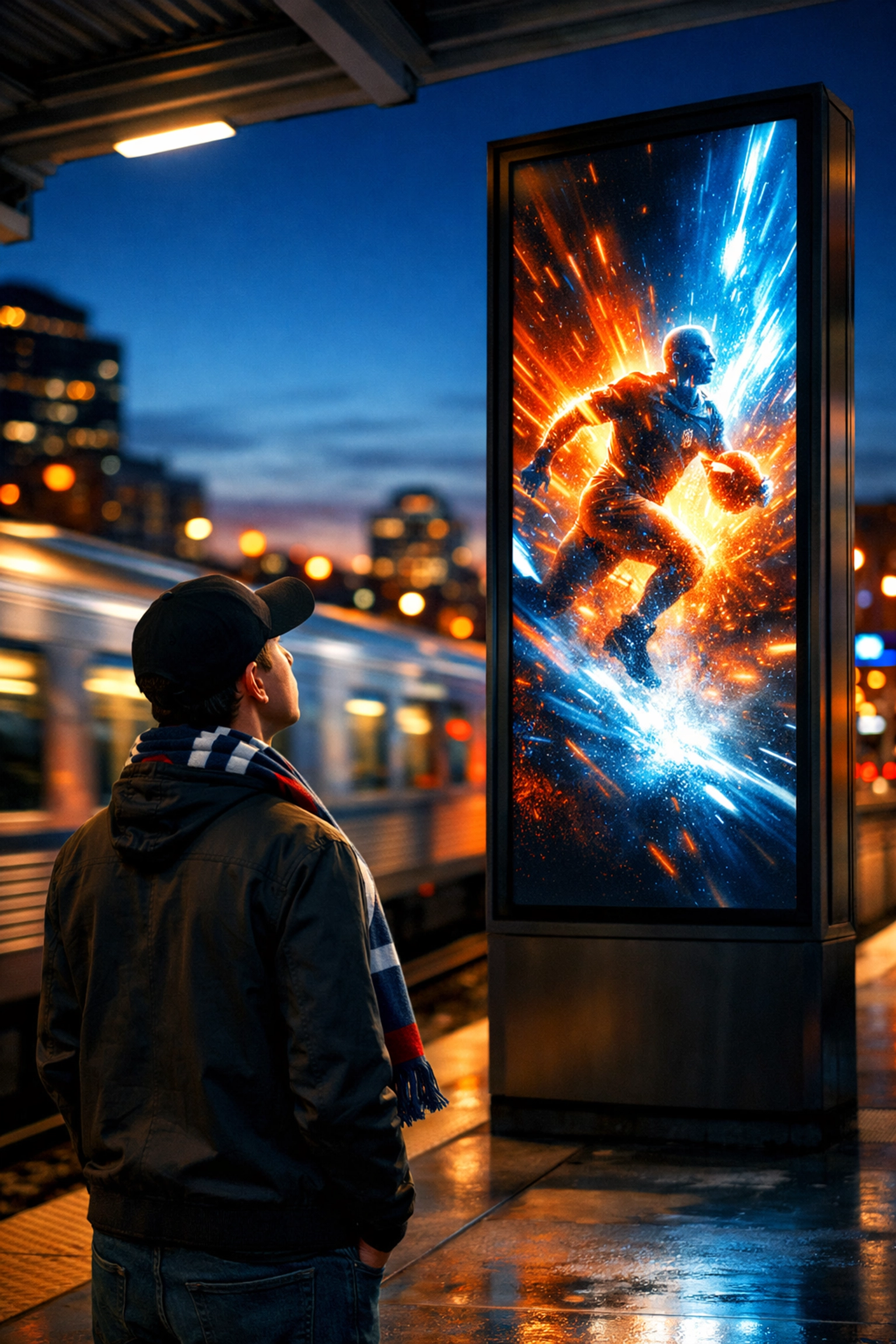
Static creative is no longer sufficient in a fast-paced sports environment. Dynamic Creative Optimization (DCO) has revolutionized how brands communicate. This technology allows ads to change automatically based on specific triggers. Instead of a fixed image, the screen displays a living message that adapts to the world around it.
Common DCO triggers include:
- Live game moments and real-time score changes.
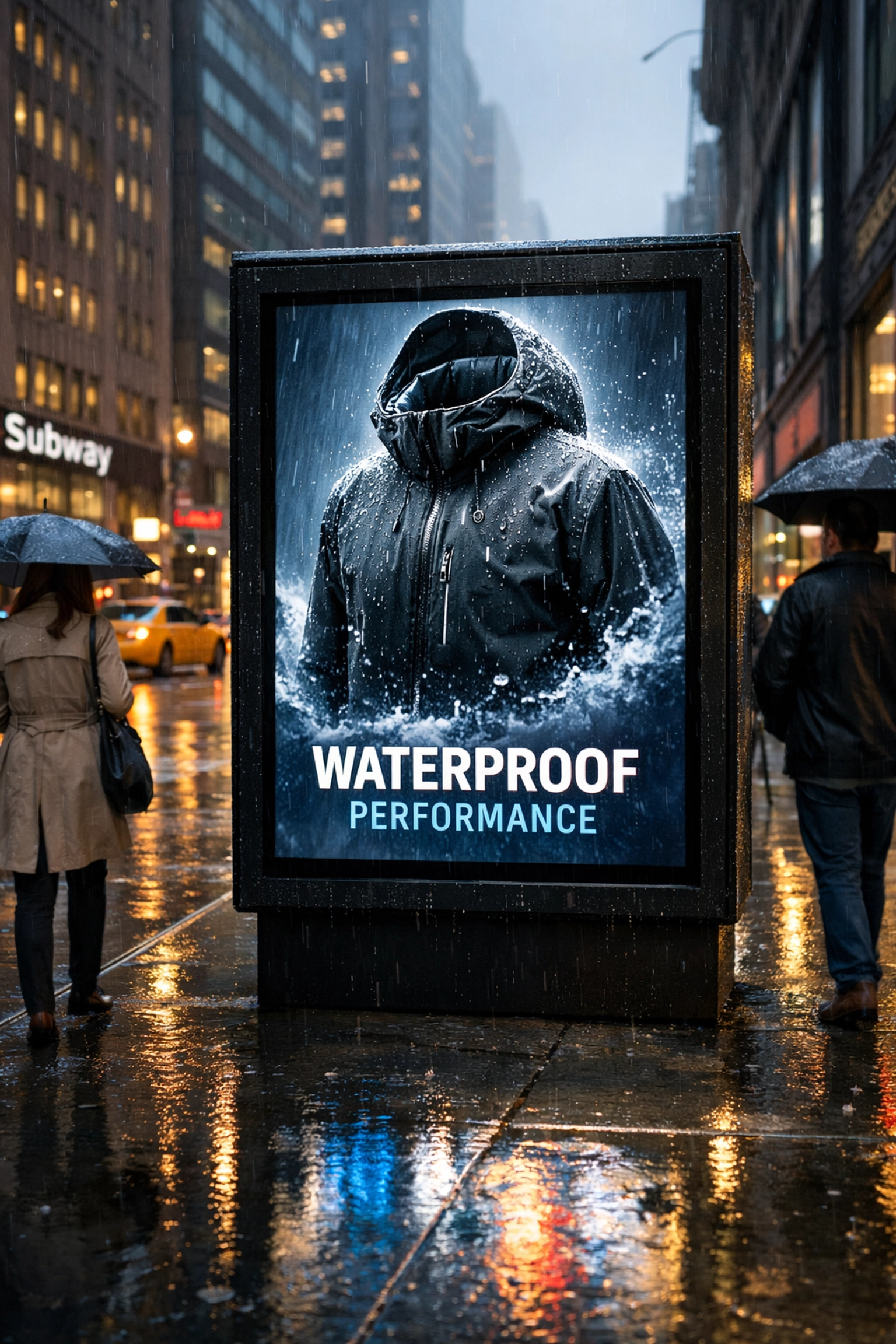
- Weather conditions (e.g., promoting rain gear when a storm hits).
- Social media sentiment or trending topics.
- Foot traffic patterns around specific venues.
- Time of day and event phases.
For example, a beverage brand might trigger a "cold drink" advertisement specifically when the local temperature exceeds a certain threshold. Similarly, an apparel brand can promote team jerseys the moment a team secures a playoff spot. This level of responsiveness prevents campaigns from appearing out of touch and ensures that the content is always relevant to the viewer's immediate context. Many brands utilize specialized inventory like Sportrons to ensure their creative is displayed in high-impact environments.
Data-Driven Targeting and Precision
Modern DOOH moves beyond the "spray and pray" philosophy of the past. By using location intelligence and mobility data, brands can understand exactly who passes a screen, how frequently they do so, and what their behavioral patterns look like.
Programmatic DOOH enables real-time bidding on inventory. This ensures that advertisements are only displayed when target audiences are physically present. This level of precision is why 67% of media planners are shifting budgets toward digital out-of-home platforms.
Targeting now incorporates multiple signals such as mobile footfall, context signals like the day of the week, and specific audience segments like frequent stadium-goers or business professionals in city centers. This ensures that every dollar spent is directed toward a screen with a high probability of reaching a qualified fan.
Synchronized Multi-Format Campaigns
Treating a digital billboard as an isolated touchpoint is a missed opportunity. The most effective campaigns coordinate messaging across multiple formats to create a sense of narrative progression.
A coordinated strategy might look like this:
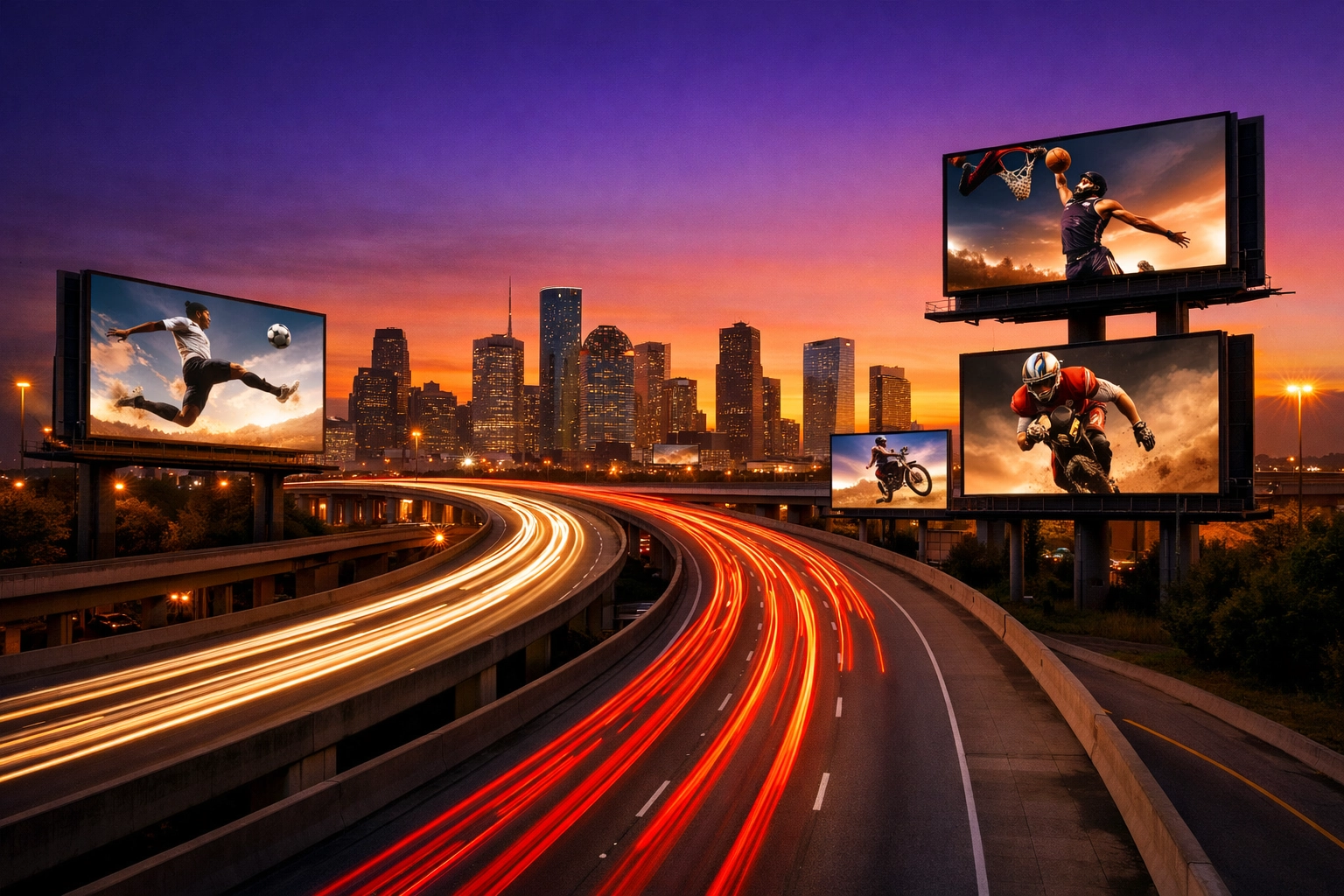
- Digital Billboards: Establishing initial brand presence along major highways leading into the city.
- Transit Advertising: Reinforcing the message during commutes on subways or buses.
- Airport Displays: Capturing the attention of fans traveling from out of town for major events.
- Street-Level Screens: Providing final touchpoints near bars, restaurants, and stadium entrances.
Coordinating these screens with streaming schedules also matters. When a brand’s DOOH messaging aligns with the content fans see on their mobile devices or connected TVs, it creates a unified brand voice that is difficult to ignore.
Measurable Results: Case Studies in Sports DOOH
The success of sports DOOH is not just theoretical. Data from major brand campaigns demonstrates significant lifts in purchase consideration and brand image. Detailed case studies show that when technology and strategy align, the results are substantial.
- White Claw: By using programmatic DOOH for a vodka launch, the brand saw a 74% lift in purchase consideration.
- Mike's Hard Iced Tea: A campaign focused on programmatic DOOH resulted in a 119% lift in positive brand image.
- Sea-Doo: This brand's first digital OOH campaign increased purchase consideration by 144% by targeting high-affinity locations.
- Nike: During the NYC Marathon, Nike utilized DOOH to create a dominant presence, proving that you do not need to be an official sponsor to win the mental real estate of fans.
These results are achieved through rigorous measurement of device IDs exposed to screens and subsequent brand lift studies. Advertisers can now track the journey from a screen exposure to a retail visit or an online purchase.
Critical Pitfalls to Avoid
While the opportunities are vast, several common mistakes can undermine a campaign's effectiveness.
First, using static creative in a dynamic world is a major error. Fan moods shift with every win and loss. An ad that feels right on Friday might feel completely irrelevant by Monday morning if the local team suffered a major defeat.
Second, poor timing can waste significant budget. Advertisements that continue to run long after an event has concluded appear out of touch. Precision scheduling is required to ensure the message matches the moment.
Third, ignoring the physical context of the screen is a mistake. A message that works on a quiet office lobby screen will likely fail on a noisy, crowded subway platform. The creative must be optimized for the environment in which it lives.
The Winning Formula for Success
To succeed in the competitive landscape of sports marketing, brands should focus on early planning and programmatic flexibility. Securing premium inventory early is important, but maintaining the ability to optimize in real-time is what separates good campaigns from great ones.
Leveraging omnichannel platforms like StackAdapt can help integrate DOOH into a wider digital strategy. By combining audience-led targeting with multi-moment activation, brands ensure they are present throughout the entire fan journey.
The future of sports advertising lies in the blurring of the physical and digital worlds. Smart venues and integrated screens are already creating interactive experiences that connect with fan mobile apps. Brands that embrace this level of immersion will capture the loyalty of the next generation of sports enthusiasts. For those looking to get started, the OOH Sports contact page offers a gateway to these advanced advertising solutions.