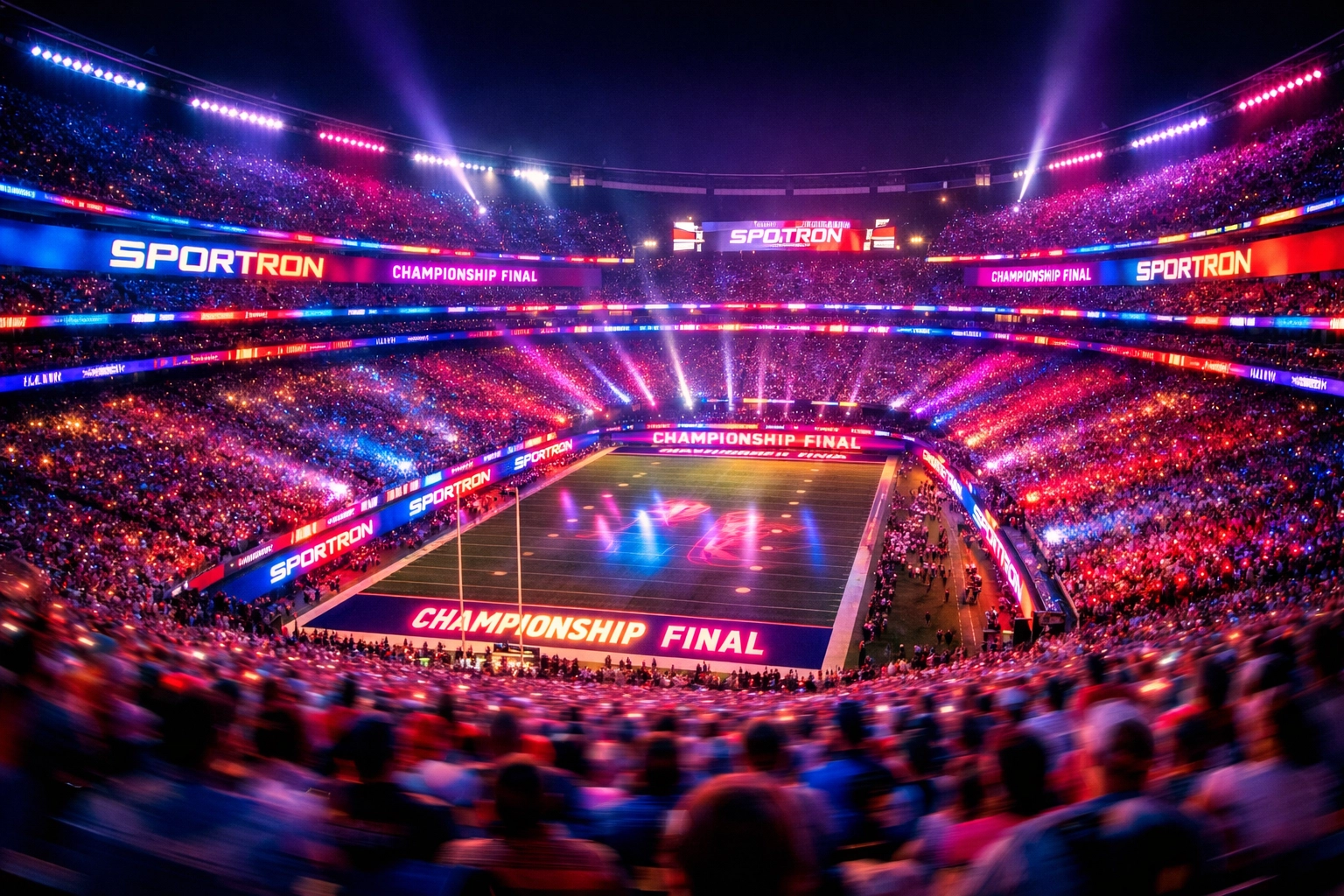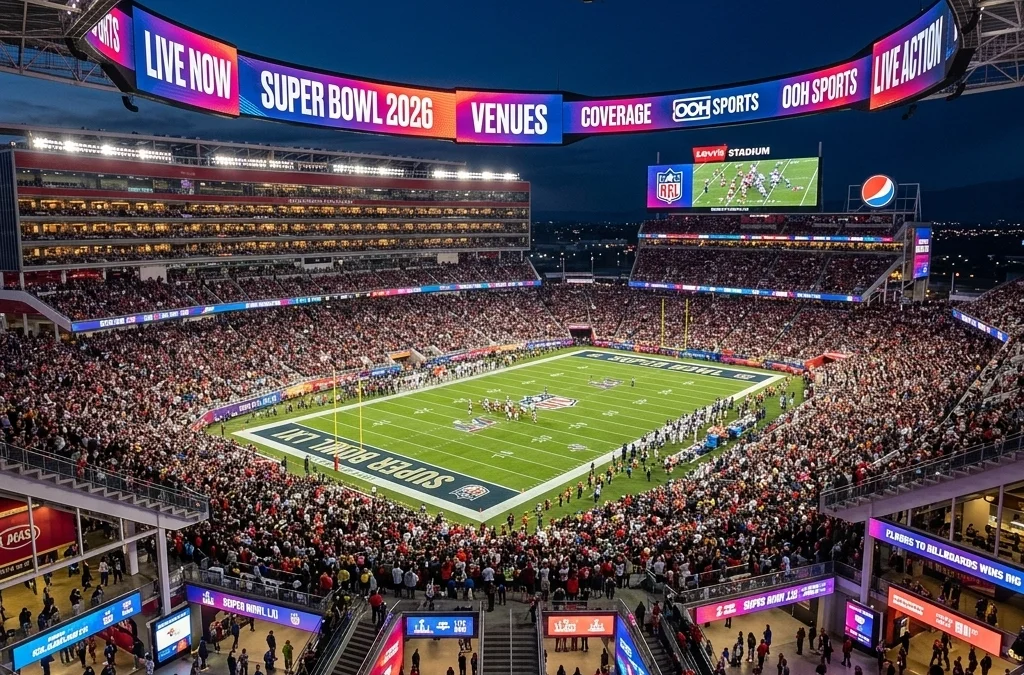
Super Bowl LX took place on February 8, 2026, at Levi’s Stadium in Santa Clara, California. This event marked a significant milestone in sports advertising history. With a stadium capacity of 68,500 and millions of viewers watching globally, the stakes for brand visibility reached an all time high. The complexity of modern advertising requires a strategy that goes beyond simple television commercials. For the 2026 game, success depended on venue-wide coverage that saturated every available inch of the environment, from the floors of the concourse to the massive digital billboards visible from the highway.
Building a presence at such a high profile event is not a simple task. It requires decades of expertise and a deep understanding of fan movement. OOH Sports has provided leadership in this space for 40 years, focusing on how out-of-home (OOH) advertising interacts with the physical world. The 2026 Super Bowl served as a masterclass in how to deploy these assets effectively.
The Strategy of Venue-Wide Domination
The objective for advertisers during Super Bowl 2026 was total immersion. When fans arrived at Levi’s Stadium, they were met with a cohesive brand experience that followed them through every step of their journey. This approach, known as venue-wide coverage, ensures that a message is never out of sight.
The strategy begins long before a fan enters the stadium. It starts with large scale billboards and digital displays located along major transit routes in Santa Clara. These assets establish brand recognition early. Once the fan moves toward the gates, the advertising shifts to more tactical, ground-level placements.

Floor Advertising: The Untapped Goldmine
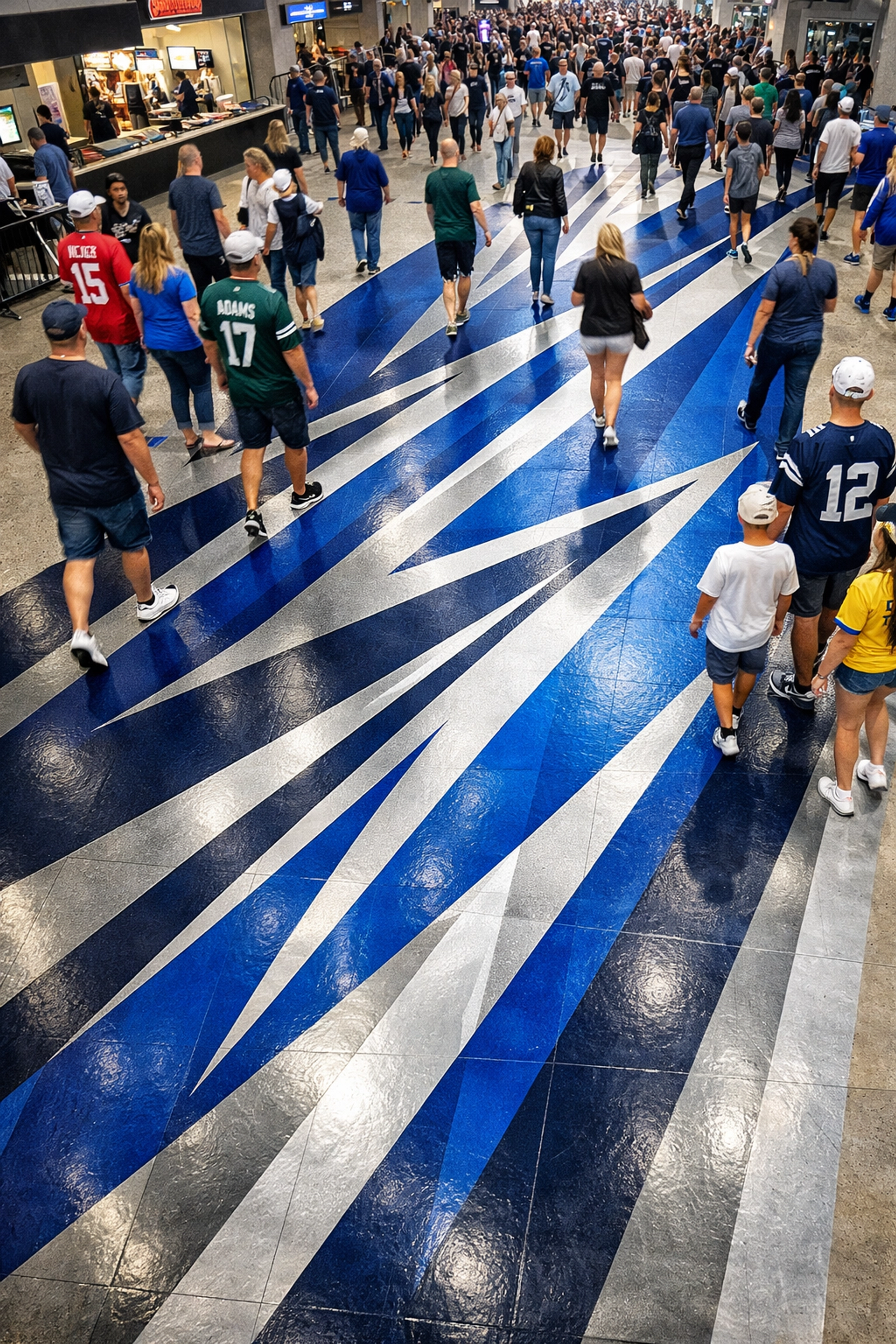
One of the most effective yet overlooked tactics in sports marketing is floor advertising. During Super Bowl 2026, floor graphics played a pivotal role in capturing attention in high traffic areas. While many fans naturally look up at screens or banners, their eyes are frequently directed toward the ground while navigating crowds or searching for their sections.
Floor graphics offer several strategic advantages:
- High dwell time in lines for concessions or restrooms.
- Direct interaction with the path of travel for 68,500 attendees.
- Non-traditional placement that breaks through visual clutter.
- Durability and slip resistant technology that ensures safety and quality.
By placing brand messaging on the floors of Levi’s Stadium, advertisers were able to maintain a constant connection with the audience. This level of detail is a hallmark of the marketing strategies developed over 40 years of industry experience.
40 Years of Leadership in Sports Advertising
The success of the 2026 Super Bowl campaigns did not happen by accident. It was the result of 40 years of leadership and refinement in the OOH industry. Over four decades, the methods for reaching fans have evolved from static posters to high tech sportrons and programmatic digital out-of-home (DOOH) networks.
Experience in this field allows for better logistics management and placement selection. Knowing which corners of a stadium receive the most foot traffic or which billboards are visible during the television broadcast is essential for maximizing return on investment. The historical data gathered over these 40 years provides a roadmap for modern execution.
For a deeper look into the history and future of this industry, watch the video below:
https://www.youtube.com/watch?v=l6J-0zileKE
The Role of Programmatic DOOH in 2026
The 2026 Super Bowl saw a massive increase in the use of programmatic DOOH. This technology allows advertisers to buy and display ads in real time based on specific triggers or data points. For instance, if a specific team scored, digital billboards around Santa Clara could update instantly to reflect the play.
Programmatic integration has proven to be highly effective in recent years. Previous data shows that programmatic DOOH campaigns can drive significant results. For example, White Claw saw a 74% lift in purchase consideration during a vodka launch using these methods. Similarly, Mike's Hard Iced Tea experienced a 119% lift in positive brand image through programmatic DOOH.
These results are not outliers. Sea-Doo reported a 144% increase in purchase consideration during their first digital OOH campaign. The 2026 Super Bowl applied these same programmatic principles on a much larger scale, ensuring that the right message reached the right fan at the right moment.
Integrating Billboards and Large Scale Displays
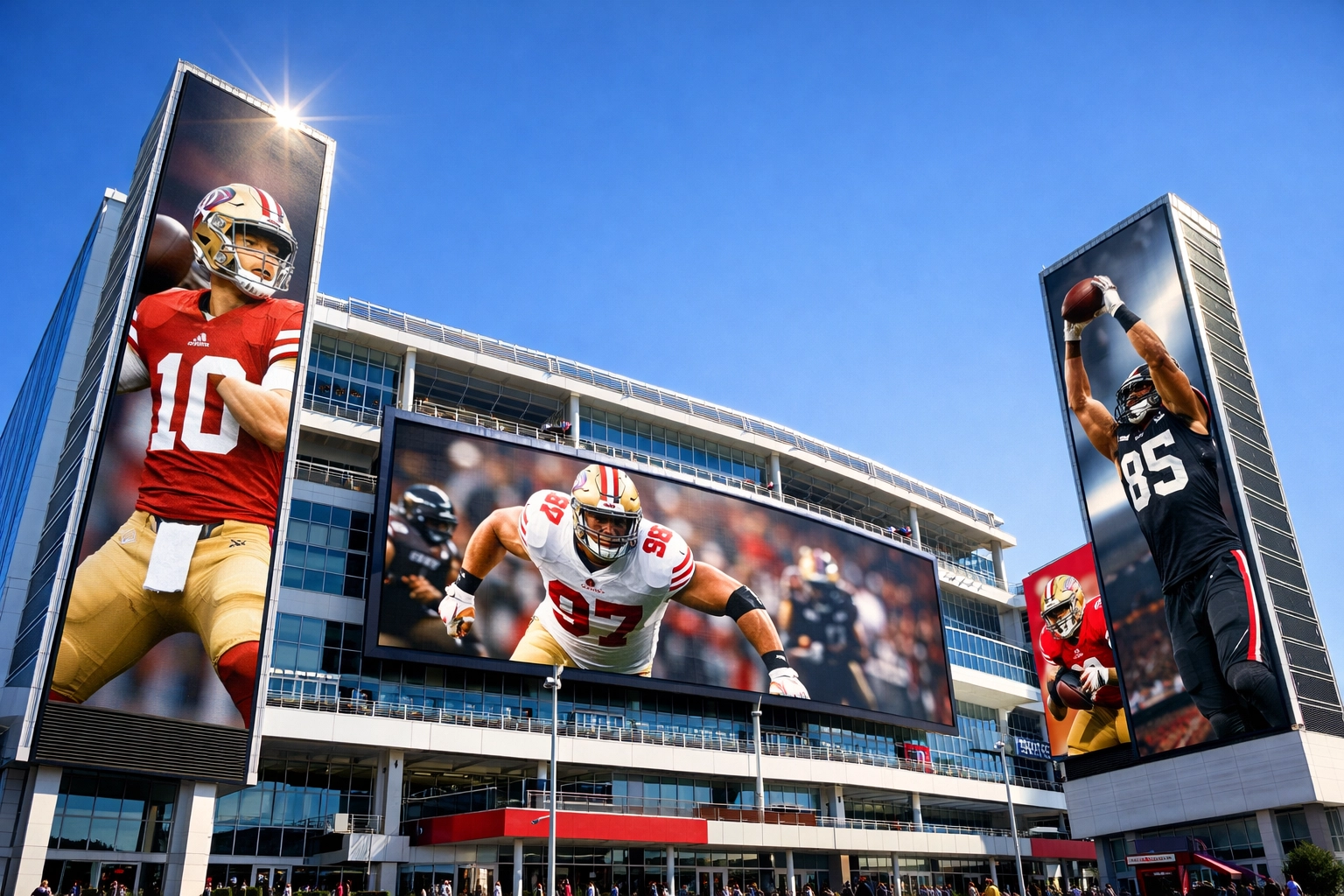
While floor graphics provide intimacy, billboards provide scale. The 2026 event utilized a network of digital and static billboards that surrounded the venue and the city of Santa Clara. These displays served as the "anchor" for the venue-wide strategy.
The key to successful billboard placement during a Super Bowl is visibility from both the ground and the air. Aerial shots from blimps and drones often capture these large displays, providing "bonus" impressions to the millions of viewers watching the broadcast at home. This synergy between physical presence and digital broadcast coverage is where OOH Sports excels.
According to industry reports, DOOH sports advertising is projected to hit $50 billion by 2030. The strategies used in 2026 at Levi’s Stadium are the foundation for reaching that milestone. More information on these trends can be found in the blog section of the OOH Sports website.
Logistics and Execution at Levi’s Stadium
Executing a venue-wide campaign at an event like Super Bowl LX requires precise logistics. Levi’s Stadium is a massive facility with complex movement patterns. The execution phase involves:
- Site surveys to identify high impact zones for floor graphics and wall wraps.
- Coordination with stadium management to ensure all placements comply with safety and brand guidelines.
- Rapid installation of high quality materials that can withstand heavy foot traffic for a multi day period.
- Real-time monitoring of digital assets to ensure 100% uptime during the game.
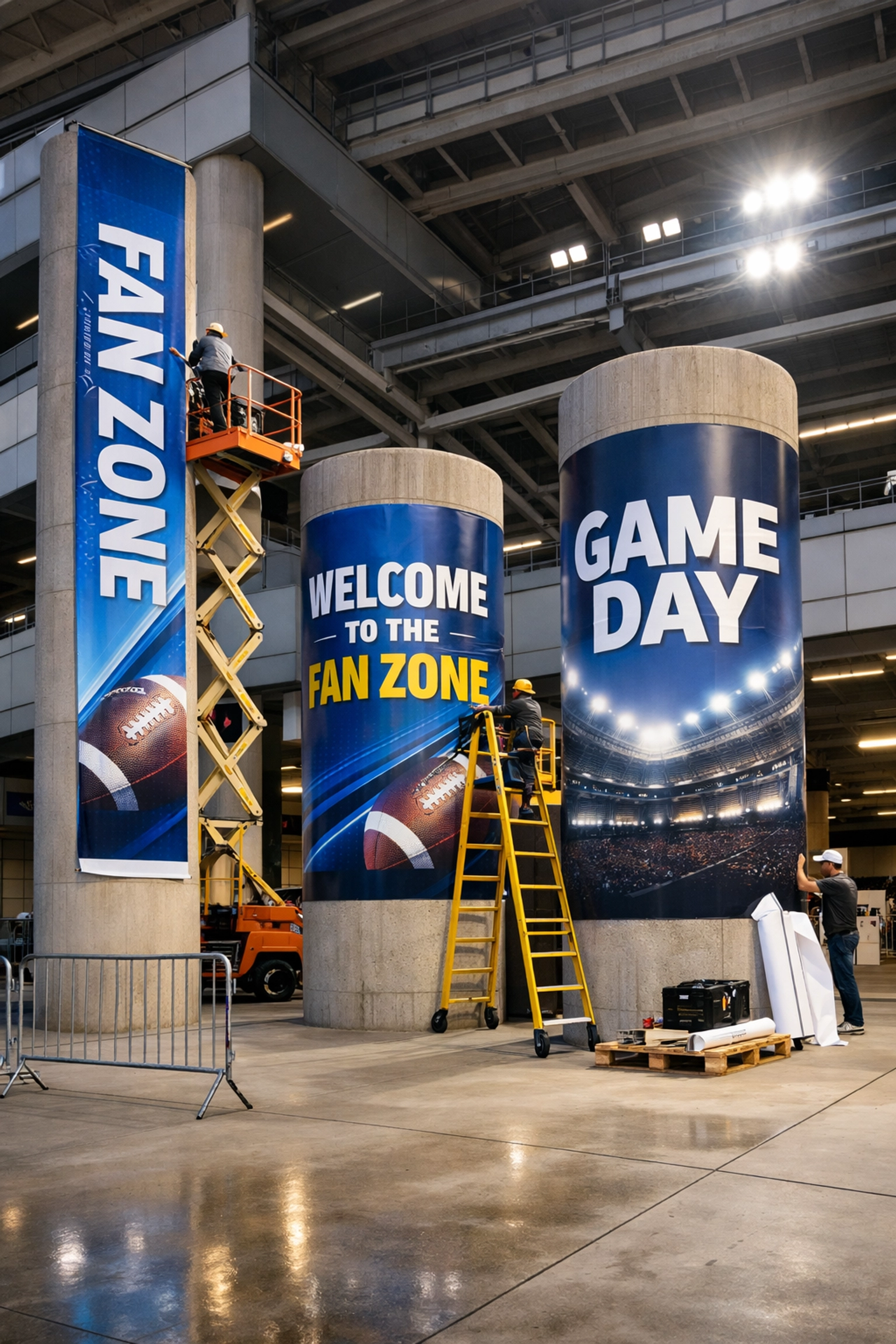
The 2026 campaign focused heavily on the "fan zone" areas where pre-game activities occurred. By saturating these zones with a mix of floors, walls, and billboards, brands were able to own the environment before the kickoff even occurred.
Measurable Outcomes and Brand Lift
The effectiveness of the 2026 strategy is backed by data. By using device ID tracking and exposed audience studies, advertisers can measure exactly how many people saw their ads and what actions they took afterward.
Recent case studies highlight the power of this approach:
- A Nike campaign during the NYC Marathon demonstrated how a brand can dominate an event without being an official sponsor by using strategic OOH placements.
- Campaigns in major hubs like New York City during holiday seasons show how high density OOH leads to immediate shopping destination success.
- The use of specific DSPs, such as StackAdapt, has helped drive programmatic DOOH adoption in omnichannel campaigns, leading to better attribution and performance tracking.
For more details on how these campaigns perform, visit the case study page.
Conclusion: The Future of Venue Advertising
The 2026 Super Bowl proved that venue-wide coverage is the gold standard for sports advertising. By combining the 40 years of leadership found at OOH Sports with modern programmatic technology, brands can achieve levels of visibility that were previously impossible. The combination of floor-level intimacy and billboard-level scale creates a multi dimensional brand experience that resonates with fans long after the final whistle.
As the industry moves toward a $50 billion market by 2030, the lessons learned in Santa Clara will serve as the blueprint for future success. Effective advertising is no longer about just being seen, it is about being part of the environment.
For those interested in exploring how to dominate the next major sporting event, the team at OOH Sports is available for consultation through the contact page. Detailed information regarding company policies and terms of service is also available for review.