
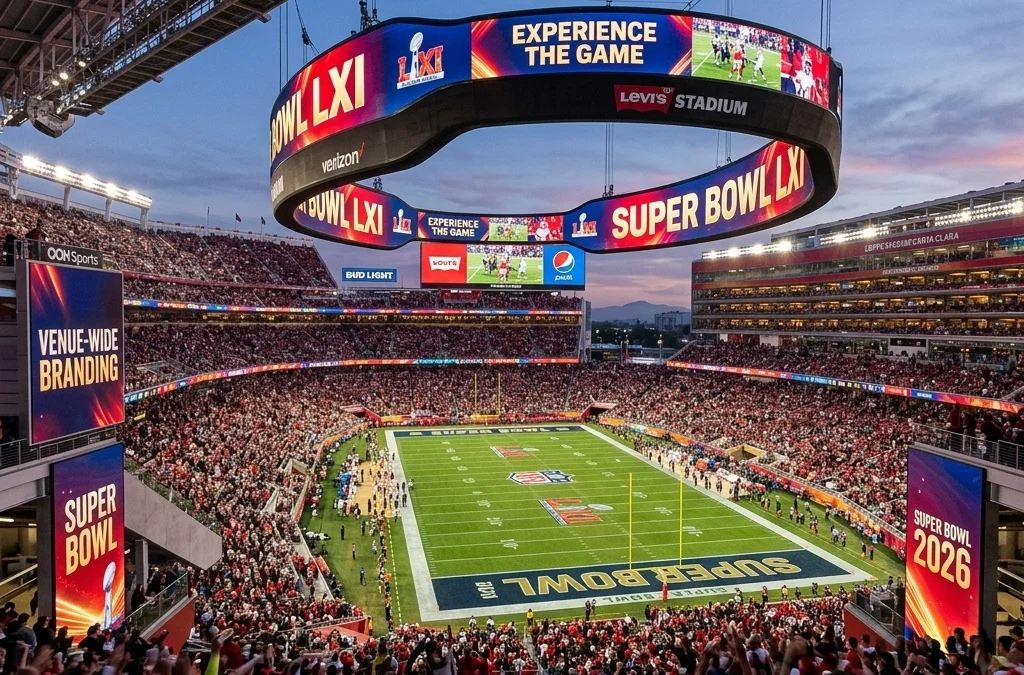
Super Bowl LX in Santa Clara has come and gone, but the marketing world is still buzzing about how the game was won off the field. While the action on the grass at Levi’s Stadium was incredible, the real story for advertisers was the total transformation of the physical environment. In April 2026, the industry is still dissecting how brands moved beyond the 30 second television spot to own every square inch of the fan experience.
OOH Sports has been at the forefront of this evolution for 40 years. Leading the way in advertising innovation requires a deep understanding of how people move, where they look, and what makes them stop in their tracks. For Super Bowl 2026, the strategy was simple. The goal was to create a venue-wide branding ecosystem that felt less like advertising and more like an essential part of the event itself.

40 Years of Out-of-Home Leadership
The journey to the Super Bowl 2026 advertising landscape began decades ago. OOH Sports has spent 40 years mastering the art of the physical impression. In the early days, this meant high impact static billboards and paper posters. Today, it means a sophisticated network of digital screens, interactive kiosks, and floor graphics that guide a consumer through their entire journey.
Experience matters because the modern fan is harder to reach than ever. They are constantly looking at their phones, distracted by social media, and overwhelmed by digital noise. To capture their attention, a brand has to exist in the physical world in a way that is impossible to ignore. OOH Sports has spent four decades refining the technology and the placement strategies that make this possible.
The Venue-Wide Philosophy: From Floors to Billboards
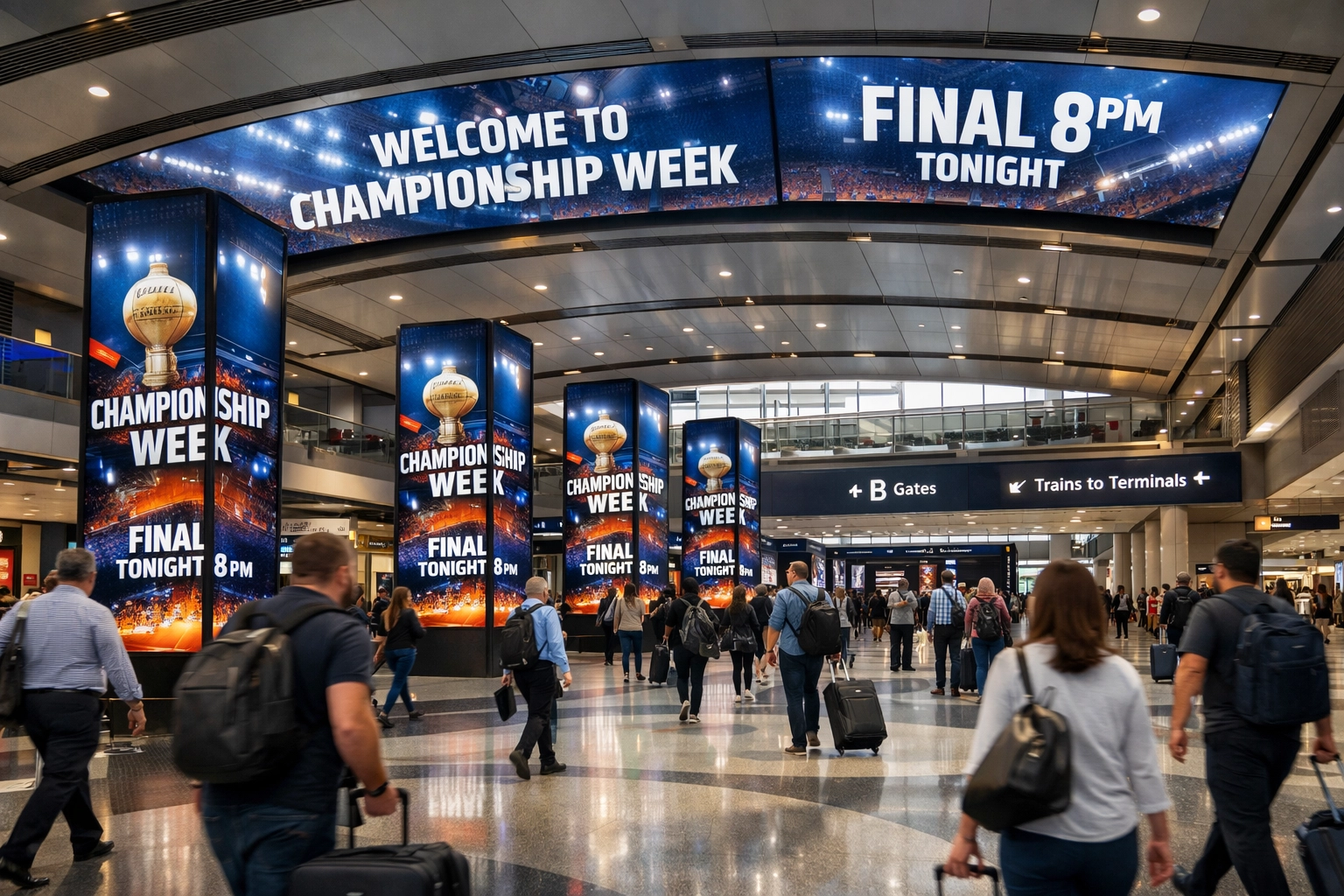
Everyone is talking about venue-wide branding because it represents the ultimate form of brand immersion. It is no longer enough to have a logo on a scoreboard. For Super Bowl 2026, the most successful brands utilized every available surface. This is the "floor to ceiling" approach that OOH Sports champions.
Why Floors Matter
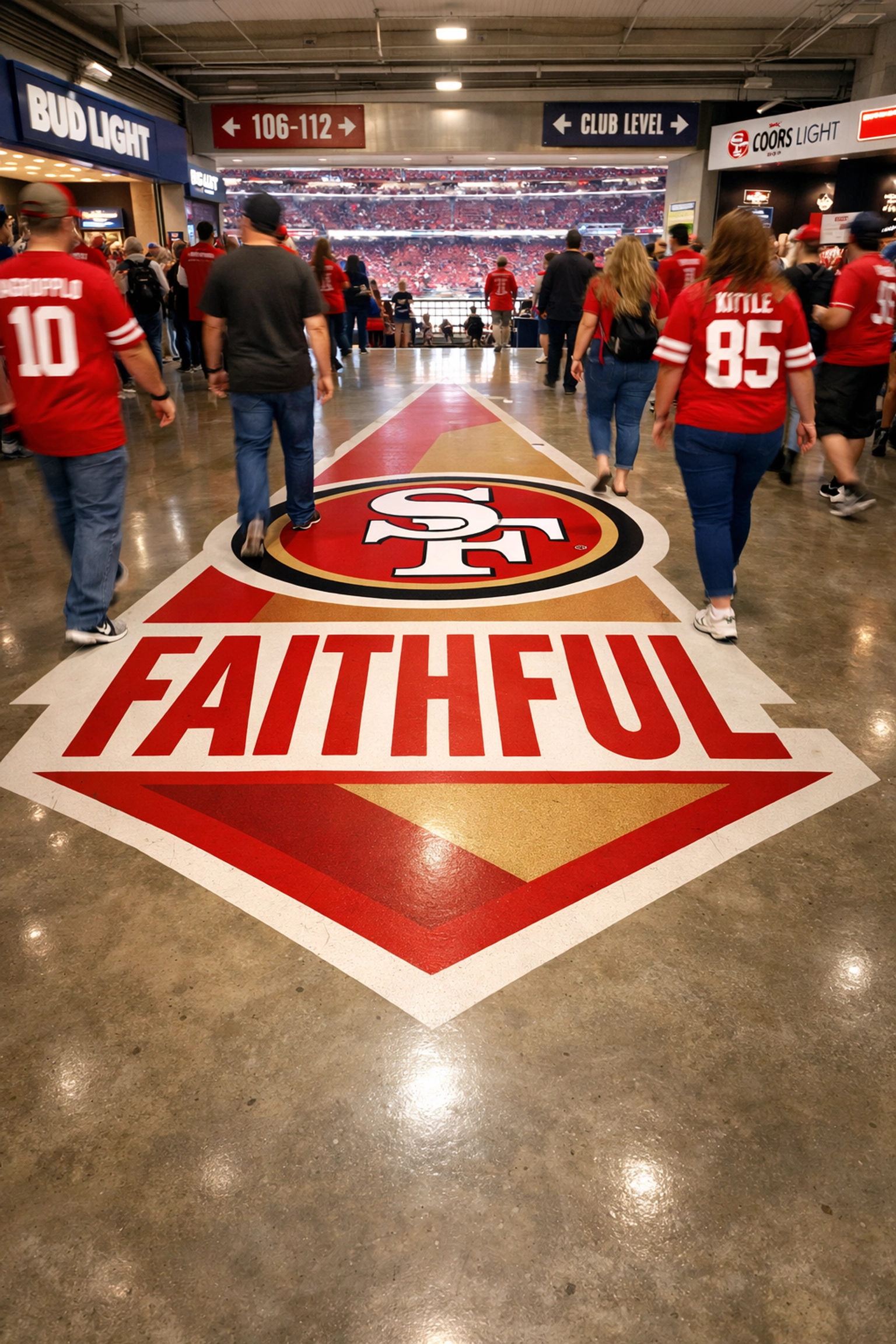
It sounds simple, but floor graphics are one of the most effective ways to capture "dead space" in a high traffic environment. When fans are walking through the concourse or waiting in line for concessions, their eyes are naturally directed downward. Large-scale, high-quality floor decals can turn a boring concrete walkway into a branded experience.
Billboards and Beyond
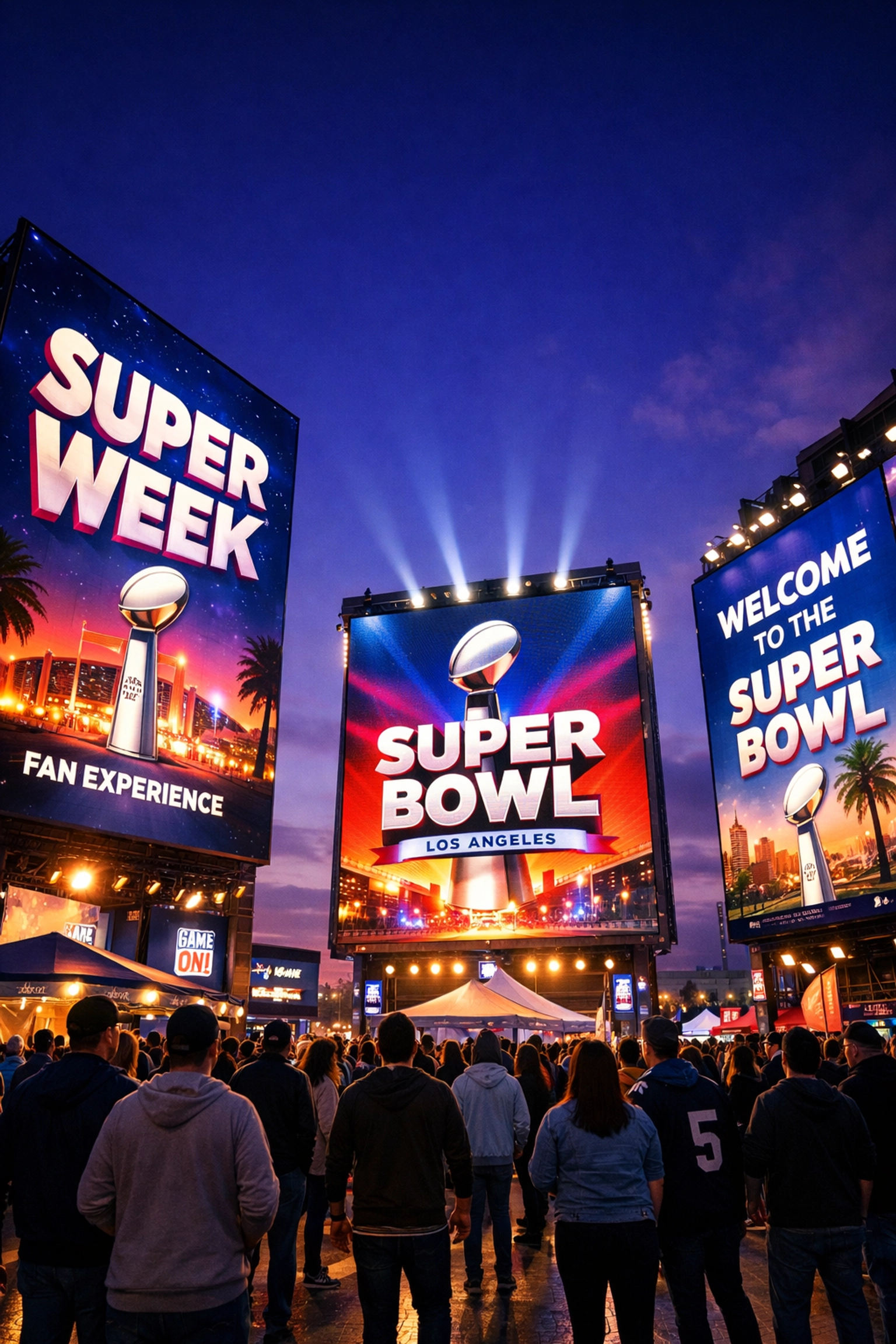
While the traditional billboard still has its place, the Super Bowl environment demands more. Digital Out-of-Home (DOOH) displays allow for real-time updates, social media integration, and dynamic creative content. By surrounding the stadium with a mix of massive digital displays and smaller, more personal screens, a brand can maintain a constant presence throughout the entire "Super Week."
To see how this looks in action, check out this look at the power of venue-based branding:
https://www.youtube.com/watch?v=l6J-0zileKE
Why Experience is the New Currency
The research from Super Bowl LX shows a clear trend. Fans are gravitating toward brands that offer an experience rather than just a message. Pop-up activations, interactive games, and immersive environments were the stars of the show in the Bay Area. This shift is why Sportrons and other specialized sports advertising tools are becoming essential for modern marketers.
When a fan walks over a branded floor, interacts with a digital kiosk to find their seat, and then sees a massive replay on a branded screen, they are living inside the brand’s world. This creates a level of brand recall that a standard TV commercial simply cannot match. It turns the stadium into a giant, living advertisement where the fan is the protagonist.
Strategic Success in the Real World
The success of venue-wide branding isn't just a theory. Data from recent campaigns shows that physical, programmatic DOOH drives massive results. For example, White Claw utilized a programmatic digital out-of-home campaign to launch their vodka line, which resulted in a 74 percent lift in purchase consideration. You can read more about that specific case study to see the numbers for yourself.
Similarly, AB InBev saw a 119 percent lift in positive brand image for Mike’s Hard Iced Tea by using programmatic DOOH. These aren't just small wins. These are game-changing results that prove why the industry is moving toward these immersive physical strategies.
Quantifiable Impact
- 74% Lift: Recorded for White Claw in purchase consideration.
- 119% Lift: Recorded for Mike’s Hard Iced Tea in brand image.
- 144% Increase: Recorded for Sea-Doo in purchase consideration after their first digital OOH campaign.
These results are the reason why OOH Sports focuses so heavily on the marketing mechanics of how these campaigns are delivered. It is about using the right technology at the right time to reach the right person.
Lessons from Levi’s Stadium
Super Bowl 2026 proved that the "stadium experience" starts miles away from the actual gate. The entire Bay Area was transformed into a branded ecosystem. Brands that won the week were the ones that understood the "Super Bowl Week" timeline.
- The Arrival: Branding at airports and transit hubs sets the tone.
- The Hub: Pop-up experiences in downtown areas create social media content.
- The Game: Venue-wide coverage ensures the brand is the backdrop for every photo and video taken during the event.
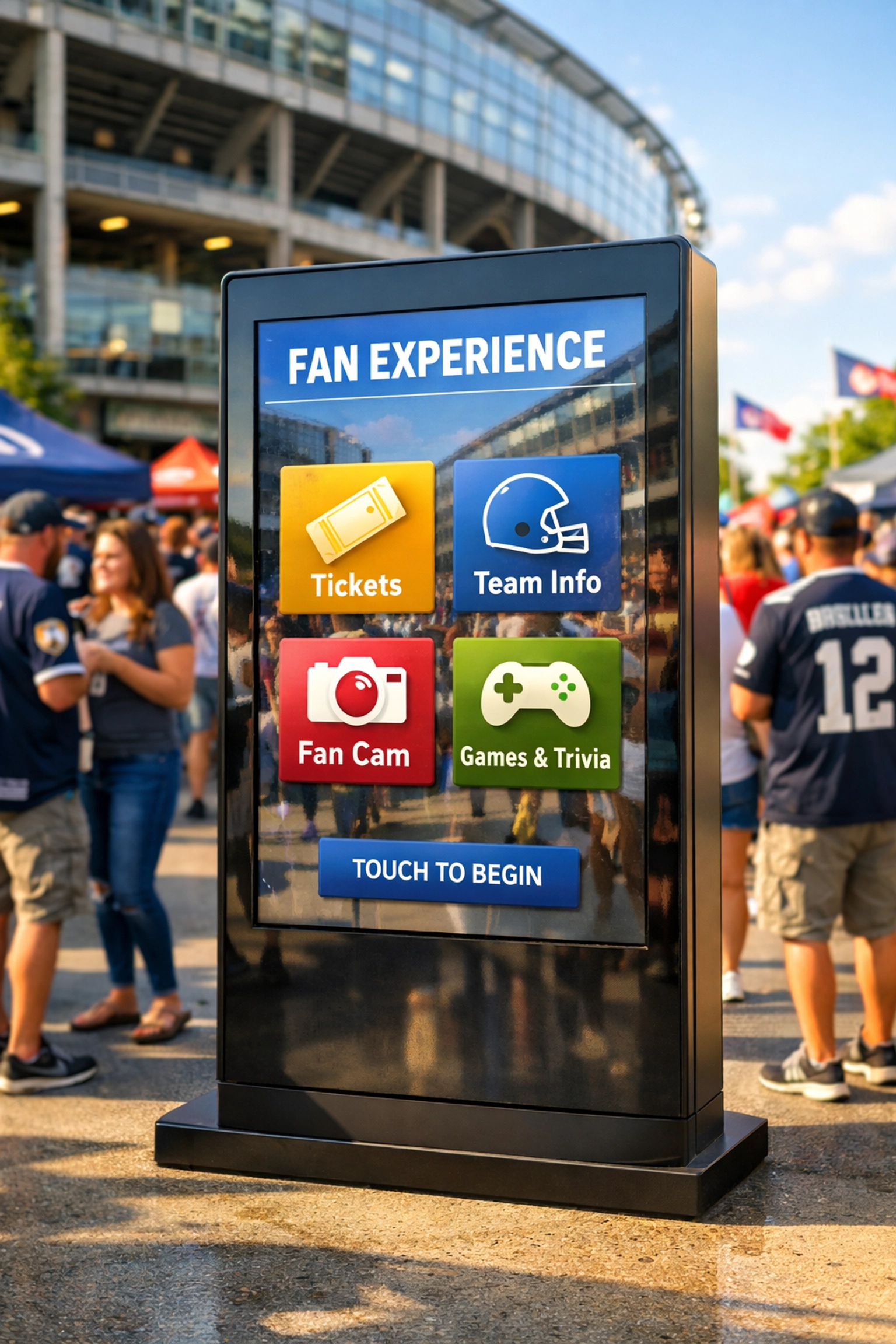
By utilizing a combination of high-impact billboards and intimate, eye-level branding like floor graphics and kiosks, advertisers were able to stay with the consumer every step of the way. This is the hallmark of a 40 year legacy in the making.
The Role of Programmatic DOOH
One of the biggest reasons for the buzz around 2026 is the advancement of programmatic technology. Advertisers can now buy OOH space with the same precision they use for online ads. This allows for hyper-local targeting and real-time adjustments based on weather, time of day, or even the score of the game.
When combined with the physical scale of a venue-wide takeover, programmatic DOOH becomes a powerhouse. It allows a brand to be flexible while maintaining a massive physical footprint. This strategy is discussed in depth in the recent article about how DOOH sports advertising will hit $50 billion by 2030.
Looking Forward: The 2027 Outlook
As the industry looks toward the next big event, the lessons from Super Bowl 2026 are clear. The brands that people talk about are the ones they can touch, feel, and walk through. The era of the passive viewer is ending. The era of the active participant is here.
OOH Sports remains committed to pushing these boundaries. With 40 years of experience, the focus remains on simple, effective, and high-impact solutions. Whether it is a floor decal in a stadium concourse or a massive digital display overlooking a fan zone, the goal is always to create a memorable experience.
For those looking to learn more about how to implement these strategies, the About page and the Contact section are great places to start. The landscape of advertising is changing quickly, and staying ahead requires a partner who has seen it all and knows what is coming next.
Experience isn't just a buzzword. It is the foundation of modern advertising. Super Bowl 2026 showed us that when you own the venue, you own the moment. And when you own the moment, you own the market. Venue-wide branding is the future, and OOH Sports is proud to have spent the last 40 years building that future one impression at a time.