
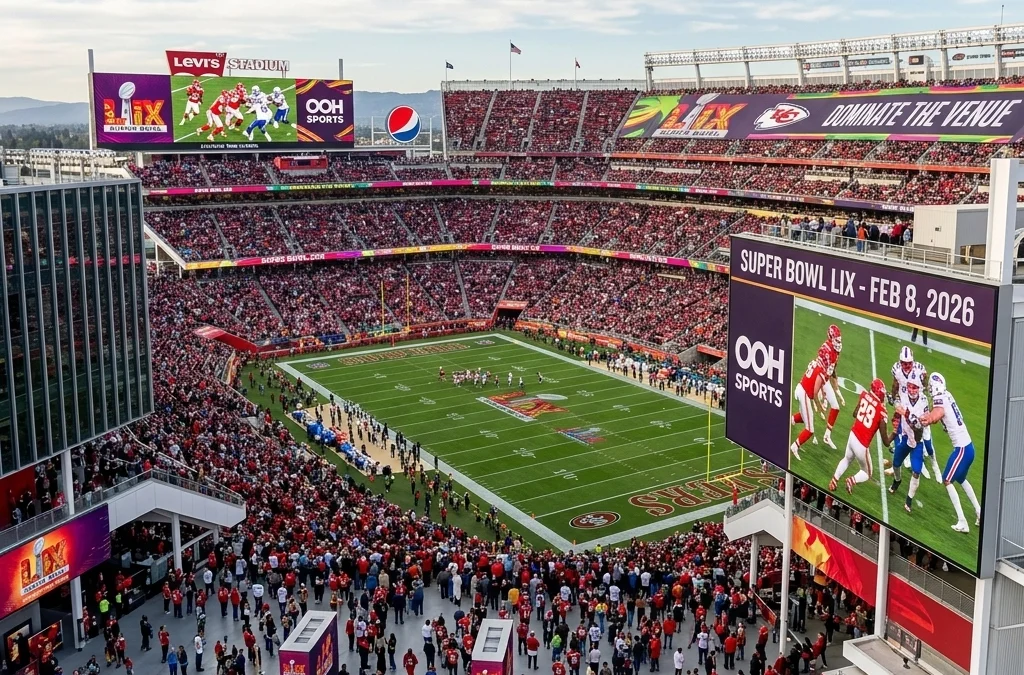
Hey there, it is Dan Kost, CEO of OOH Sports. We are sitting here in April, just a few months after the dust settled on Super Bowl LX in Santa Clara. What a game it was. The Seahawks really showed up against the Patriots, and Bad Bunny definitely brought the heat during the halftime show. But while everyone else was focused on the score or the music, our team was looking at the bigger picture: the venue.
At OOH Sports, we have spent the last 40 years learning exactly how to own a room, or in this case, a massive stadium. Dominating a venue like Levi’s Stadium requires more than just buying a few spots on a screen. It takes a venue-wide strategy that starts at the floor and goes all the way up to the massive billboards. This year, we took things to a whole new level.
If you missed the action or want to see how the pros do it, check out this look at our latest work:
https://www.youtube.com/watch?v=l6J-0zileKE
40 Years of Putting Brands in the Spotlight
When OOH Sports started four decades ago, things were a bit different. We did not have programmatic bidding or digital screens that could update in real time. We had grit, great locations, and a passion for sports marketing. Over the last 40 years, we have evolved alongside the technology, moving from traditional static posters to the high tech sportrons we use today.
Our longevity in this business is not just about being around for a long time. It is about understanding the fan experience. Whether it is a local game or the biggest Sunday of the year, we know how to place an ad so it feels like part of the event rather than an interruption. That 40 year legacy is the foundation for everything we did at Super Bowl 2026.
The Strategy: Venue-Wide Coverage
When you want to dominate the Super Bowl venue, you have to think about the "Fan Journey." A fan does not just teleport into their seat. They arrive at the airport, take a shuttle, walk through the fan zones, grab a drink at the concourse, and finally sit down.

Our goal was to ensure that a brand was visible at every one of those steps. We call this "Floors to Billboards" coverage.
Starting from the Ground Up: Floor Graphics
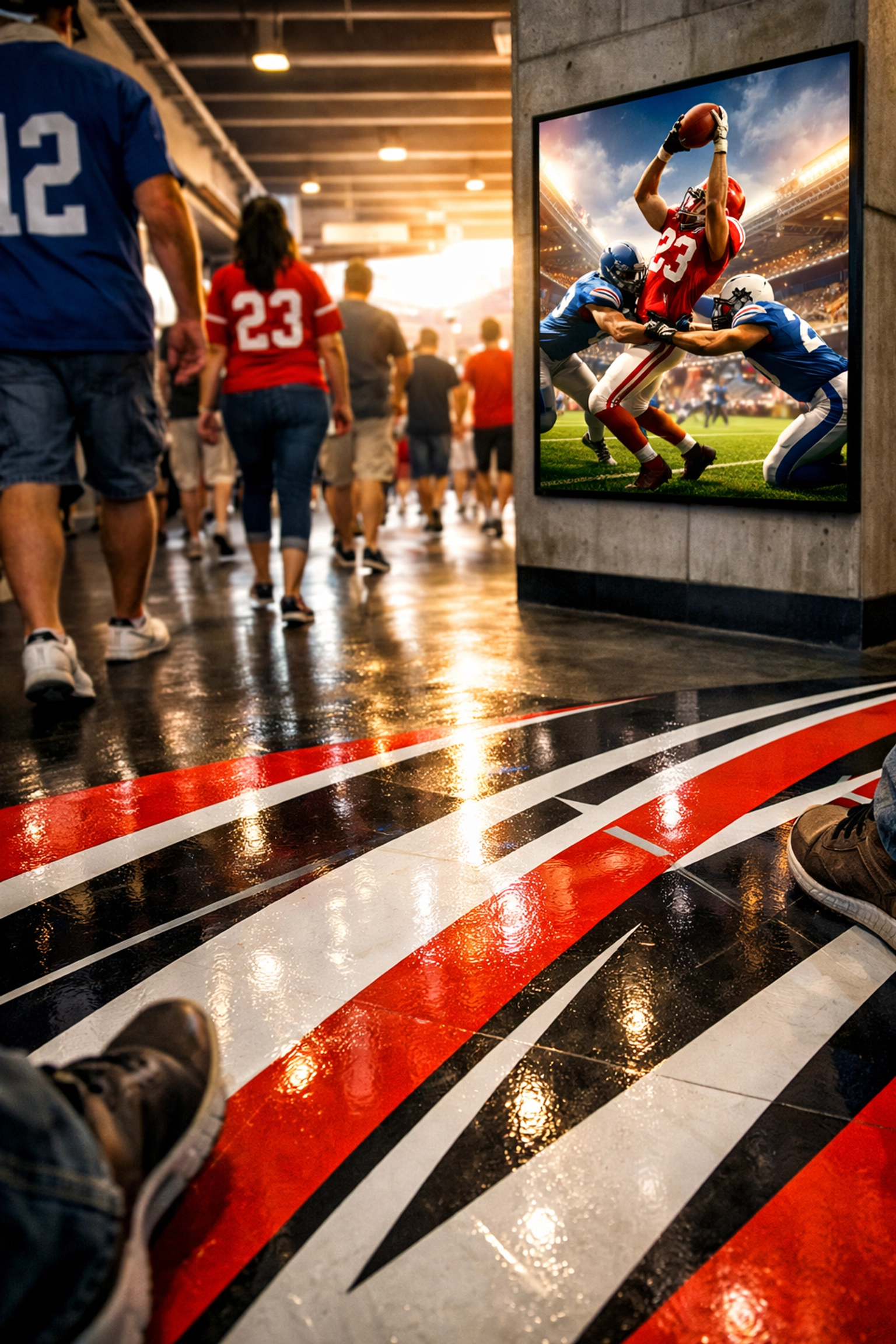
Most people forget to look down, but in a crowded stadium, the floor is prime real estate. We used high-impact floor graphics in high-traffic areas like the entrances and the main concourses of Levi’s Stadium. These are not just stickers. They are high-durability, non-slip brand moments that guide fans toward concessions or exits while keeping a brand front and center. When thousands of people are walking toward their seats, your brand is right there under their feet, making an impression before they even see the field.
The Power of the Big Screen: Billboards and DOOH
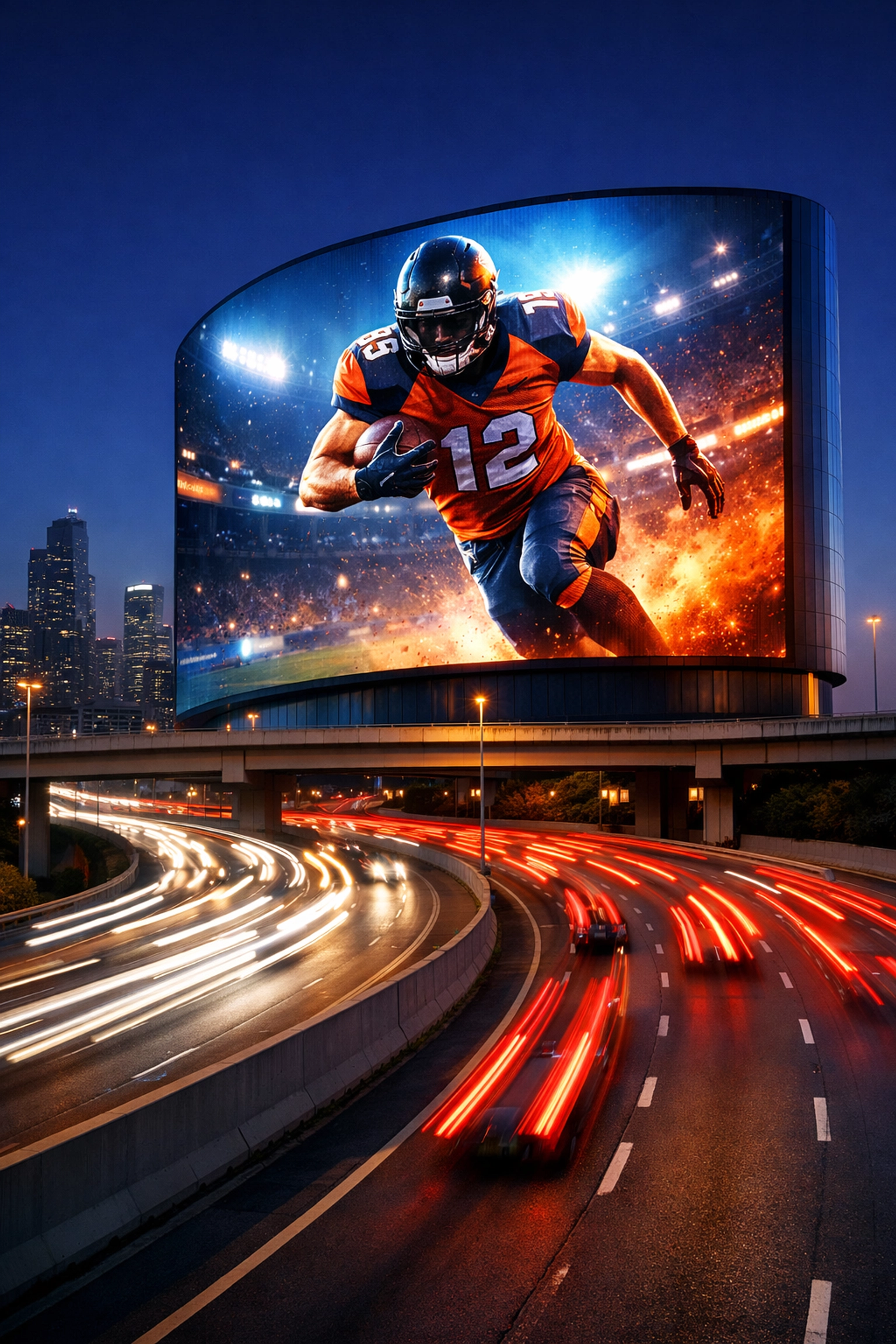
Once fans are in their seats or walking the open-air concourses, they look up. This is where the billboards and Digital Out-of-Home (DOOH) take over. For Super Bowl LX, we utilized massive digital screens surrounding the stadium and throughout the Santa Clara area.
Using programmatic technology, we were able to sync ads with the rhythm of the game. When there was a touchdown or a big play, our ads could reflect that energy instantly. This is a far cry from the static boards of the past. If you want to see how this stacks up against old-school methods, take a look at our analysis on programmatic DOOH vs traditional stadium ads.
Why Venue Dominance Matters (By the Numbers)
We do not just do this because it looks cool. We do it because it works. Our experience has shown that venue-wide coverage creates a "surround sound" effect for your brand. When a fan sees your message on a floor graphic, then on a digital screen in the concourse, and finally on a massive billboard outside the stadium, it builds incredible brand recall.
We have seen similar success with other major campaigns. For instance, the White Claw programmatic DOOH campaign saw a 74 percent lift in purchase consideration. You can read the full White Claw case study to see how those numbers actually happen. Similarly, Mike’s Hard Iced Tea saw a 119 percent lift in brand image. These results are not accidents. They are the result of strategic, multi-touchpoint advertising.
Levi’s Stadium: The Perfect High-Tech Backdrop
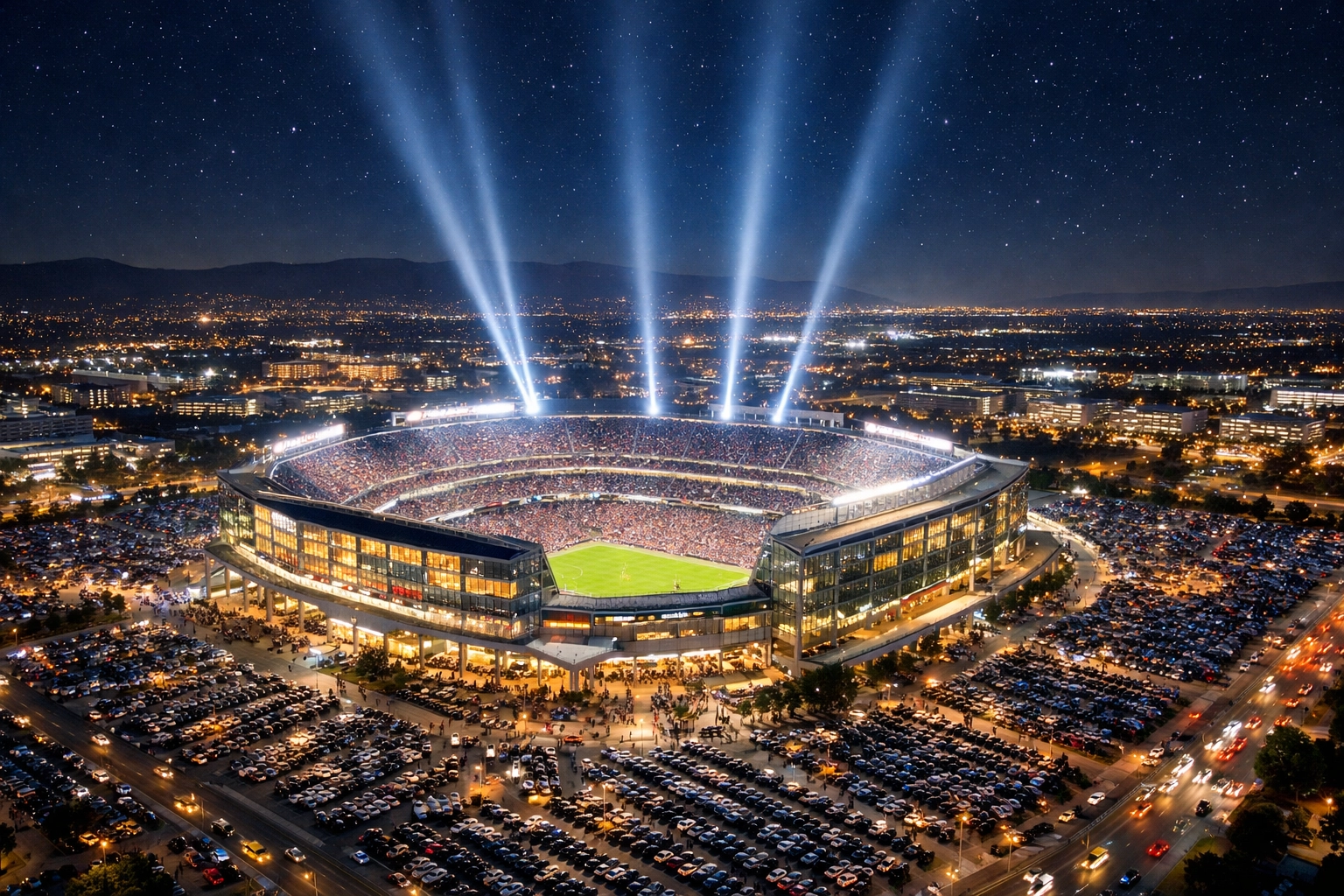
Santa Clara was the perfect place for Super Bowl LX. Being in the heart of Silicon Valley, Levi’s Stadium is one of the most technologically advanced venues in the world. It has a massive 68,500-seat capacity and a design that focuses on the fan experience.
Because the stadium is surrounded by tech campuses and high-traffic highways like the 101, the advertising opportunities extend far beyond the gates. We managed boards that captured fans as they traveled from San Francisco and San Jose, creating a seamless brand experience from the moment they landed in the Bay Area.
How We Leverage Modern Tech for Big Wins
One of the biggest shifts in our 40-year history is the move toward data-driven advertising. We no longer have to guess who is seeing our ads. With programmatic DOOH, we can use mobile data and location targeting to ensure we are reaching the right people at the right time.
For the Super Bowl, this meant targeting specific fan zones and parking lots where we knew the energy was highest. We could track which devices were exposed to our ads and follow up with digital retargeting later. This omnichannel approach is the future of sports marketing. In fact, experts predict that DOOH sports advertising will hit $50 billion by 2030. If you are not using these strategies yet, you are leaving money on the table.
Making It Simple
At OOH Sports, we like to keep things simple. We know that marketing can get complicated with all the jargon and data points, but at the end of the day, it is about making a connection. We take the stress out of the process by handling everything from the creative strategy to the final execution.
Whether it is a massive event like the Super Bowl or a targeted campaign in a single city, our process remains the same:
- Identify the Fan Journey: Where are they going? What are they doing?
- Strategic Placement: From floors to billboards, where will the brand make the most impact?
- Real-Time Optimization: Using programmatic tech to keep the message fresh.
- Measurable Results: Proving the ROI with hard data.
Looking Ahead to 2027 and Beyond
Super Bowl LX was a huge success for our partners, but we are already looking ahead. The world of sports advertising never stops moving. As we continue to celebrate our 40th year of leadership, we are constantly testing new materials for floor graphics and new ways to integrate mobile interactivity into our billboards.
The lessons we learned in Santa Clara will be applied to every campaign we run this year. We know that dominating a venue is not about having the biggest budget. It is about having the best strategy. It is about being where the fans are, whether they are looking down at their feet or up at the sky.
If you are ready to see what 40 years of experience can do for your brand, let’s chat. You can head over to our contact page or check out more of our case studies to see the results for yourself.
The Super Bowl may only happen once a year, but the opportunity to dominate your market is available every single day. Let's make sure your brand is the one everyone is talking about when the final whistle blows.
Stay simple, stay impactful.
- Dan Kost
CEO, OOH Sports