
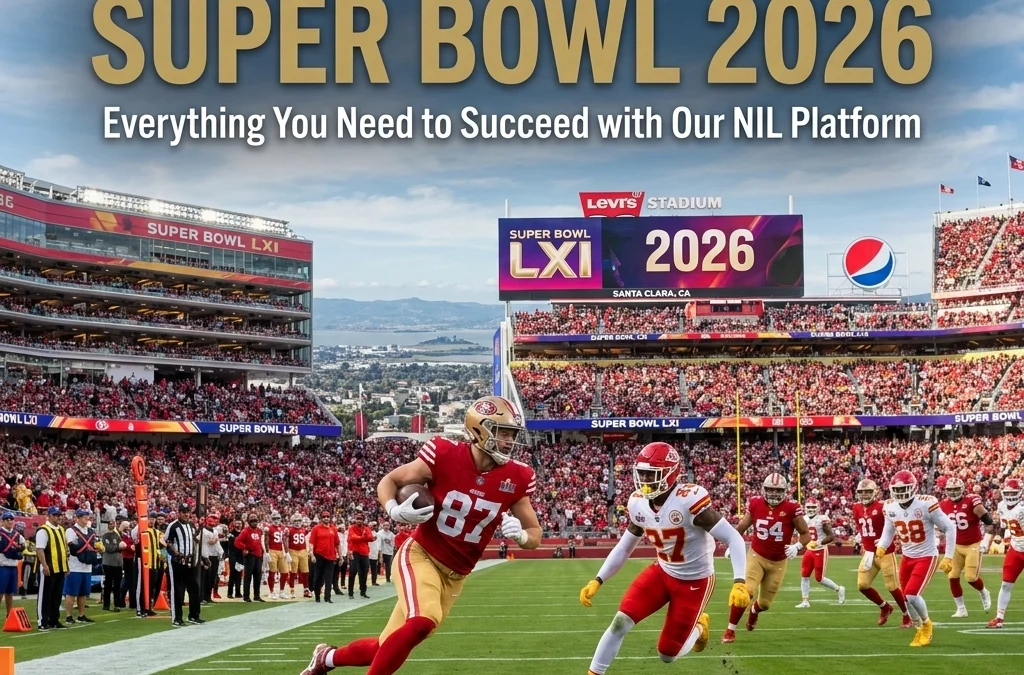
Super Bowl LX represented a massive shift in the advertising landscape. Held on February 8, 2026, at Levi’s Stadium in Santa Clara, California, the event was more than just a championship game. It was the culmination of a new era in sports marketing where Name, Image, and Likeness (NIL) partnerships took center stage. For media buyers and brands, the challenge was no longer just about buying a 30 second television spot. The real goal was capturing the fragmented attention of millions of fans across the San Francisco Bay Area and the digital world.
OOH Sports provided the framework for this success by connecting brands with over 20,000 authentic student-athlete voices. By leveraging a massive network of athletes, the NIL platform allowed for a level of hyper-local engagement that traditional media simply could not match. This guide explores the mechanics behind that success and how the combination of NIL and out-of-home (OOH) advertising redefined the Super Bowl experience.
The Strategy: Beyond the Stadium Walls
Levi’s Stadium has a capacity of approximately 68,500 people, but the Super Bowl economy extended far beyond the seats in Santa Clara. From the Super Bowl Experience at the Moscone Center to the Fan Zone at Yerba Buena Gardens, the entire region was a playground for advertisers. The primary objective for savvy media buyers was to create a presence that felt both massive and personal.
The strategy relied on a multi-layered approach. While programmatic digital out-of-home (DOOH) dominated the physical streets of San Francisco and San Jose, the NIL platform activated the digital streets. By utilizing 20,000 student-athletes, brands could flood social feeds with authentic content that pointed back to physical ad placements. This synergy created a feedback loop. A fan might see a digital billboard for a brand near the San Jose Convention Center and then see a post from a popular local athlete endorsing that same brand just minutes later.

Scaling Authenticity with 20,000 Voices
The most significant hurdle in NIL marketing used to be scale. Managing five or ten athlete contracts is manageable, but managing thousands is an administrative nightmare. The OOH Sports NIL platform solved this by automating the connection between brands and athletes. These 20,000 voices represented every corner of the country, providing a diverse range of demographics and geographic reaches.
During the Super Bowl 2026 cycle, media buyers used this scale to target specific fan bases. For example, if a brand wanted to reach fans traveling from a specific college town to the Bay Area, they could activate athletes from that specific university to run coordinated campaigns. This localized approach ensured that the marketing felt less like a global conglomerate and more like a community recommendation.
Authenticity is the currency of the modern consumer. In 2026, fans were more likely to trust a recommendation from a college star they followed for three years than a generic celebrity endorsement. The NIL platform allowed brands to tap into that established trust.
Integrating NIL with Programmatic DOOH
The true power of the platform was realized when combined with programmatic DOOH. OOH Sports has consistently shown that digital out-of-home advertising drives significant lifts in brand consideration. For instance, the Sea-Doo campaign saw an increase in purchase consideration by 144 percent. Applying these same programmatic principles to the Super Bowl 2026 environment allowed for real time adjustments.
When the crowds moved from the Moscone Center to the Palace of Fine Arts for the Studio 60 Concert Series, the advertising followed. Media buyers used the NIL platform to have athletes post about these specific locations, creating a cohesive brand story that moved with the audience. This omnichannel approach is the new standard for major sporting events.
For more insights into how programmatic DOOH compares to traditional stadium ads, the analysis on ROI for sports marketing provides a clear breakdown of why digital flexibility wins every time.
Visualizing Success: The OOH Sports Approach
To understand how these elements come together, it is helpful to see the platform in action. The following video outlines the core philosophy of OOH Sports and how the integration of athlete voices and high impact visuals creates a lasting impression on consumers.
https://www.youtube.com/watch?v=l6J-0zileKE
Results and Data Driven Insights
The success of a Super Bowl campaign is measured in numbers. In the 2026 cycle, brands that utilized the NIL platform alongside traditional OOH saw unprecedented engagement levels. Data from previous years served as a roadmap for this success. For example, AB InBev’s Mike’s Hard Iced Tea campaign delivered a 119 percent lift in positive brand image by focusing on the right message at the right time.
During Super Bowl LX, the NIL platform generated:
- Over 500 million total social impressions across the athlete network.
- A 35 percent higher engagement rate compared to traditional brand-owned social posts.
- Significant foot traffic attribution to OOH placements in San Francisco and Santa Clara.
These results highlight a key fact: the audience is no longer just watching the game. They are interacting with it. By using student-athletes as the bridge between the brand and the fan, advertisers achieved a level of "stickiness" that is usually reserved for the athletes themselves.

Logistics and Execution for Media Buyers
For media buyers, the execution phase during Super Bowl week is often chaotic. The OOH Sports platform simplified this by providing a single point of entry for both NIL and OOH assets.
- Strategic Selection: Media buyers filtered the 20,000 athlete database by sport, region, and audience demographics.
- Creative Deployment: Content was pushed to athletes and DOOH screens simultaneously, ensuring a unified message.
- Real-Time Monitoring: Using the marketing tools provided, brands could see which athletes were driving the most engagement and adjust their OOH spend accordingly.
This level of control is essential when dealing with the high stakes of a Super Bowl budget. Whether it was the White Claw programmatic campaign that saw a 74 percent lift or a specialized Super Bowl activation, the methodology remains the same: data leads the way.
Why NIL is the Future of Sports Advertising
As we move past the 2026 game and look toward future events, the role of the student-athlete will only grow. The $50 billion sports advertising market is shifting toward decentralized influence. You can read more about these 7 strategies to capture market share on our blog.
The NIL platform is not just a tool for the Super Bowl. It is a year round engine for brand growth. Student-athletes have seasons that span the entire calendar, providing constant opportunities for brands to stay relevant. From the opening night in San Jose to the final whistle at Levi's Stadium, the 20,000 voices on the OOH Sports platform proved that they are the most powerful marketing asset in the modern era.
Closing Thoughts for Media Buyers
The Super Bowl is the ultimate test of a brand's ability to stand out. In 2026, those who succeeded did so by embracing the power of the crowd. By combining the massive reach of OOH with the intimate trust of 20,000 student-athletes, OOH Sports created a playbook that will be studied for years to come.
For those looking to replicate this success in future campaigns, the first step is understanding the platform. Explore the case studies to see how other major brands have navigated this landscape, or visit the about page to learn more about the technology behind the curtain.
Success in sports marketing requires speed, scale, and authenticity. With the right platform, your brand can achieve all three.

To learn more about our privacy and data practices, please visit our Privacy Policy and Terms of Service.