
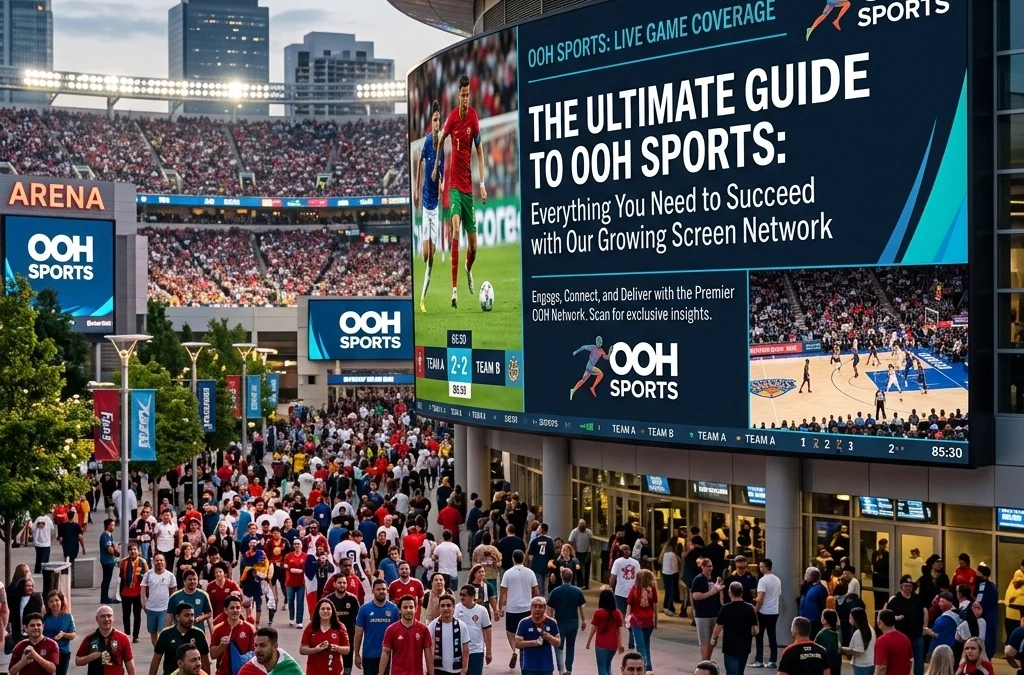
Out-of-home advertising is undergoing a significant transformation. As traditional media channels face increased fragmentation, OOH Sports is expanding its digital footprint to offer brands unparalleled access to engaged audiences. This guide outlines the strategic growth of the network, the technology driving its success, and how media buyers can leverage these assets to achieve measurable results.
National Expansion and Network Growth
OOH Sports has reached a major milestone in its national expansion, now operating a network of over 25,000 digital screens. This growth positions the company as a leader in the digital out-of-home (DOOH) sector, specifically targeting the high-value sports and entertainment demographic. By focusing on areas where fans live, work, and play, the network ensures that brand messaging remains a constant presence throughout the consumer journey.
The expansion strategy centers on high-traffic environments that serve as the primary touchpoints for sports fans. This includes transit hubs, entertainment districts, and sports-themed hospitality venues. The scale of this network allows for both broad national reach and granular local targeting, providing flexibility for diverse campaign objectives.

The Strategic Importance of Sporttrons
At the core of the network expansion is the Sporttron technology. These high-definition digital displays are engineered to deliver crisp, vibrant content that captures attention in bright, high-action environments. Unlike static billboards, Sporttrons allow for dynamic content rotation, enabling multiple brands to occupy premium space while maintaining high visibility.
The use of Sporttron technology facilitates:
- Real-time content updates based on live game scores or events.
- High-frequency ad rotations that increase total impressions.
- Visual clarity that ensures brand assets are viewed as intended, regardless of lighting conditions.
- Seamless integration with programmatic buying platforms.
By deploying these screens in high-dwell locations, OOH Sports maximizes the window of opportunity for brand engagement.

Objective and Strategy: Reaching the 99 Percent
Traditional sports marketing often focuses heavily on the stadium experience. However, research indicates that a vast majority of the fan base experiences sporting events outside the venue walls. OOH Sports focuses on reaching the 99 percent of fans who are engaging with sports culture in their local communities.
The strategy involves identifying "Decision Zones." These are geographical areas where consumers are most likely to make purchasing decisions related to food, beverage, apparel, and entertainment. By placing digital screens in these zones, the network bridges the gap between fan excitement and consumer action.
Key Placement Categories:
- Transit Wait Points: Reaching fans as they commute to games or sports bars. These locations offer high dwell times and a captive audience.
- Entertainment Districts: Placing screens in the heart of city centers where fans gather before and after major events.
- Sports Restaurants and Bars: Maintaining brand presence during the hours when fans are most focused on sports content and social interaction.
Programmatic DOOH: A Data-Driven Approach
The shift toward programmatic digital out-of-home (pDOOH) is a cornerstone of the OOH Sports growth model. This technology allows media buyers to purchase screen inventory with the same precision and ease as online display advertising.
Through programmatic integration, campaigns can be optimized in real time. This capability is essential for brands that need to pivot their messaging based on market conditions, inventory levels, or team performance. The use of anonymized mobile location data further enhances targeting, allowing advertisers to identify when their target demographic is most likely to be in proximity to a specific screen.
For more information on the technical infrastructure, visit the Marketing page.

Measurable Impact: Results from the Field
The effectiveness of the OOH Sports network is best demonstrated through recent campaign data. Several major brands have utilized the network to achieve significant lifts in brand awareness and purchase consideration.
White Claw: Enhancing Purchase Consideration
In a recent campaign for a new product launch, White Claw utilized programmatic DOOH to target specific consumer segments. The results indicated a 74 percent lift in purchase consideration. The campaign successfully utilized the network's high-visibility screens to drive awareness in competitive market segments. More details on this execution can be found in the White Claw Case Study.
Mike's Hard Iced Tea: Brand Image Improvement
AB InBev’s Mike’s Hard Iced Tea leveraged the OOH Sports network to shift brand perception. By utilizing dynamic creative and strategic screen placement, the campaign saw a 119 percent lift in positive brand image. This demonstrates the power of the network to not only drive sales but also to influence long-term brand equity. Detailed results are available in the Mike's Hard Case Study.
Sea-Doo: Driving Interest through Visual Impact
Sea-Doo’s first digital OOH campaign focused on high-impact visuals and strategic targeting during peak recreational seasons. The campaign resulted in a 144 percent increase in purchase consideration. This case study highlights the network's ability to reach consumers during leisure time when they are most receptive to lifestyle-based messaging. Read the full Sea-Doo Case Study.

Creative Best Practices for the Digital Network
To succeed on a growing screen network, creative assets must be optimized for the medium. Out-of-home advertising is a visual-first channel, and the following tactics are recommended for maximum impact:
- Keep it Simple: Use bold fonts and high-contrast colors. The message should be legible from a distance.
- Utilize Motion: Subtle animation can increase eye-capture rates without being distracting.
- Contextual Relevance: Tailor the creative to the specific location or event. Mentioning a local team or a city landmark can increase resonance with the audience.
- Clear Call to Action: Whether it is a website URL or a social media handle, the next step for the consumer should be obvious.
For comprehensive guidelines on ad specs and placement, media buyers can refer to the About section.
Integration with Omnichannel Campaigns
OOH Sports does not operate in a vacuum. The network is designed to complement broader omnichannel strategies. When DOOH is integrated with social media and mobile advertising, the results are amplified.
Research shows that consumers are significantly more likely to engage with a brand on social media after seeing an OOH advertisement. This "OOH-to-Social" bridge is a powerful tool for brands looking to go viral or build community engagement. By syncing DOOH placements with mobile retargeting, brands can ensure their message stays with the consumer long after they have left the vicinity of the screen.

Future-Proofing with OOH Sports
The expansion of the OOH Sports network to over 25,000 screens is only the beginning. As technology continues to evolve, the network will integrate more advanced data analytics, augmented reality capabilities, and interactive features. For brands and media buyers, this represents an evergreen opportunity to reach fans in a way that is impactful, measurable, and unskippable.
The commitment to network growth and technological innovation ensures that OOH Sports remains at the forefront of the advertising industry. By prioritizing simple, effective, and data-driven solutions, the company provides a platform where brands of all sizes can succeed.
For those looking to begin a campaign or learn more about the latest network updates, the Contact page provides a direct line to the OOH Sports team. Additional resources, including company policies and terms, can be reviewed at the Terms of Service and Privacy Policy pages.
By leveraging the scale of a national screen network and the precision of programmatic technology, advertisers can ensure their message is heard above the noise, reaching fans exactly where they are.