
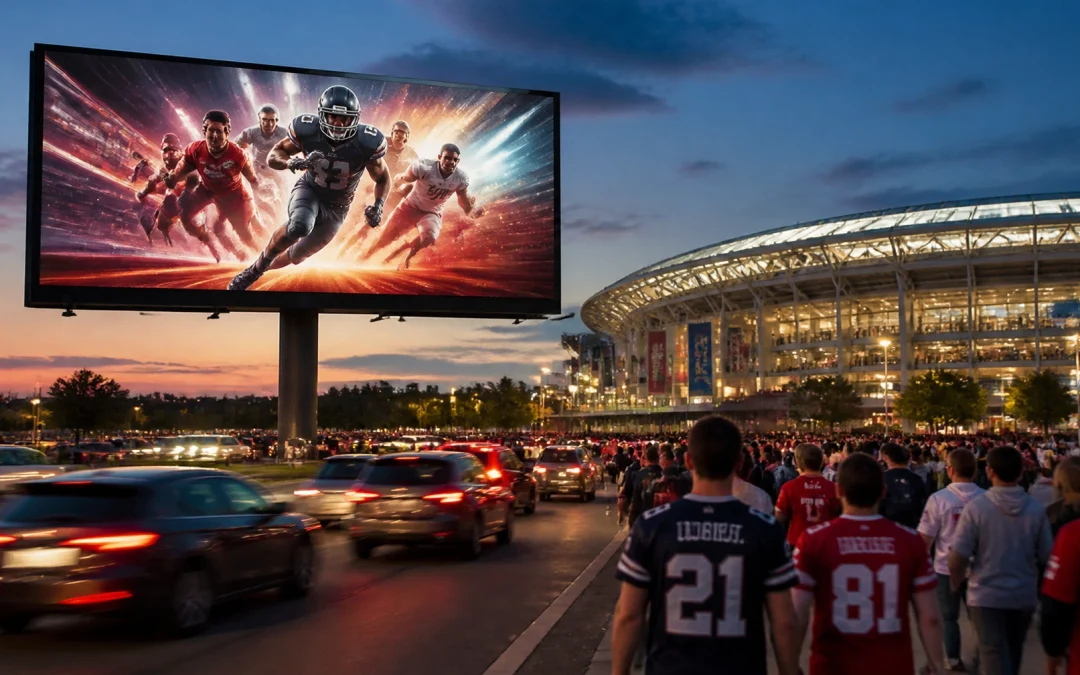
Traditional sports marketing often focuses on the duration of the game itself. However, the most significant opportunities for fan engagement occur long before the first whistle and continue well after the final buzzer. Many brands struggle to maintain a consistent presence throughout the fan journey, leading to fragmented campaigns and missed emotional peaks. By identifying common errors in fan engagement strategy and leveraging the 10-mile digital perimeter, brands can create a more cohesive and impactful narrative.
Mistake 1: The "Last-Minute" Engagement Gap
A frequent error in sports-centered campaigns is the delay of messaging until fans are already inside the venue. By the time a spectator reaches their seat, their attention is focused entirely on the field or court. This "Last-Minute" approach ignores the hours of anticipation leading up to the event.
The 10-Mile Fix: The OOH Sports Network addresses this by activating digital screens within a 10-mile radius of the stadium. This strategy captures fans during their commute and pre-game social activities. By meeting fans where they are, brands establish presence during the high-anticipation phase, turning the journey to the stadium into a branding opportunity.
Mistake 2: Over-Reliance on Mobile Screens
There is a common assumption that fans are constantly tethered to their mobile devices during live events. While social media is a factor, stadium environments are notorious for poor connectivity and high visual competition. Relying solely on mobile advertising often results in messages being lost in a "wall of digital noise."
The 10-Mile Fix: Digital Out-of-Home (DOOH) provides unskippable, large-scale visibility that does not require a data connection or an app. Strategically placed billboards and kiosks around the venue offer a secondary screen experience that is physical and unavoidable. This ensures that the brand remains part of the fan’s peripheral vision even when their phone is in their pocket.
Mistake 3: Static Messaging in a Dynamic Environment
Sports are defined by real-time shifts in momentum, score, and emotion. Using the same static creative for an entire season: or even an entire game: fails to capitalize on these fluctuations. Generic messaging often feels disconnected from the live experience that fans are currently living through.
The 10-Mile Fix: Through programmatic DOOH, brands can deploy dynamic creative that updates based on live game triggers. Whether it is a goal, a win, or a specific player milestone, the 10-mile zone allows for real-time relevance. This alignment with the fan’s immediate emotional state significantly increases brand resonance.

Mistake 4: Ignoring the Post-Game Disconnect
Many engagement strategies stop the moment the game ends. However, the post-game period is when fans are either celebrating a victory or dissecting a loss. This is a period of intense conversation and high dwell time in nearby bars, restaurants, and transit hubs.
The 10-Mile Fix: By extending the campaign into the 10-mile perimeter, brands can follow the fan as they leave the stadium. Screens in entertainment districts and transit centers can display post-game "congratulations" or "see you next time" messages, maintaining the brand’s role as a supporter of the community long after the stadium lights have dimmed.
Mistake 5: Failing to Establish Tribal Loyalty
Fans do not view themselves as generic consumers. They view themselves as part of a tribe. Campaigns that use corporate, detached language often fail to spark a connection. Brands that do not "speak the language" of the specific fan base are often viewed as intruders rather than supporters.
The 10-Mile Fix: Proximity-based advertising allows for localized, team-specific creative. By appearing on digital boards in the neighborhoods surrounding the stadium, a brand can position itself as a "home team" supporter. This creates a halo effect, where the brand’s status is elevated by its association with the local sports culture.
Mistake 6: Low Frequency and Fragmented Reach
A single ad placement inside a stadium often lacks the frequency needed to drive action. In a high-stimulus environment, a fan might see an ad once or twice, but it rarely leads to a lasting impression or a change in purchase intent.
The 10-Mile Fix: The 10-mile zone creates a "surround sound" effect. A fan might see the brand on a highway billboard, again on a pedestrian kiosk near the entrance, and once more on a transit screen while heading home. This high-frequency exposure across multiple touchpoints ensures the message is reinforced throughout the day.
Mistake 7: Unmeasured Awareness Spend
Historically, out-of-home advertising near stadiums was difficult to track. Many CMOs viewed these placements as "awareness only," with no clear way to measure ROI or attribute specific business outcomes to the spend.
The 10-Mile Fix: Modern programmatic DOOH has transformed the 10-mile perimeter into a data-driven channel. Using device ID tracking and brand lift studies, marketers can now quantify the impact of their campaigns. This precision moves sports advertising from a speculative spend to a measurable strategic tactic.

Strategy and Execution
The successful deployment of a stadium-adjacent campaign requires a multi-layered approach to targeting and creative delivery.
Objective and Strategy
The primary objective is to dominate the visual landscape within the 10-mile radius of a sports venue. This is achieved by:
- Identifying high-traffic routes used by fans arriving and departing the venue.
- Utilizing programmatic DOOH to automate ad delivery based on event schedules.
- Aligning creative assets with the specific emotional journey of the sports fan.
Technology Partners
OOH Sports collaborates with leading technology platforms to ensure seamless execution. This includes the use of specialized Demand Side Platforms (DSPs) like StackAdapt to manage inventory across various digital board categories. These partnerships allow for precise geofencing and real-time bidding, ensuring that the brand’s message is displayed at the most impactful moments.
Measurement and Methodology
To move beyond traditional metrics, campaigns are evaluated through:
- Brand Lift Studies: Measuring changes in brand perception, favorability, and purchase intent among exposed audiences.
- Foot Traffic Attribution: Tracking whether fans who saw the ads visited a retail location or dealership within a specific timeframe.
- Device ID Exposure: Quantifying the number of unique fans reached within the 10-mile zone and retargeting them across other digital channels.
Results and Impact
The effectiveness of the 10-mile digital perimeter is best illustrated through recent data-driven campaigns within the sports marketing sector.
Quantifiable Success
- Purchase Consideration: A campaign for Sea-Doo utilized programmatic DOOH to target active outdoor enthusiasts near sporting events. The strategy led to a 144% increase in purchase consideration.
- Brand Image: An AB InBev campaign for Mike’s Hard Iced Tea focused on high-traffic areas around major stadiums. This approach resulted in a 119% lift in positive brand image.
- Market Penetration: During the launch of White Claw’s vodka line, a programmatic DOOH campaign drove a 74% lift in purchase consideration, demonstrating the power of contextual reach.

Conclusion
The traditional boundaries of stadium advertising are expanding. The 10-mile zone represents a shift from "event-based" marketing to "journey-based" marketing. By addressing the common mistakes of fragmented reach, static messaging, and poor measurement, brands can integrate themselves into the very fabric of the sports experience. The result is a more authentic connection with fans and a significant increase in measurable brand performance.