
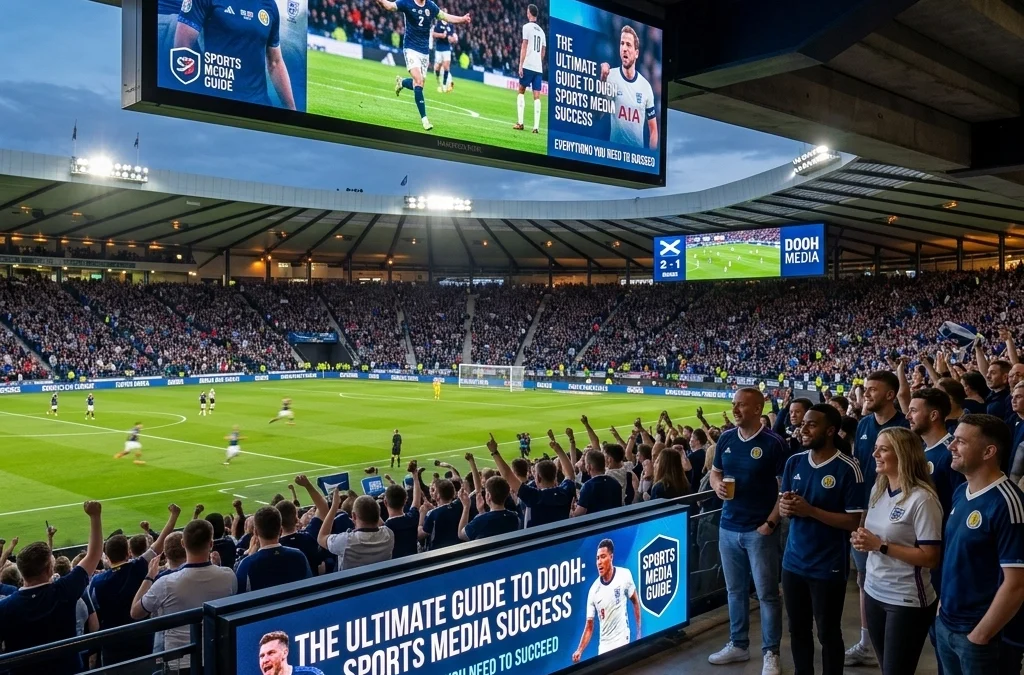
Digital Out-of-Home (DOOH) advertising has transitioned from a supplementary marketing tactic to a primary driver of brand engagement in the sports industry. As fan behavior becomes increasingly fragmented across multiple platforms and devices, the physical environment remains one of the few places where attention is guaranteed and collective. This guide examines the strategic implementation of DOOH within sports media, offering insights into how brands can leverage technology and timing to connect with high-value audiences.
The fundamental shift in modern sports marketing is the recognition that the vast majority of fan engagement occurs outside the stadium walls. While the live event is the focal point, the fan journey begins days before kickoff and continues long after the final whistle. High-impact digital screens located in transit hubs, retail centers, and urban districts provide the necessary touchpoints to reach fans where they live, work, and commute.
The Strategic Landscape of Sports DOOH
The efficacy of DOOH in sports is rooted in its ability to tap into the emotional state of the consumer. Research indicates that 81% of fans feel more positive toward brands that sponsor their favorite sports, and over 40% of consumers discuss sporting events with peers after seeing out-of-home advertisements. By integrating digital displays into the sports ecosystem, brands can transform a simple advertisement into a part of the fan's daily routine.
The current market for programmatic DOOH is experiencing significant growth, with projections suggesting a rise from approximately $7.5 billion globally to nearly $46 billion over the next decade. This growth is driven by the increasing availability of digital screens, currently estimated at over 25,000 across major sporting markets, allowing brands to scale their presence with greater efficiency than traditional venue-based sponsorships.
The Three-Phase Activation Strategy
A successful DOOH campaign in the sports sector is built on a structured timing window. To maximize ROI, advertisers must coordinate their messaging across three distinct phases of the fan journey.
1. The Pre-Game Build-Up
The 48 hours leading up to a major sporting event are characterized by high anticipation. During this window, fans are actively seeking information, checking betting odds, and organizing social gatherings.
- Inventory Focus: Premium screens in transit hubs, office districts, and retail centers.
- Content Strategy: Use of countdown clocks, broadcast schedules, and real-time betting updates to provide utility to the viewer.
- Impact: Capturing the audience in "planning mode" increases the likelihood of brand recall during purchase decisions at retail locations.
2. Live Event Engagement
During the game, the objective shifts to real-time relevance. Even for those not inside the stadium, the "second screen" experience is often complemented by "third screen" exposure in public spaces, bars, and watch parties.
- Inventory Focus: Digital billboards near stadium entrances, street-level displays in entertainment districts, and Sportrons in high-traffic areas.
- Content Strategy: Live score updates and reaction-based creative that mirrors the momentum of the game.
- Impact: Aligning brand messaging with live outcomes fosters a sense of shared experience between the brand and the fan.

3. Post-Game Community Connection
The conclusion of an event does not signify the end of the marketing opportunity. The post-game phase is an ideal time for community engagement and celebratory or consolatory messaging.
- Inventory Focus: Commuter routes and digital displays in residential areas.
- Content Strategy: Highlights, thank-you messages to the fans, and "next game" reminders.
- Impact: Maintaining presence beyond the event ensures the brand remains top-of-mind during the emotional cooldown period.
Technological Pillars of Modern DOOH
The transition from static to digital out-of-home is powered by sophisticated technology that allows for precision and flexibility.
Programmatic Buying and Data-Driven Targeting
Programmatic DOOH enables media buyers to purchase inventory based on specific triggers rather than fixed schedules. By using location intelligence and mobility data, brands can identify when their target demographic is most likely to be in the vicinity of a screen. This data-driven approach ensures that budget is allocated toward impressions that have the highest probability of conversion.
Dynamic Creative Optimization (DCO)
DCO allows for the automated adjustment of creative assets based on external data feeds. In sports media, this can include:
- Weather Triggers: An apparel brand may switch from promoting t-shirts to rain gear if a storm is detected near the stadium.
- Score-Based Triggers: A beverage brand might trigger a "celebration" creative immediately following a home team victory.
- Temperature Triggers: Promoting cold drinks when the local temperature exceeds a certain threshold.
Omnichannel Alignment
Modern DOOH does not exist in a vacuum. It is most effective when synchronized with other digital channels. Streaming alignment is a tactic where DOOH messaging is coordinated with live streaming schedules, creating a unified brand voice across mobile, connected TV, and physical displays. This creates a surround-sound effect that reinforces the brand message at every possible touchpoint.

Measurable Results and Case Studies
The success of DOOH in sports media is best illustrated through data-backed results. Several recent campaigns demonstrate the power of programmatic DOOH to drive significant lifts in brand metrics.
- Purchase Consideration: In a campaign for White Claw's vodka launch, programmatic DOOH was used to target specific consumer segments in high-traffic urban areas. The result was a 74% lift in purchase consideration, proving that strategic screen placement can directly influence consumer intent.
- Brand Image: AB InBev’s Mike’s Hard Iced Tea utilized a similar approach to enhance brand perception. By leveraging data-driven placement, the campaign saw a 119% lift in positive brand image.
- First-Time Campaigns: For brands new to the space, the impact can be even more pronounced. Sea-Doo's inaugural DOOH campaign resulted in a 144% increase in purchase consideration, highlighting the effectiveness of the medium for market entry.
These results are typical of campaigns that utilize high-quality case study methodologies to track attribution, often through the use of exposed device IDs to measure subsequent retail visits or online actions.

Best Practices for Media Buyers
To achieve success in the competitive sports media environment, media buyers should adhere to the following best practices:
- Plan for Premium Inventory Early: Major sporting events attract high demand. Securing prime digital locations near stadiums and transit hubs should be prioritized in the early stages of planning.
- Integrate Social Proof: Real-time social media feeds or fan-generated content can be integrated into DOOH creative to increase authenticity and engagement.
- Utilize Specialized DSPs: Working with platforms like StackAdapt can streamline the programmatic buying process and provide access to advanced targeting features.
- Prioritize Measurement: Implement robust measurement frameworks that go beyond simple impressions. Focus on brand lift studies, foot traffic attribution, and conversion tracking to justify media spend.
- Focus on the Journey: Map out the fan's physical path on game day. From the morning commute to the stadium gates, ensure the brand is visible at each critical junction.
Conclusion
Digital Out-of-Home advertising offers a unique opportunity for brands to participate in the excitement and community of sports. By moving beyond the stadium and into the streets, transit lines, and retail centers, advertisers can reach fans during the moments that matter most. Through the combination of programmatic technology, dynamic creative, and strategic timing, DOOH provides a scalable and highly effective solution for any sports-focused marketing campaign.
For those looking to expand their presence in this space, OOH Sports provides the expertise and platform needed to navigate the complexities of digital out-of-home advertising. As the industry continues to evolve, staying informed on the latest blog insights and industry trends will be essential for maintaining a competitive edge in sports media.

To learn more about how to implement these strategies for your next campaign, visit the OOH Sports contact page to connect with a specialist.