
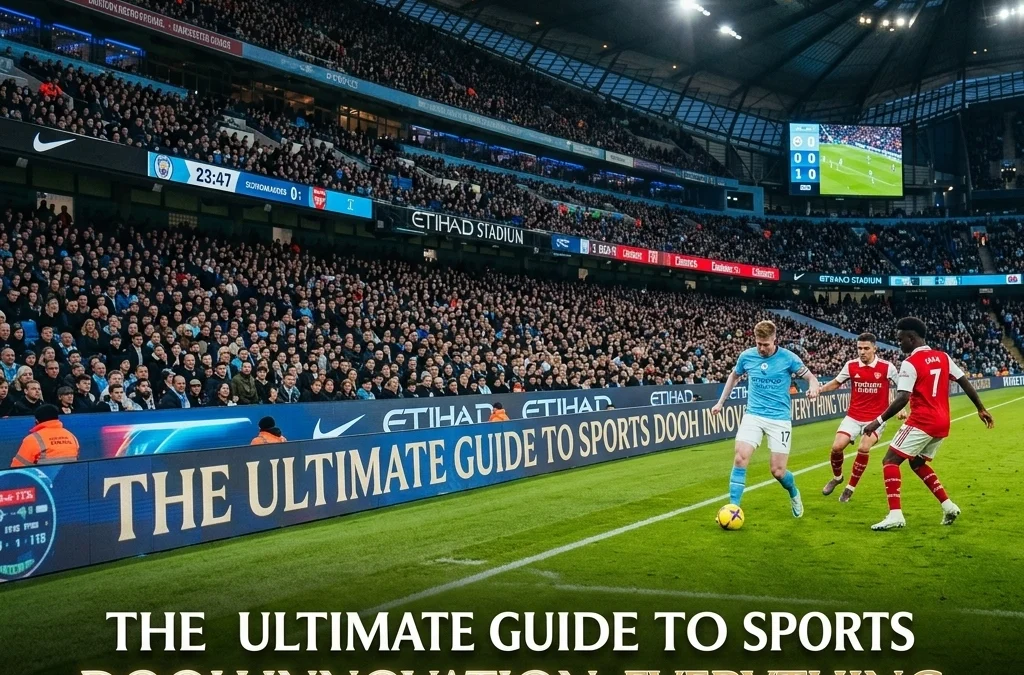
The landscape of sports marketing has undergone a massive transformation. For decades, winning the perimeter meant securing a static board around the field of play. Today, the perimeter has expanded far beyond the stadium walls. Digital Out-of-Home (DOOH) advertising has turned every screen in the city into a potential touchpoint for sports fans. This guide explores how media buyers and brand managers use innovation to capture attention, drive engagement, and deliver measurable ROI in the modern sports ecosystem.
Redefining the Perimeter in Sports Marketing
The perimeter is no longer just a physical boundary inside an arena. In the world of modern advertising, the perimeter represents the entire journey of a sports fan on game day. This journey begins at home, continues through the commute, peaks at the venue, and lingers long after the final whistle.
Innovation in this space is driven by the shift from static displays to high-impact digital screens. These screens are located in airports, transit hubs, city centers, and near stadiums. By leveraging these assets, brands can create a surround-sound effect that keeps their message top-of-mind. OOH Sports focuses on this expanded perimeter to ensure that fans are reached at the most relevant moments of their day.
Strategy: The Shift to Audience-Led Activation
Traditional sports sponsorships often relied on broad demographics. Modern DOOH innovation shifts the focus toward audience-led activation. This strategy uses behavioral data and location intelligence to identify where high-affinity fans are most likely to be at any given time.
Rather than buying a specific billboard for a month, media buyers now use programmatic technology to buy impressions. This allows brands to activate messaging only when their target audience is present. For example, a brand might choose to trigger ads only within a five-mile radius of a stadium in the three hours leading up to kickoff. This precision reduces waste and ensures that every dollar spent is directed toward a verified fan.

Dynamic Creative Optimization (DCO)
One of the most significant innovations in sports DOOH is Dynamic Creative Optimization (DCO). Static creative is limited by its inability to react to the environment. DCO allows advertisers to change their messaging in real-time based on external data feeds.
In the context of sports, DCO can be triggered by several factors:
- Live Scores: Displays can update instantly to reflect a home team goal or a final score.
- Weather Conditions: An apparel brand can swap a t-shirt ad for a raincoat ad if it starts to pour outside the stadium.
- Social Sentiment: Trending hashtags or fan reactions can be pulled onto screens to create a sense of community.
- Game Moments: Specific triggers can be set for "clutch" moments, such as a last-minute field goal attempt or a power play.
This level of responsiveness makes the advertisement feel like part of the event rather than an interruption. It transforms a standard marketing message into a utility that provides value to the fan.
The Three Phases of Fan Engagement
To win the perimeter, brands must consider the chronological flow of a sporting event. A successful DOOH strategy is typically divided into three distinct phases.
1. The Build-Up (Pre-Game)
The goal during this phase is to build anticipation and awareness. Messaging often focuses on countdowns, ticket sales, or "get ready" themes. Screens in transit hubs and on major highways are critical here, as they reach fans while they are traveling toward the venue.
2. The Live Event (During Game)
While many fans are inside the stadium, many more are in the surrounding area at sports bars or fan zones. This is the time for high-impact, real-time updates. Sportrons and other specialized displays are used to keep the brand's presence felt even for those without a ticket to the game.
3. The Aftermath (Post-Game)
The period immediately following a game is a prime opportunity for conversion. If the home team wins, celebratory creative can be deployed to capitalize on the positive emotional state of the fans. If the team loses, the messaging might shift toward "next time" or offer a consolation discount at a nearby retail location.
Technology Partners and Programmatic DOOH
The backbone of sports DOOH innovation is the programmatic ecosystem. Programmatic buying allows for a level of flexibility that was previously impossible in outdoor advertising. Media buyers can now set specific parameters for when and where their ads appear.
The use of programmatic platforms enables:
- No Fixed Contracts: Brands can pivot their strategy mid-campaign if the team’s performance or the market conditions change.
- Impression-Based Targeting: Buying is based on the number of people actually seeing the screen rather than a flat fee for the location.
- Rapid Optimization: Performance data can be analyzed in real-time, allowing for immediate adjustments to creative or placement.
By working with specialized technology partners, OOH Sports ensures that campaigns are delivered with technical fluency and maximum efficiency.

Measurable Results and Impact
The primary concern for any brand manager is the bottom line. Innovation is only valuable if it delivers results. Data from recent campaigns shows that sports DOOH significantly outperforms traditional static formats in terms of brand lift and purchase intent.
In a study of programmatic DOOH performance, brands saw substantial gains across key metrics:
- Purchase Consideration: One beverage brand achieved a 74% lift in purchase consideration by using real-time game triggers.
- Brand Image: Another campaign saw a 119% increase in positive brand image ratings when the creative was synchronized with live event outcomes.
- Foot Traffic: By using device IDs exposed to DOOH screens, brands can track how many fans later visited a retail location or entered the stadium.
These results prove that a dynamic, well-timed message is far more effective than a generic, static one. The ability to measure these outcomes provides the transparency that modern media buyers demand.
Omnichannel Integration
Winning the perimeter also requires a unified approach across different media channels. DOOH should not exist in a vacuum. The most successful campaigns are those that integrate with mobile, social, and streaming platforms.
When a fan sees a brand on a large-format digital billboard during their commute, and then receives a retargeting ad on their mobile device while scrolling through game highlights, the brand's message is reinforced. This "priming effect" leads to higher recall and better conversion rates. Integrating DOOH with live streaming schedules ensures that the physical and digital worlds are perfectly in sync.

Logistics and Execution Processes
Executing a high-level sports DOOH campaign requires meticulous planning. The process generally follows these steps:
- Objective Setting: Defining whether the goal is brand awareness, foot traffic, or direct sales.
- Inventory Selection: Identifying the key screens within the "expanded perimeter" of the target stadium or city.
- Creative Development: Building dynamic assets that can accommodate live data feeds and various screen aspect ratios.
- Integration: Connecting the creative to the necessary data sources, such as live score providers or weather services.
- Deployment: Using programmatic platforms to push the content live based on the predefined triggers.
- Monitoring and Analysis: Tracking performance in real-time and making adjustments to maximize ROI.
This structured approach ensures that the campaign remains organized and focused on the desired outcomes.
Why Innovation Matters Now
The competition for fan attention has never been higher. With the rise of second-screen viewing and fragmented media consumption, brands must find ways to stand out. Innovation in sports DOOH provides that edge. It allows brands to be part of the excitement of the game in a way that feels natural and timely.
By using real-time data, programmatic flexibility, and strategic location targeting, advertisers can move beyond simple visibility. They can create meaningful connections with fans that drive long-term loyalty and immediate sales. To see examples of this in action, the OOH Sports Case Study section offers detailed looks at how these strategies have been applied successfully.
Conclusion: Dominating the Perimeter
Winning the perimeter is a strategic challenge that requires the right combination of technology and creativity. By embracing the innovations in DOOH, brand managers can ensure their message is seen at the right time, in the right place, by the right audience.
The future of sports marketing belongs to those who can move as fast as the game itself. Whether it is updating a score in real-time or targeting fans as they walk through the stadium gates, the tools are now available to make every impression count. For more insights on how to elevate your sports marketing strategy, visit the OOH Sports Blog or Contact Us to start planning your next campaign.