
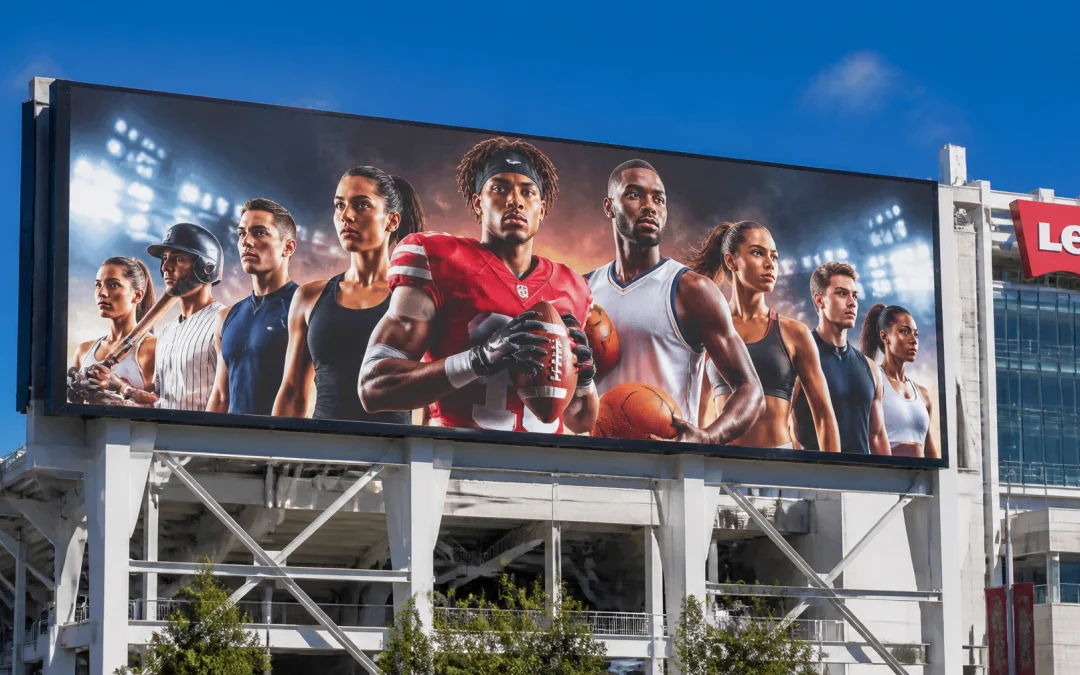
Super Bowl LX, scheduled to take place at Levi’s Stadium in Santa Clara in 2026, represents a significant milestone in the evolution of sports marketing. For the first time, the massive scale of the Name, Image, and Likeness (NIL) era will fully converge with the most significant advertising event in the United States. This convergence offers a unique opportunity for media buyers and brand managers to move beyond traditional, high-cost sponsorships and engage with a distributed network of authentic voices.
The strategy for 2026 involves mobilizing over 20,000 student-athletes to create a resonant, decentralized brand presence that spans the entire Bay Area and reaches into every home market across the country. By leveraging a structured NIL platform and integrating it with programmatic Digital Out of Home (DOOH) advertising, brands can achieve a level of saturation and authenticity that was previously unattainable.
Objective & Strategy
The primary objective of a Super Bowl NIL campaign is to achieve high-frequency brand exposure and deep audience engagement by utilizing the social capital of college athletes. Rather than focusing on a single high-profile professional athlete, the strategy prioritizes the collective influence of thousands of student-athletes. This approach mitigates the risk of individual controversy and maximizes reach across diverse demographics.
The strategy centers on three core pillars:
- Scale: Utilizing a platform that manages a roster of 20,000 athletes to ensure a nationwide footprint.
- Hyper-Local Targeting: Executing digital advertising within a 10-mile perimeter of the host stadium and official fan zones.
- Authentic Content: Coordinating athlete-generated content that aligns with the brand’s messaging while maintaining the athlete’s unique voice.
By focusing on these pillars, a brand can surround the Super Bowl environment without the multi-million dollar price tag of an official NFL partnership. The goal is to create a "surround sound" effect where the target audience encounters the brand on social media, on digital screens in the city, and through the trusted voices of their favorite college stars.

The Power of the 20,000-Athlete Network
A network of 20,000 student-athletes offers a level of market penetration that single-talent deals cannot match. This roster includes athletes from every major conference, gender, and sport, providing a built-in segmentation tool for brands. Whether a campaign requires the high energy of a basketball player or the disciplined focus of a track athlete, the diversity of the network allows for precise brand alignment.
The logistics of managing such a large group are handled through a centralized NIL platform. This technology allows for the simultaneous deployment of campaign briefs, the collection of creative assets, and the automated processing of payments and compliance disclosures. For media buyers, this turns what would be a logistical nightmare into a turnkey solution.
During the week leading up to Super Bowl LX, these athletes serve as digital ambassadors. While the world's attention is on Santa Clara, the athletes engage their local communities and fan bases, driving conversation and brand awareness. This decentralized approach ensures that the brand remains relevant in every college town in America, even as the main event unfolds in California.
Technology Partners & Programmatic Execution
Success in a scaled NIL campaign requires a robust technology stack. OOH Sports utilizes advanced programmatic platforms to bridge the gap between social influence and physical advertising. By partnering with leading Demand-Side Platforms (DSPs) like StackAdapt, the campaign can execute real-time bidding for digital billboard space, ensuring that ads are shown when and where they will have the most impact.
The integration of NIL content into DOOH screens is a critical tactical move. When a fan walking through downtown San Francisco sees a digital screen featuring the same student-athlete they just saw on their Instagram feed, the brand's credibility is reinforced. This omnichannel approach creates a seamless experience for the consumer.
Key technical components include:
- Dynamic Creative Optimization (DCO): Automatically swapping out athlete imagery on digital boards based on the viewer’s location or current game events.
- Mobile Retargeting: Identifying mobile devices that were exposed to the DOOH ads and retargeting them with NIL-led social media content.
- Real-Time Analytics: Monitoring campaign performance across all 20,000 athletes and every digital screen to optimize spend in real-time.
Strategic Logistics: The 10-Mile Perimeter
While the athletes provide the "digital" reach, the "physical" reach is secured through a 10-mile perimeter strategy around key Super Bowl venues. This includes Levi’s Stadium, the official Super Bowl Experience in San Francisco, and various fan activation zones throughout the Bay Area.

The execution involves securing inventory on all available digital video advertising boards within this radius. This ensures that every fan, media member, and corporate executive traveling to the game is exposed to the brand. The perimeter strategy is not just about quantity; it is about strategic placement. Screens are selected based on high foot traffic areas, transit hubs, and popular dining and entertainment districts.
This geographic focus allows a brand to "own" the local environment. By saturating the perimeter with NIL-led creative, the brand creates a dominant presence that rivals official sponsors. The 10-mile radius becomes a dedicated brand zone where the message is reinforced at every turn.
Measurable Impact & Results
Data-driven decision-making is at the heart of this guide. The success of a Super Bowl NIL and DOOH campaign is measured through rigorous brand lift studies and attribution modeling. Based on historical data from similar high-impact campaigns, the potential for significant return on investment is clear.
For instance, previous programmatic DOOH executions have shown remarkable results:
- White Claw achieved a 74% lift in purchase consideration through a targeted programmatic campaign. More details on this can be found in the White Claw case study.
- AB InBev’s Mike’s Hard Iced Tea recorded a 119% lift in positive brand image, demonstrating the power of visual frequency in a competitive market. The full report is available here.
- Sea-Doo saw a 144% increase in purchase consideration by integrating digital OOH with their broader marketing strategy. The strategy is detailed in their campaign overview.
These benchmarks indicate that when a brand combines the massive scale of 20,000 student-athletes with the high-visibility of DOOH, the results are measurable and substantial. The campaign tracks metrics such as total impressions, device IDs exposed, and subsequent brand search volume to provide a comprehensive view of the impact.

Conclusion
Mobilizing 20,000 student-athletes for Super Bowl LX is no longer a theoretical concept. It is a viable, data-backed strategy for brands looking to disrupt the traditional advertising landscape. By utilizing a specialized NIL platform, leveraging programmatic DOOH technology, and focusing on a strategic 10-mile perimeter, media buyers can deliver a campaign that is both massive in scale and intimate in its authenticity.
As the industry prepares for 2026, the focus must remain on the integration of these different channels. The brands that succeed will be those that view NIL not as a separate social media tactic, but as a core component of their omnichannel presence.
For a deeper look at how these platforms operate in the real world, view the following presentation: