
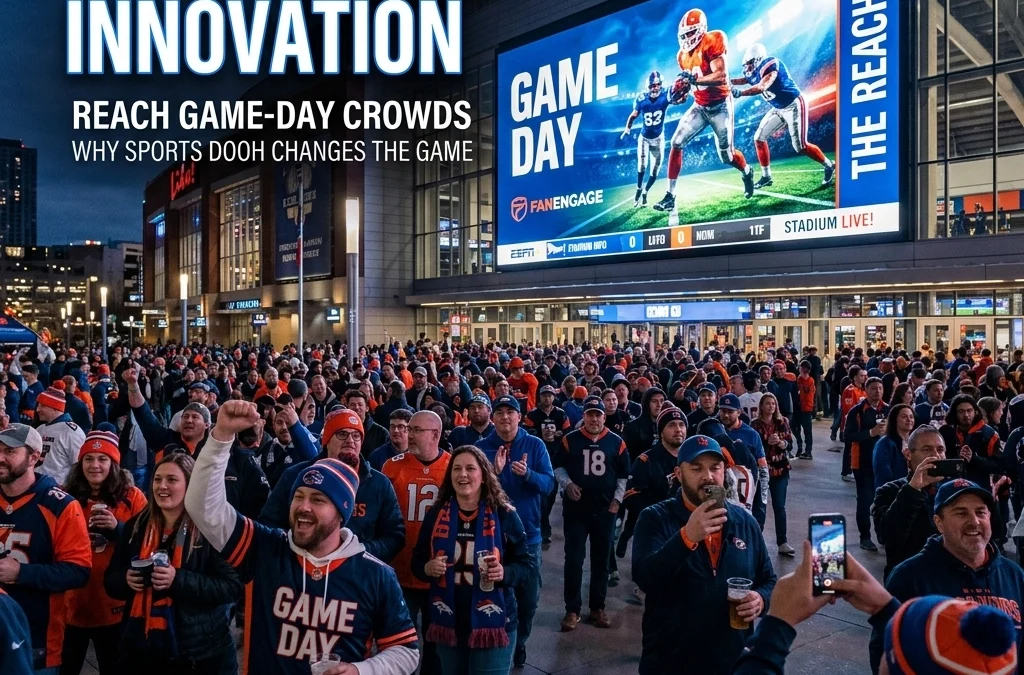
The landscape of sports marketing is undergoing a significant transformation. For decades, the standard approach for brand managers and media buyers involved securing a spot on a local television broadcast or purchasing static signage inside a stadium. While these methods provided visibility, they often lacked the agility needed to keep up with the fast paced nature of live sports.
Digital Out-of-Home (DOOH) advertising has emerged as a disruptive force in this space. By combining the physical impact of traditional outdoor advertising with the technical capabilities of digital media, sports DOOH allows brands to connect with fans in ways that were previously impossible. This innovation is not just about moving from paper to screens. It is about timing, relevance, and the ability to follow a fan throughout their entire game-day experience.

The Multi-Touchpoint Fan Journey
One of the most significant shifts in sports marketing strategy is the move toward a multi-touchpoint approach. In the past, a brand might focus all its energy on a single 30 second commercial during the game. However, a fan's connection to the event begins hours before the first whistle and continues long after the final score is recorded.
Innovation in DOOH allows brands to activate displays across multiple locations, including city centers, transit hubs, and popular gathering spots near the venue. By placing messaging along the commute route, a brand becomes a part of the anticipation. This strategy ensures that the audience sees the message when excitement is building.
When fans arrive at the stadium, they are met with high impact visuals on perimeter displays and Sportrons. After the game, the messaging can shift to reflect the outcome, appearing on screens in bars, restaurants, and transit stations where fans gather to celebrate or decompress. This constant presence throughout the day creates a cohesive brand narrative that a single stadium sign simply cannot achieve.
Strategy: Real-Time Relevance Through Dynamic Creative
The true power of modern sports DOOH lies in its ability to adapt to what is happening on the field. Static ads are fixed, but the game is fluid. Dynamic creative technology allows displays to update instantly based on live data feeds.
For instance, a brand can trigger specific creative content based on:
- Live game scores and lead changes.
- Player performance milestones or record breaking moments.
- Countdown timers leading up to kickoff.
- Weather conditions at the stadium.
- Social media feeds featuring fan reactions.
This level of relevance transforms an advertisement into a valuable piece of information for the fan. When a screen shows the current score alongside a brand logo, the audience views the brand as a participant in the experience rather than an intruder. This strategy leverages the emotional high points of the game, ensuring that the brand message is delivered when fan engagement is at its peak.

The Role of Programmatic Technology
Programmatic DOOH has changed the way media buyers interact with outdoor inventory. In the traditional model, buying a billboard required long lead times and rigid contracts. Today, programmatic platforms allow for a more flexible and data-driven execution.
Media buyers can now set specific parameters for when and where their ads appear. This might include bidding on screen time only during the four hours surrounding a home game or targeting specific zip codes with a high density of sports fans. This level of precision helps to eliminate wasted impressions and ensures that the budget is focused on the most valuable moments.
The transition from traditional sponsorships to programmatic models offers a better return on investment. For a detailed comparison of these methods, the analysis of programmatic DOOH versus traditional stadium sponsorships provides deeper insight into how modern brands are optimizing their spend.
Precision Geographic Targeting
Innovation in sports DOOH is also defined by geographic precision. It is no longer enough to just be in the city where the game is played. Brands are now using location data to identify the exact paths fans take to the stadium.
By analyzing commute patterns and foot traffic data, OOH Sports can place advertisements on the specific transit lines and street furniture that see the highest volume of game-day traffic. This targeted approach ensures that the message is seen by the intended audience without the high cost of a city wide "spray and pray" campaign.
Furthermore, this geographic focus allows for regional customization. A brand can run one creative execution in the neighborhood surrounding the home team's stadium and a completely different one in the visiting team's city. This localized relevance builds a stronger connection with the community and demonstrates a brand's commitment to the local sports culture.

Measuring the Impact on the Bottom Line
One of the historical challenges of outdoor advertising was the difficulty of measurement. Innovations in digital technology have addressed this concern. Media buyers can now use device ID tracking to measure how many people were exposed to an ad and subsequently visited a retail location or a website.
The data surrounding sports sponsorships is compelling. Research indicates that 81% of fans feel more positive toward brands that sponsor the sports they love. Even more importantly, 66% of fans are more likely to purchase from these brands. These are not just vanity metrics. They represent a tangible shift in consumer behavior.
By using DOOH, brands can capture audience data and retarget those same individuals across other digital channels, such as connected TV or mobile display ads. This omnichannel approach reinforces the message and moves the fan further down the sales funnel. For more secrets on how high level buyers utilize these tools, see the guide on DOOH industry secrets.
Objective & Strategy: A Case for Innovation
The objective of any sports marketing campaign is to win the attention of a highly distracted audience. In an era where fans are constantly looking at their phones or juggling multiple screens, the physical environment remains one of the few places where a brand can achieve undivided attention.
The strategy of modern sports DOOH is built on three pillars:
- Context: Placing the ad where the fan is already focused.
- Immediacy: Using live data to stay relevant to the current moment.
- Frequency: Maintaining a presence throughout the entire fan journey.
A successful execution of this strategy was seen in how brands have managed to dominate large scale events without being official sponsors. The story of how Nike achieved high visibility during the NYC Marathon without an official partnership is a prime example of how strategic OOH placement can disrupt a market.

Implementation and Logistics
Execution is where innovation meets reality. Implementing a sports DOOH campaign requires coordination between creative teams, data providers, and network operators. The process involves selecting the right screens, such as those found in the stadium perimeter, and ensuring that the dynamic triggers are correctly configured.
OOH Sports simplifies this process by providing a unified platform for managing these complex campaigns. By centralizing the buy and the creative management, brand managers can focus on the big picture while the technology handles the minute by minute updates.
The Future of the Game-Day Experience
The future of sports marketing will continue to lean into technology that bridges the gap between the physical and digital worlds. We are seeing a move toward more interactive displays, augmented reality integrations, and even deeper levels of personalization.
As the technology evolves, the focus will remain on the fan. The brands that succeed will be those that provide value, enhance the game-day experience, and respect the passion of the audience. Innovation in sports DOOH is not just a trend. It is a fundamental shift in how brands and fans interact in the real world.
For those looking to stay ahead of the curve, exploring the latest in marketing strategies and staying updated via the OOH Sports blog is essential. The game is changing, and the tools available to reach the crowd have never been more powerful. Reach out to the team to learn more through the contact page and start building a strategy that wins on game day.